
A major five-year study on California's Central Coast led by the U.S. Food and Drug Administration and the Western Center for Food Safety at the University of California, Davis, is helping scientists better understand how harmful bacteria can move through the environment.
Often called the nation's "salad bowl," growing more than 400 crops, including a large portion of the country's leafy greens, the Central Coast has been linked to several foodborne illness outbreaks. In 2020, the FDA asked the Western Center for Food Safety at UC Davis to play a central role in a large-scale environmental study to better understand where disease-causing bacteria come from and how they spread.
The study was built on close collaboration. Researchers worked in partnership with the FDA, the California Department of Food and Agriculture, ranchers, landowners and growers.
"This was a five-year collaborative effort to test the environment within and surrounding produce fields, such as soil, surface water, sediment and air," said Rob Atwill, a principal investigator for the Western Center for Food Safety and epidemiologist with the UC Davis Weill School of Veterinary Medicine.
Researchers also collected feces from livestock and wildlife at numerous ranches and vineyards to better understand the occurrence of bacteria at those locations.
"We could not have done this without our partnership with the California livestock and produce industries," Atwill said.
Bacteria detected in animals and the environment
Initial findings show detection of harmful strains of E. coli, including types that can cause serious human illness, in animal and environmental sources in the region. They detected the bacteria in feces from animals such as cattle, feral pigs, bobcats, deer, various birds, coyotes and flies, and occasionally in older samples, showing the organisms can persist under a range of conditions.
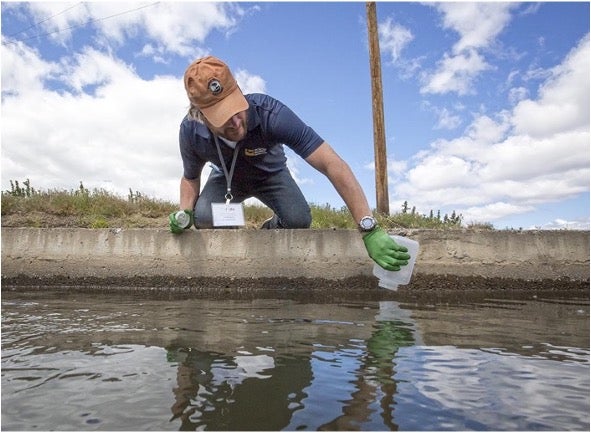
The bacteria appeared less often in farm soil overall, but was more frequently found in farm soil near rivers, streams and cattle ranches. Researchers also found it in rivers, creeks and in sediment and less often in irrigation runoff, suggesting surface water helps the bacteria survive and move through the landscape.
No link to outbreak strain
Researchers identified multiple strains of E. coli O157:H7 in environmental samples, but they did not detect the strain linked to outbreaks that occurred between 2016 and 2020. Additional strains found in wildlife closely matched those found in cattle and in some cases in water and soil. Several illness-causing strains were identified and some continued to be isolated from the environment for nearly two years.
At one livestock ranch, different E. coli O157:H7 strains were detected each year in both cattle and wildlife, suggesting infections were short-lived and that the bacteria may have been circulating among the animals. E. coli O157:H7 appeared very briefly in two other ranches, but this strain of bacteria was also short-lived in these herds.
Collaboration key to advancing food safety
Researchers said the findings reinforce what scientists and growers have long understood: These organisms are naturally present in the environment. Linda J. Harris, co-principal investigator with the Western Center for Food Safety and professor emerita in the UC Davis Food Science and Technology department, said the results confirm a lot of what was previously known about how bacteria spread.
"The agricultural industry has made a lot of changes in the last decade to address food safety issues and our data support that they are focused on the right things," said Harris. "These data will be used by the industry to inform future targeted research and refinements, if needed, to existing guidance on best practices for growers to reduce food safety risks."
Analysis of the hundreds of thousands of data points collected during the study is ongoing and further updates will be shared later this year. Additional information can be found on the FDA's website.
The Western Center for Food Safety was established in 2008 as a Center of Excellence under the Human Foods Program with the FDA. The center's mission is to identify real-world solutions to food safety challenges and provide outreach and education to agricultural stakeholders.


