


A Flinders University research team has been named a finalist in the Research and Innovation category of the Australian Museum Eureka Prizes 2026.
Shortlisted for the Australian Infectious Diseases Research Centre Eureka Prize for Infectious Diseases Research, the team has developed a new way to stop dangerous infections on medical implants without relying on antibiotics.
The team, from Flinders University's Biomedical Nanoengineering Laboratory, is led by Professor Krasimir Vasilev and Associate Professor Vi-Khanh Truong. Their breakthrough uses a gallium-based liquid metal coating that can be applied to implants and kill bacteria - including drug-resistant strains - while still helping the body to heal.
The research program began in 2019 during Associate Professor Truong's Fulbright Fellowship, when he started investigating gallium-based liquid metals as part of a new strategy to combat antibiotic-resistant bacteria.
Infections linked to medical devices such as hip and knee replacements, dental implants and catheters remain a major challenge for hospitals worldwide, particularly as antibiotics become less effective.
Professor Krasimir Vasilev says the new technology tackles this problem in a different way.
"Rather than using antibiotics, we use gallium liquid metal to create a protective surface that disrupts the biological processes bacteria need to survive and multiply," says Professor Vasilev, from Flinders' College of Medicine and Public Health.
"By targeting bacteria in this way, we can reduce the risk of antimicrobial resistance developing."
The coating has been tested in laboratory and preclinical studies, where it not only prevented infection but also supported bone growth and tissue attachment around the implant.
Associate Professor Truong says that combination of safety and effectiveness is what makes this technology stand out.
"One of the biggest challenges in this field has been finding a way to prevent infection without harming surrounding tissue," says Associate Professor Truong.
"Our studies have shown strong antibacterial performance while also improving tissue integration and healing. Importantly, the coating can be produced using manufacturing methods that already exist, making it a realistic option for widespread clinical use."
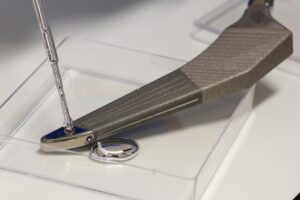
The researchers believe the technology could offer a practical new weapon against antimicrobial resistance while improving recovery and outcomes for patients receiving medical implants.
The Australian Museum Eureka Prizes are Australia's premier science awards, recognising excellence in research, innovation, leadership and science engagement. Established in 1990, the awards celebrate scientific achievements that have made a significant impact on society.
The winners will be announced at a gala ceremony in Sydney Town Hall on Thursday 3 September, and streamed live online.


