Researchers from LunaSCOPE, Brown University's NASA-funded lunar science collaboration, have mapped the thickness of the loose dirt and rock layer that could help or hinder lunar explorers, depending on the task at hand.
PROVIDENCE, R.I. [Brown University] - New research by lunar scientists from Brown University provides critical new insights into the thickness of the Moon's regolith, the layer of loose dust and rock that drapes the entire lunar surface.
Using an analysis of more than 300 small and freshly formed impact craters across the lunar surface, along with data collected from lunar missions dating back to the 1970s, the researchers created a map of regolith thickness across the Moon. The team has made the data publicly available in the hope that other researchers will add to it, helping to make it a valuable resource for future lunar exploration.
"Understanding the Moon's surface is important because we're landing there, we're going to be walking and driving there, and we're going to be mining there," said Andrea Rajšić, a research scientist at Brown who led the study. "We think this map is a good starting point that we can add to as we collect more data."
The study is published in the Planetary Science Journal.
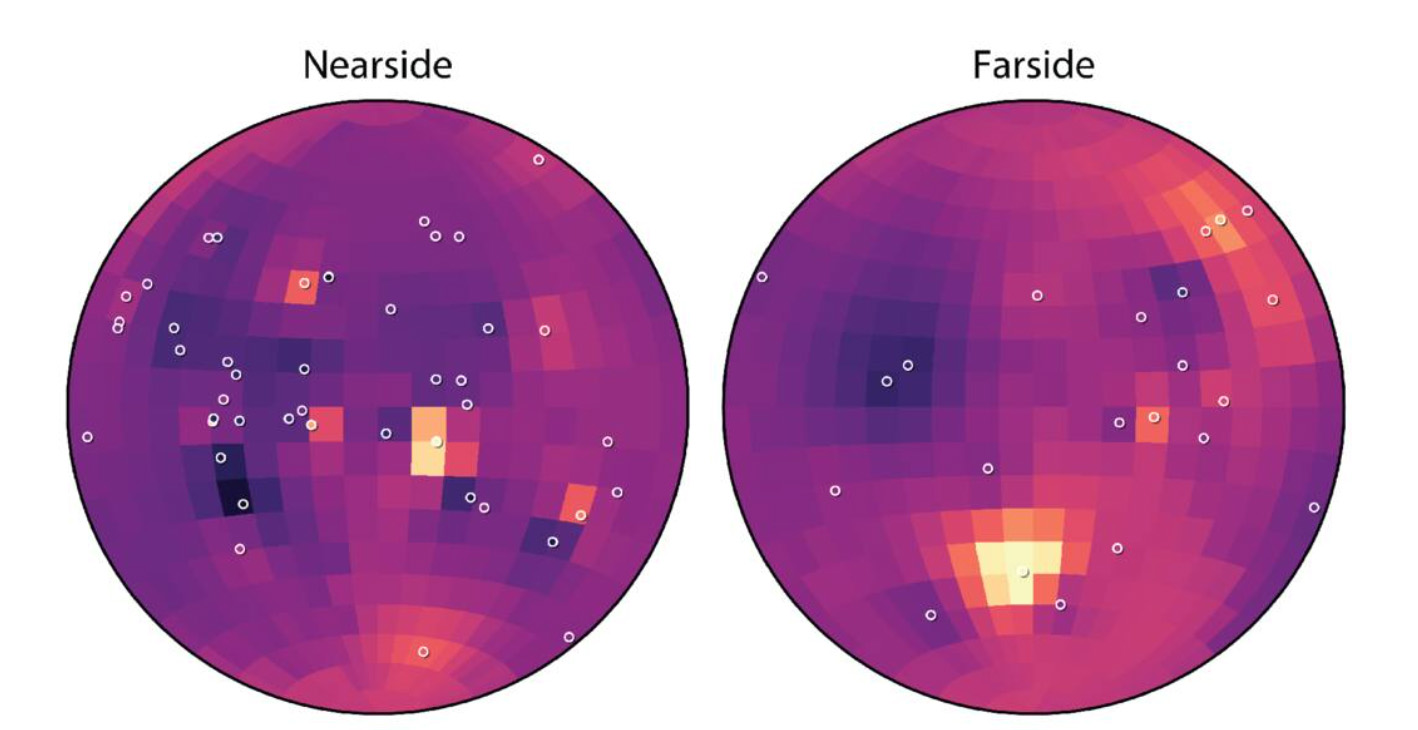
The Moon is under constant bombardment from meteorites and other impactors. Those impacts are the main driver in creating the lunar regolith layer, but they can also provide a means for studying it. The research team looked at 346 relatively fresh lunar craters, looking carefully at the blanket of debris surrounding each crater. Impacts that penetrate through the regolith layer to reach bedrock eject massive boulders onto the surface, which are clearly visible on satellite images. Once the researchers determined which craters exposed bedrock and which did not, they used known relationships between crater diameter and depth to estimate regolith thickness regionally across the Moon.
The research helps to reveal patterns in lunar regolith thickness. Scientists have long hypothesized that regolith is likely thicker in the more ancient terrains of the lunar highlands compared to the maria - the large volcanic plains visible as dark patches on the lunar nearside. These new findings are consistent with that idea. The researchers estimate that regolith thickness averages about six meters in the highlands and about four meters in the maria.
Rajšić, who is deputy principal investigator of LunaSCOPE - Brown's NASA-funded lunar science research group - said insights like these could be vital to the future of lunar exploration. Depending upon the goals of a given mission, landing where there is more or less regolith could be an important factor in mission planning.
"For example, in a situation where you want to build a Moon base, thinner regolith could make it easier to reach more competent material for foundations, depending on the construction method," Rajšić said. "On the other hand, if you're thinking about resources utilization, there may be a lot of useful things trapped in the regolith - like water ice or helium-3."
While the research was able to demonstrate broad trends and regional variation in regolith thickness, the researchers hope to eventually zoom in to include more local variation. That will require new data, which is why the team made their data and the mapping tools available for contributions from other researchers.
"We're hoping that people will use it more and add observations so that we eventually have a global coverage of the Moon," Rajšić said.
The research was supported by a grant from the NASA Solar System Exploration Research Virtual Institute (80NSSC23M0161).