
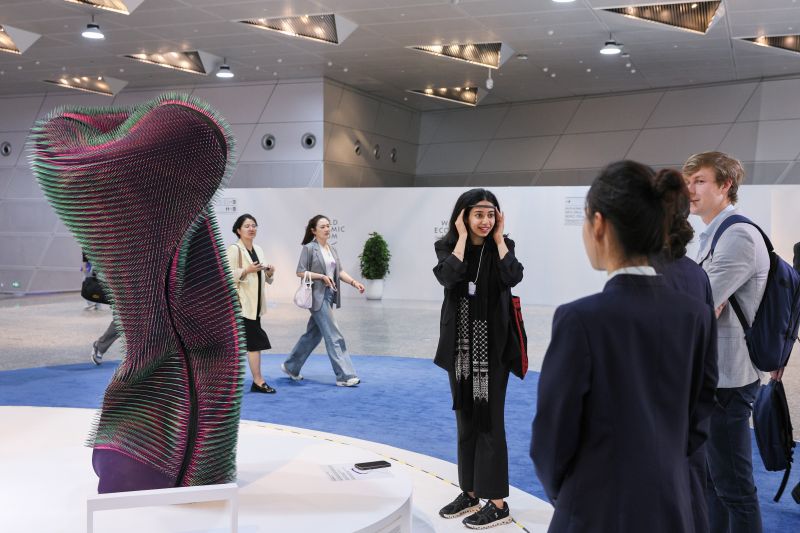
The University of Melbourne has joined international leaders, researchers and creative practitioners at the World Economic Forum's Annual Meeting of the New Champions in Dalian, China, contributing to discussions on how emerging technologies are shaping society.
Held under the theme 'Innovating at Scale', the meeting brought together more than 1,700 participants from more than 90 countries to explore how technologies, including artificial intelligence, can contribute to economic and social transformation.
As part of the program, Science Gallery Melbourne collaborated with partner galleries in Bengaluru, India, and Monterrey, Mexico, to present an interactive exhibition examining how AI and digital systems are influencing human cognition, behaviour and the environments societies depend on.
Science Gallery Melbourne Director Dr Ryan Jefferies said the collaboration brought together international perspectives on the opportunities and challenges presented by technological change.
"This collaboration has created a dynamic platform for researchers, artists and students from different countries to explore how emerging technologies, creativity and curiosity are reshaping society," Dr Jefferies said.
"It is through these shared efforts that we can better understand both the opportunities and the societal implications of innovation."
The University's participation in Dalian also reflects its broader engagement with partners in China through education, research and cultural exchange, including initiatives supported by the Jiangsu–Victoria sister-state relationship. The relationship provides a framework for cooperation between Victoria and Jiangsu in areas including education, research, cultural exchange and economic engagement.
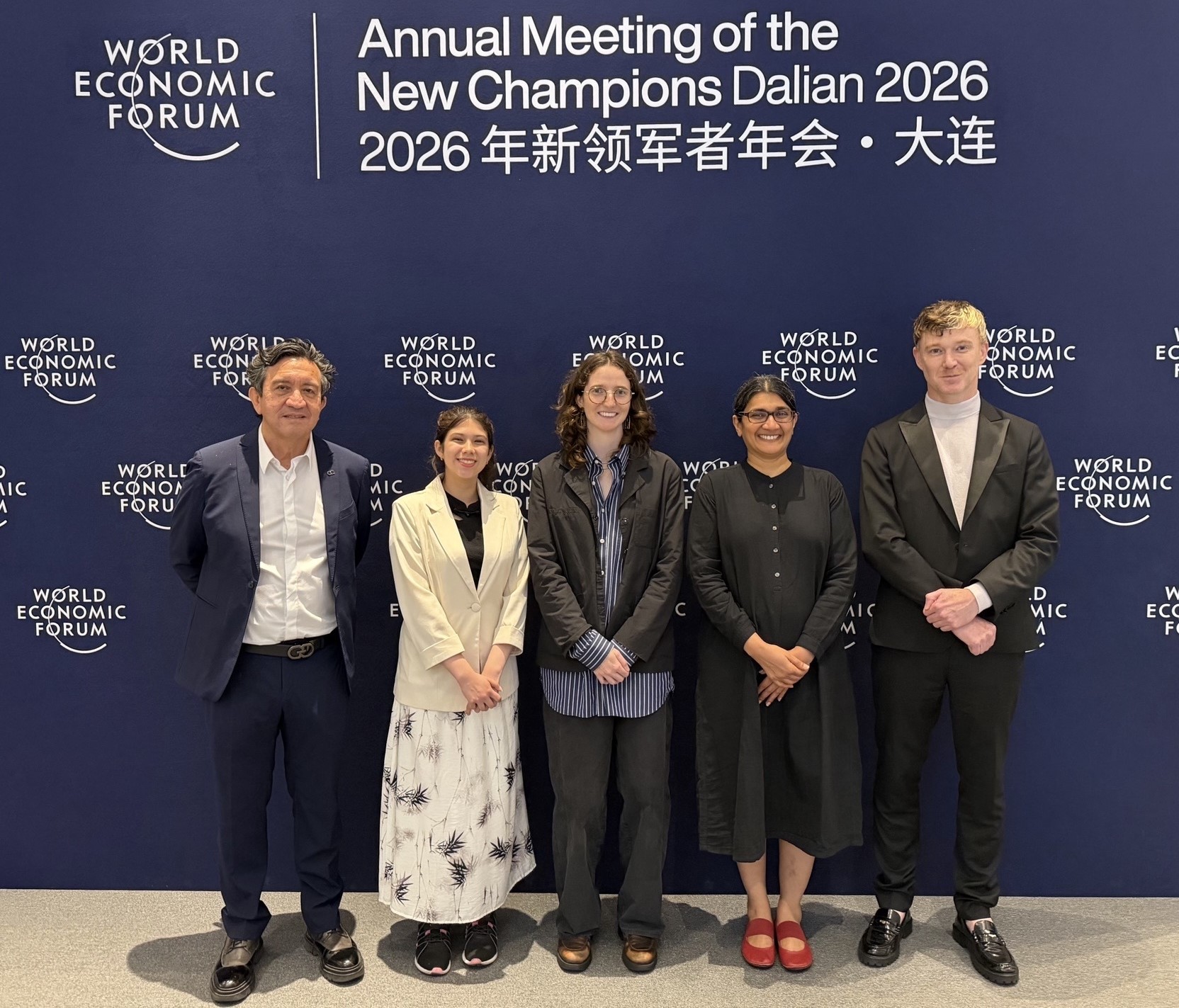
L-R: Miguel González Virgen (Director, Science Gallery Monterrey), Greta Fernanda Ramírez Guerrero (Mediator, Science Gallery Monterrey), Bern Hall (Assistant Curator, Science Gallery Melbourne), Jahnavi Phalkey (Director, Science Gallery Bengaluru), and Dr Ryan Jefferies (Director, Science Gallery Melbourne). Image: Ryan Jefferies
One example is the Global Design Challenge, delivered by Science Gallery Melbourne in collaboration with the Victorian Department of Education, which connected secondary school students in Victoria and Jiangsu Province through the Living Room Project, a virtual collaboration focused on sustainable housing and speculative design.
Deputy Vice-Chancellor (Global, Culture and Engagement) Professor Michael Wesley said partnerships with institutions in China were supporting practical collaboration on issues of global importance.
"Open and responsible collaboration between institutions in China and Australia is creating practical platforms for innovation, exchange and mutual understanding," Professor Wesley said.
"By connecting students, researchers and partners across countries, these initiatives contribute to the development of knowledge and capabilities that support both local and global priorities."
The University of Melbourne also works with Tsinghua University and Shanghai University on interdisciplinary programs responding to complex global challenges.
Science Gallery Melbourne's current exhibition, EMERGENCE(Y), features Tuengel by Professor Zhigang Wang, Director of the Department of Information Arts and Design at Tsinghua University. In November, Science Gallery Melbourne and Shanghai University will also co-host the next Future Careers Forum, focused on future skills, interdisciplinary learning and career pathways.
Through its participation in Dalian and ongoing partnerships in China, the University of Melbourne is contributing to international discussion on how emerging technologies can be developed and used responsibly.


