
New research from The University of Texas at Arlington helps explain a longstanding puzzle in melanoma treatment: why continuous targeted therapy performed better than planned on-and-off treatment schedules in clinical trials, despite promising laboratory studies of intermittent dosing.
In 2026, an estimated 112,000 new melanoma cases will be diagnosed in the United States, and approximately 8,510 people will die from the disease, according to the American Cancer Society. To improve treatment for melanoma and other cancers, researchers analyzed different dosing strategies, finding that adjusting treatment schedules over time may offer a more effective way to manage tumors than sticking to rigid treatment schedules.
"Traditionally, oncology treatments follow fixed dosing schedules. Patients receive chemotherapy, immunotherapy, surgery or other treatments according to predetermined protocols," said Souvik Roy, associate professor of mathematics. "However, through several of my lab's previous studies on esophageal and colon cancer, we found that continuous and dynamically adjusted dosing therapies may work better in two important ways: controlling the tumor and reducing toxicity.
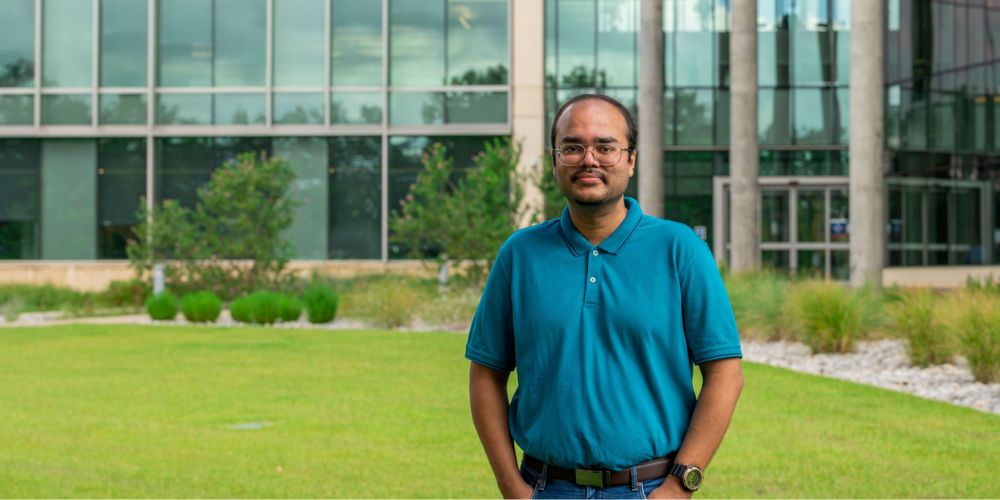
"Reducing toxicity is a major benefit for patients. It can lower out-of-pocket medical costs for families and reduce overhead costs for hospitals."
The study—a collaboration between Dr. Roy, Natalia Komarova from the University of California–Irvine and Anthony Zamora, her student—was published in Mathematical Biosciences. The researchers combined mathematical modeling with optimal control techniques to determine treatment schedules that minimize both tumor burden and treatment toxicity.
The study provides a mathematical explanation for an important puzzle in melanoma treatment. While laboratory studies suggested intermittent dosing could delay drug resistance, clinical trials favored continuous therapy. The new analysis shows that the best strategy may be a gradual tapering of treatment rather than repeated on-and-off dosing.
"Our model projects the best possible treatment schedule while balancing tumor control and treatment toxicity," Roy said. "Rather than producing a fixed dosing pattern, it suggests an optimal sequence that begins with full-dose therapy, transitions to an intermediate dose and eventually discontinues treatment without restarting it.
"The idea is to aggressively target drug-sensitive tumor cells early and then taper treatment before discontinuing it, reducing opportunities for drug-resistant cells to emerge and undermine the therapy."
This study builds on Roy's previous research on improving oncology treatments through mathematical modeling.
Related: New imaging technique could provide clearer images for oncologists
Roy said some cancer researchers and clinicians are already exploring adaptive treatment strategies in clinical settings. Although the study focuses on melanoma, the mathematical framework could be adapted to other diseases where treatment effectiveness depends on balancing therapeutic benefit against toxicity.
"Mathematical models allow clinicians to evaluate treatment strategies before they are tested in patients," Roy said. "Our goal is not to replace physicians, but to provide computational tools that help guide treatment decisions and improve patient outcomes."
About The University of Texas at Arlington (UTA)
The University of Texas at Arlington is a growing public research university in the heart of Dallas-Fort Worth. With a student body of over 42,700, UTA is the second-largest institution in the University of Texas System, offering more than 180 undergraduate and graduate degree programs. Recognized as a Carnegie R-1 university, UTA stands among the nation's top 5% of institutions for research activity. UTA and its 300,000 alumni generate an annual economic impact of $28.8 billion for the state. The University has received the Innovation and Economic Prosperity designation from the Association of Public and Land Grant Universities and has earned recognition for its focus on student access and success, considered key drivers to economic growth and social progress for North Texas and beyond.


