
Rohana Rogan-Darvill's story is testament to the fact that some of the most important science doesn't always happen in a lab.
With a Masters of Science in Fisheries Biology and Management and years of experience in technical roles, she has a strong scientific background. But it's the real-world application of that science that drives her.
"I've always been science adjacent - next to science, but not necessarily doing research or experiments," Rohana said.
"I found a different way to connect with science that I really enjoy. I've really found my home in being able to educate, communicate, and make what can be quite an inaccessible area accessible to the public and policymakers.
"I love being in that centrepiece between science and other people."
That connection to science and the environment began early. Rohana grew up spending time on the south coast of New South Wales, where family holidays were centred around the ocean.
"Anything on the beach: body surfing, boogey boarding, ocean swimming, snorkelling, playing in rockpools - it was all part of my fond memories of childhood."
Those early experiences shaped her interest in the natural world.
She would later return to those same environments during her university studies, but with a different perspective.
"I was revisiting those places, but with a different sort of lens, as an adult and learning about that environment - the large-scale ecology, sedimentology, geology and the long-term history of the area.
"It was interesting to learn about it in a different phase of life that wasn't just me poking around in pools."
Rohana studied a Bachelor of Global and Ocean Science, focusing on Marine Biology and Biological Oceanography at the Australian National University in Canberra. While she built a strong academic foundation, she realised early on that a traditional research path was not the right fit.
"I found I was more interested in applied science and science communication."
After university, she sought out hands-on experience through volunteering.
"I volunteered at the National Zoo and Aquarium in Canberra, and I also volunteered at several research stations in Indonesia and Madagascar."
In Indonesia, she worked with Operation Wallacea, supporting dive operations and research projects on a remote tropical island.
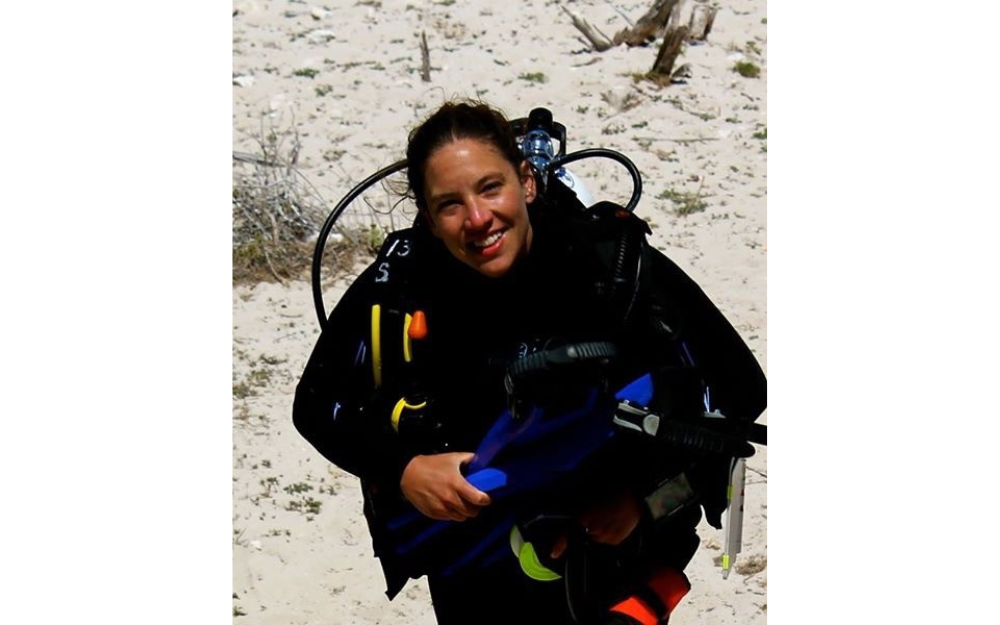
While in Madagascar, she worked on community-led marine management projects, helping collect data to support local conservation efforts.
"What I really enjoyed was being able to engage with people doing really interesting studies in these beautiful parts of the world."
The volunteering experiences reinforced her interest in applied science: work that directly supports environmental management and decision-making.
Rohana's volunteering at the National Zoo and Aquarium in Canberra led to her securing a permanent position as an aquarist and reptile keeper.
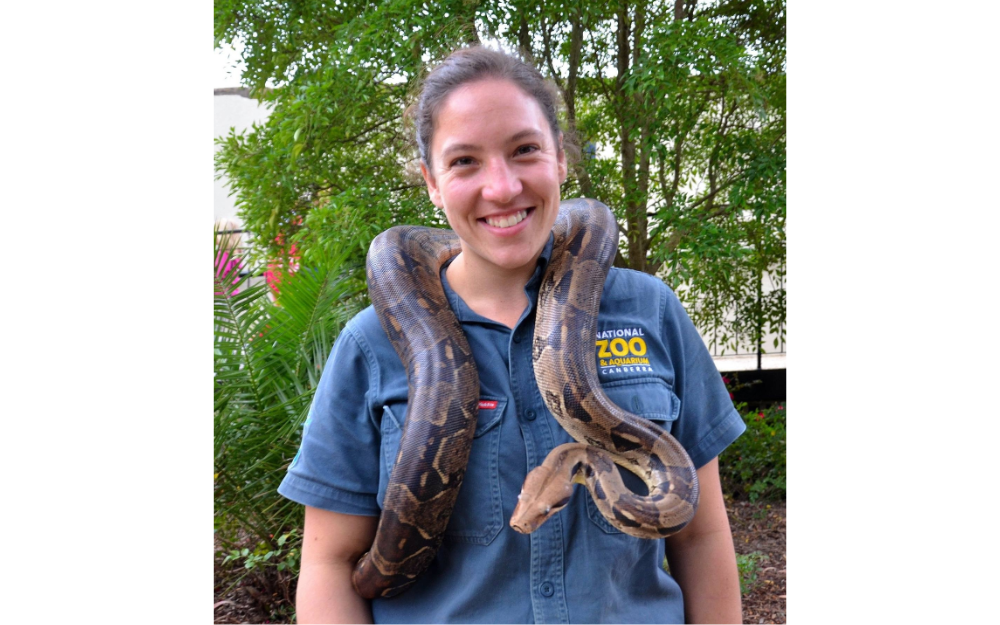
"During that time, one of the things I really enjoyed was when they closed the aquarium for renovations. As a result of that, I was able to be part of the rebuilding of the aquarium which included developing new displays, and new aquarium tanks around themes I was interested in.
"It was also allowing me to put my interest in science communication and education to a really functional use."
The experience had her well-placed to thrive in her next adventure in Townsville when she began her Masters at James Cook University.
While completing her Masters, Rohana worked as an aquarist at the Great Barrier Reef Aquarium (then ReefHQ).
"It was really interesting to bring the skills that I had learned from the National Zoo and Aquarium and learn some entirely different things. Sometimes that was about different types of aquarium systems, and different animals that we were caring for. And sometimes it was about how we communicate with the public and how we do our education delivery."
Her role also included spending time in the turtle hospital, where sick and injured turtles were rehabilitated before being released back into the wild.
"The turtle hospital was super interesting - being at the forefront of helping to care for turtles."
One case in particular stayed with her.
"There was a big female green turtle named Debbie. She had suffered an almost complete loss of her shell and the scutes across her back, which can happen when turtles are floating too long and become sunburned.
"She was with us for quite a long time, and just by giving her a good diet and space to recover, she was able to be released. It's fascinating to watch that recovery process."
Seeing turtles return to the ocean was one of the more rewarding parts of the job.
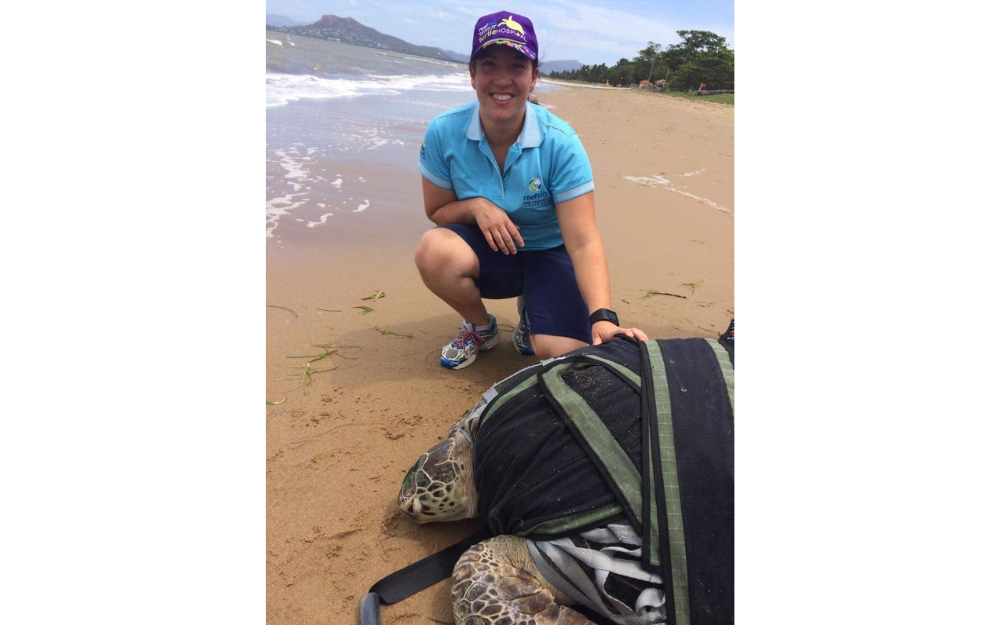
"It's really rewarding to see turtles being released, particularly those large female turtles, as they're able to lay hundreds of eggs in a season.
"You hope there's impact in that kind of release."
After two years at the Aquarium, Rohana joined the Reef Authority as an Assessment Officer.
Now, Rohana has worked across many roles over her almost eight-year tenure.
"The Reef Authority was attractive to me because it was applied science.
"I found my different parts in that along the way, from working in permits, to science for management, to the Outlook Report, and now where I am today in synthesis and reporting."
Rohana played a key role in delivering the Great Barrier Reef Outlook Report 2024 , which brings together a wide range of scientific information to assess the health of the Great Barrier Reef and the pressures it faces.
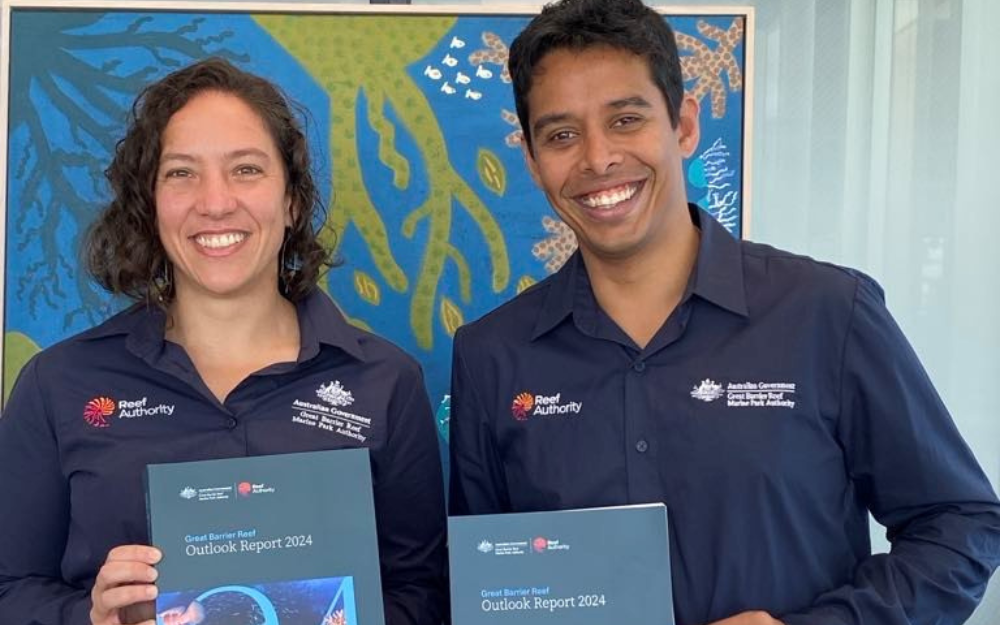
"It was a big project with a small team.
"It is a science communication exercise. We worked very closely with researchers to understand their expertise. We then had to package that up and present the science in a way that is accessible for the general public and decision makers.
"The Outlook Report was the perfect culmination of a lot of my different skills that I'd learned along the way."
Now working as Assistant Director: Synthesis and Reporting, Rohana continues to sit at the intersection of science, communication and decision-making.
"The role that I'm in is about finding different ways to bring knowledge, data and information to the fingertips of the people that need it in the agency.
"That can be in many different forms - an eight-page report like the Reef Snapshot , a dashboard on our Reef Knowledge System , or providing advice in a working group.
"It helps in supporting those in the agency that are involved in decision-making."
Her work reflects a broader principle: that science has the most impact when it is understood and used. And in that way, Rohana hopes to make a difference.
"Being able to protect something for the future is what keeps me showing up each day."


