The recent shark bite incident at Coogee Beach has reignited debate about how Australia manages sharks along its coastline. While calls for shark culling often follow these events, the science increasingly points towards smarter ways to reduce risk without harming the marine ecosystems we all value.
As ocean lovers, surfers and scientists who spend much of our lives in and around the water, shark bite incidents hit close to home. We understand the community's heightened fear. Rather than revisiting the debate around shark culling, we want to highlight where the science is heading and why new research is pointing towards more effective ways of reducing risk while protecting the health of our oceans.
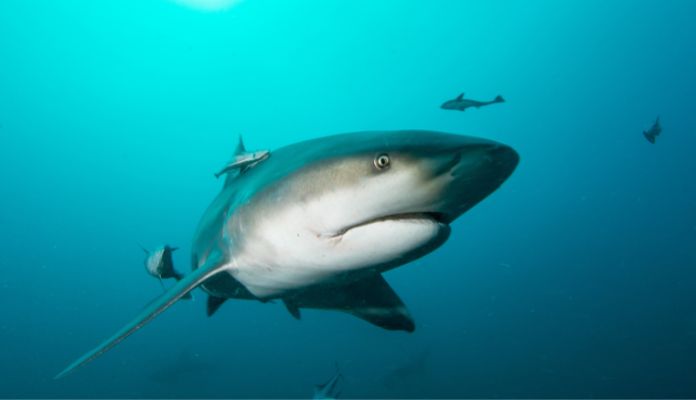
Ocean conditions are changing where sharks are found on the Australian coastline.
What the science says about shark bite occurrence
There is currently no scientific evidence that shark bite incidents are being driven by increasing shark numbers.
Research suggests the breeding population of white sharks along Australia's east coast has remained relatively stable in recent years . In fact, recent genetic studies estimate there are only around 500 breeding white sharks in Australian waters , highlighting how vulnerable this species could be to population decline if lethal control measures were widely adopted.
Instead, environmental factors such as water temperature and prey availability appear to play a major role in determining where sharks are found . As ocean conditions change, sharks may spend more time in areas used by swimmers, surfers and divers, increasing the likelihood of encounters.
In other words, changing shark distribution, rather than increasing shark numbers, may help explain why shark interactions are becoming more common.
Why lethal measures aren't the answer
Australia has relied on shark nets and other lethal control measures for decades, yet shark bite incidents still occur at beaches where these programs operate.
Importantly, shark nets are not barriers that prevent sharks from reaching beaches. Instead, they entangle a wide range of marine life, including dolphins, turtles, rays, whales and non-target shark species.
There is also little scientific evidence that reducing shark numbers provides a lasting solution to shark bite risk. Many of the species involved in serious incidents are highly mobile, meaning sharks removed from one area can simply be replaced by others moving through the region.
At the same time, sharks play a critical role in maintaining healthy marine ecosystems. They grow slowly, mature late and produce relatively few offspring, making them particularly vulnerable to population decline.
Healthy oceans need healthy shark populations. Losing them would have consequences far beyond shoreline safety.
The technologies that actually work
A suite of new technologies has emerged in recent years that can genuinely improve ocean safety.
One of the most visible examples is drone surveillance. Around 80 beaches across Australia now use drone patrols to monitor for sharks and provide real-time information to beachgoers and lifeguards. Studies have shown drones can reliably detect sharks under a range of conditions.
The main limitation is coverage . Drones cannot monitor every beach simultaneously and require trained operators. However, expanding drone surveillance and improving automated shark detection systems represents an important and achievable step towards safer beaches.
Personal shark deterrents offer another tool that allows ocean users to take risk reduction into their own hands. However, effectiveness varies considerably between products.
When choosing a deterrent, look for devices that have been independently tested and evaluated in peer-reviewed scientific journals rather than relying solely on marketing claims.
It is also important to remember that different shark species respond differently to deterrents. A product that works well on one species may be less effective on another. Ideally, deterrents should be tested against white, tiger and bull sharks, the three species associated with most serious shark bites in Australia.
The Western Australian Government's shark deterrent rebate scheme provides a useful guide to products supported by scientific evidence. Among the available options, electronic deterrents that emit strong electric pulses are among the most rigorously tested and have been shown to reduce interactions across multiple shark species .
Other emerging technologies include bite-resistant wetsuit materials designed to provide additional protection should a bite occur.
A new approach: changing what sharks see

An example of a surfboard with LED lighting. Picture: Supplied
Our research explores the use of LED lighting to reduce white shark bites on surfers.
The idea starts with a simple question: what does a surfer look like to a white shark?
White sharks are visual hunters that often attack from below. Viewed from beneath, a surfer on a board can resemble natural prey such as a seal . By fitting high-intensity LEDs to the underside of a surfboard in carefully designed patterns, we can alter that silhouette and remove a key visual trigger.
In controlled field trials, white sharks stopped attacking seal-shaped decoys fitted with the lighting system . These findings, published in peer-reviewed journals, demonstrate how a better understanding of shark behaviour and sensory biology can be used to develop non-lethal technologies that reduce bite risk.
We are now working to bring this technology to market through Kraken Systems, a Macquarie University spin-off and social enterprise co-founded with world-renowned surfboard shaper Nev Hyman. Supported by the Taronga Hatch accelerator and the Macquarie University Incubator, the project aims to translate scientific research into a practical solution that improves surfer safety without harming marine life.
Importantly, a portion of all profits will be returned directly to shark research, helping fund the next generation of ocean-safety innovations.
What you can do right now
Technology works best when combined with smart behaviour in the water. Evidence-based ways to reduce risk include:
- Swim between the flags at patrolled beaches.
- Never swim alone.
- Avoid the water around dawn and dusk when shark activity is generally higher.
- Stay away from areas used by recreational or commercial fishers.
- Avoid river mouths, estuaries and murky water, particularly after heavy rainfall.
- Leave the water if large schools of fish are present.
- Check the SharkSmart app for recent sightings of white, tiger and bull sharks in your area.
Living safely alongside sharks
A greater understanding of how and why shark encounters occur is driving better technology and more effective prevention strategies.
Early warning systems, personal deterrents and continued research into shark behaviour all have a role to play. Shark bites will never be eliminated entirely, but science is giving us increasingly effective tools to reduce risk while protecting the marine ecosystems that make Australia's coastline unique.
The challenge is not choosing between people and sharks. It is using evidence to develop solutions that keep both safe.