
In addition to shrinking and regrowing, shrew skulls change shape with the seasons.
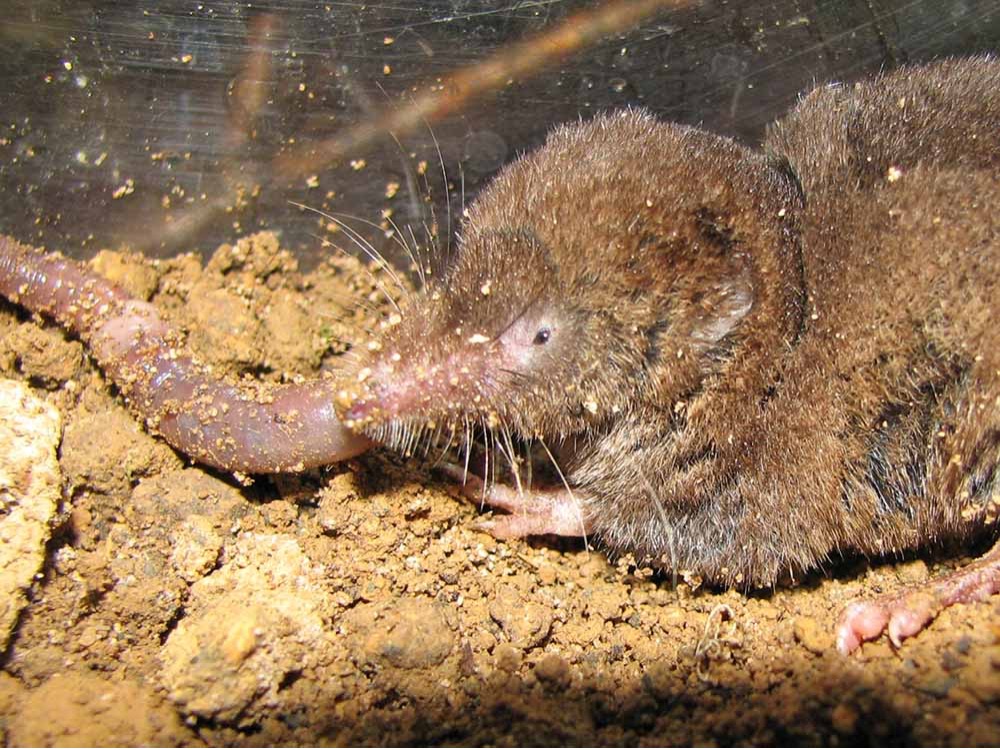
Winter is difficult for small mammals. They have to maintain their body temperature despite the cold and scarcity of food. One response that helps many species is seasonal shrinking, with their skull and other body parts becoming about 20% smaller and then regrowing in spring. But the full story is more complicated. According to new research led by Hokkaido University, the skull doesn't simply shrink; it remodels itself, changing shape with the seasons.
First identified in shrews about 70 years ago, this seasonal, reversible shrinkage is known as Dehnel's phenomenon. Since then, researchers have observed Dehnel's phenomenon in moles, voles, weasels, and other small mammals. Faced with the energetic challenges of winter, these animals shrink their skulls and several internal organs, including their heart, liver, and kidneys. Although Dehnel's phenomenon has been observed in some small mammals, scientists still don't understand how it happens or how widespread the phenomenon is.
To get a better picture of what's happening, a team led by Dr. Satoshi Ohdachi from Hokkaido University examined 136 long-clawed shrew (Sorex unguiculatus) specimens from a collection at the University's Botanic Garden. The project built on the master's thesis of Yukina Suwa, who is also one of the study's authors, and was subsequently developed through additional analyses conducted by Dr. Yugo Ikeda of Toyo University in collaboration with Dr. Ohdachi. The team measured body and skull weight, together with 14 cranial and mandibular traits. They also photographed the skulls from different angles and used morphometric analysis to quantify the shapes.
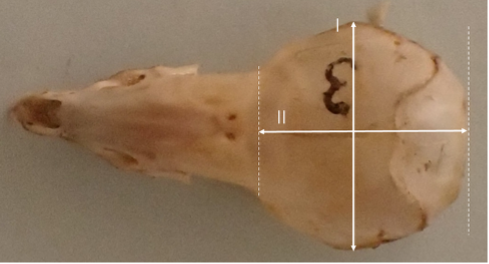
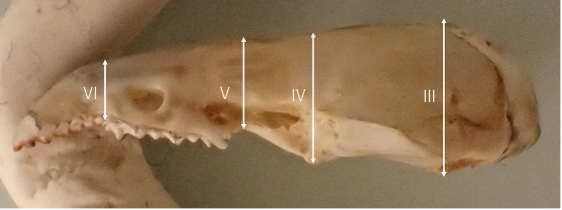
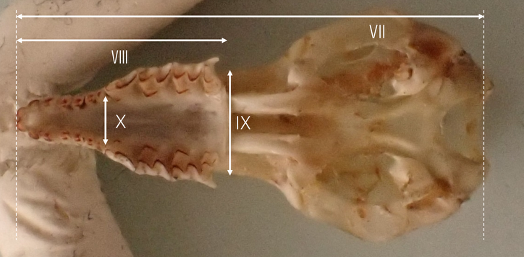
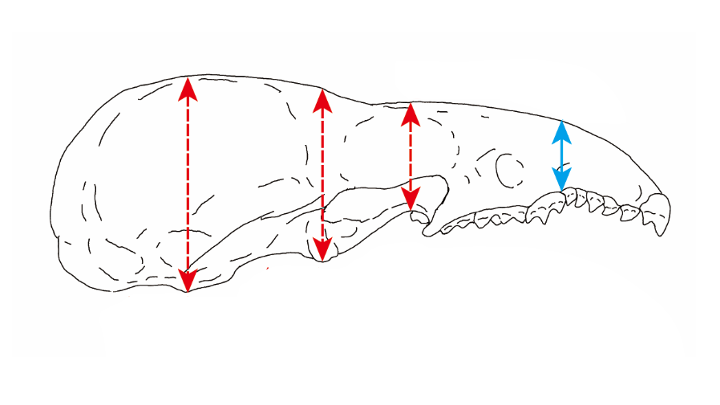
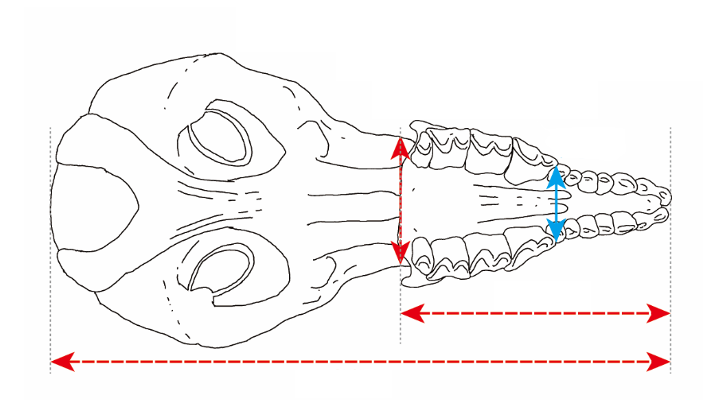
Photographs and schematic illustrations of shrew skulls. (Photos and illustrations: Satoshi Ohdachi)
"By combining these approaches, we could examine not only whether the skull became larger or smaller, but also how different parts of the skull changed in relation to one another throughout the year," explains Ohdachi. "We expected to find the classical Dehnel's pattern, but we found something unexpected. While the braincase shrinks in winter, the rostrum-the front part of the skull containing the nasal region-actually grows larger, and then shrinks back again in spring. Different parts of the skull are being remodeled in different, and sometimes opposite, directions depending on the season."
The team called this pattern the "reverse Dehnel's phenomenon" because some parts of the skull, such as the nasal region, grow rather than shrink. They don't yet know why the skull changes shape in these ways, though they speculate that it could improve heat exchange and help keep the brain warm. In future research, they plan to test that hypothesis and investigate the physiological, cellular, and developmental changes underlying the Dehnel's and reverse Dehnel's phenomena. They also want to look for Dehnel's and reverse Dehnel's phenomena in other shrew species in Hokkaido and more broadly, with the hope that comparative studies will uncover general patterns.
Eventually, understanding the mechanisms and regulation of these processes could provide important insights into tissue plasticity, neuroscience, and biomedical research.

Research group that led the study. From left to right: Yugo Ikeda, Yukina Suwa, and Satoshi D. Ohdachi.
Original article:
Ikeda et al., Dehnel's phenomenon is not a simple reduction of size: seasonal change in skull shape of the long-clawed shrew (Soricidae, Mammalia). Proceedings of the Royal Society B: Biological Sciences. 2026.
DOI: 10.1098/rspb.2026.0244
Funding:
This work was partly supported by the Japan Society for the Promotion of Science (JSPS) KAKENHI (JP24KJ0040).


