
Scientists at Lawrence Berkeley National Laboratory (Berkeley Lab) have developed a machine learning tool that can detect and estimate past radiation exposure using the information in a standard complete blood count, or CBC, one of the most routinely performed clinical blood tests.
Rapidly identifying and quantifying exposure is essential for determining what treatments or monitoring are necessary for people who might come into contact with radiation. This process, called biodosimetry, uses measurable biological changes to determine whether exposure occurred and, when possible, estimate the absorbed dose. However, existing methods involve time-intensive processes that can only be performed by specialized laboratories, and the results can be inconclusive or hard to interpret - especially for cases of low-dose exposure, which are more common and more likely to be overlooked. A CBC-based model could therefore serve as an accessible initial screening tool.
"We were motivated by a simple question: Do routine blood tests retain information about a person's prior radiation exposure?" said Jamie Inman, a research scientist in Berkeley Lab's Biological Systems and Engineering (BSE) Division who co-led the study with Jian-Hua Mao and Hang Chang. "What surprised us was how much information the CBC patterns retained across a wide range of doses and times after exposure. These findings suggest that CBC data could contribute to rapid exposure screening, although confirmatory testing would still be needed."
Chang, a computational staff scientist in BSE, used a type of machine learning called unsupervised sparse representation learning to find signals within CBC data that aren't apparent from examining individual measurements alone.
"We were motivated by a simple question: Do routine blood tests retain information about a person's prior radiation exposure?" - Jamie Inman
The resulting model, named "Sparse CBC," is now available open source on Zenodo, and the team are optimistic it can be adapted for use in humans. A study about the model was recently published in Nature's Communications Medicine journal.
"There are complex tests we can use to check for physical damage to DNA, but we wanted to know whether a standard CBC contains biomarkers that could indicate a history of radiation exposure, including low-dose exposure or exposure that occurred months earlier," said Mao, a BSE geneticist senior scientist.
"Studies have looked at CBC parameters, or the ratio of a couple different parameters to try to determine biological changes related to radiation," said Chang. "One of the advantages of our technology is that it can look into the signatures more comprehensively than other, more mainstream machine learning tools, and it also shows better translational power to make predictions when applied to different groups."
The expertise in generating precise radiation exposures for the training data came from co-authors Kei Nakamura and Lieselotte Obst-Huebl, an applied physicist and research scientist, respectively, in Berkeley Lab's Accelerator Technology & Applied Physics (ATAP) Division.
"For this study, we established and characterized a low-dose radiation environment, and developed refined procedures to accurately quantify doses even as they approached the lower detection limits of standard methods," said Obst-Huebl.
The researchers developed and validated Sparse CBC using retrospective data from 1,151 male and female mice from two commonly used laboratory strains. The animals received sham irradiation or total-body X-ray doses ranging from 0.05 to 4 grays (Gy). A dose of 0.05 Gy is equivalent to the cumulative yearly dose limit for workers in the U.S. who face potential exposure, such as medical technicians and nuclear power workers. This amount and below is considered safe, whereas an exposure of 4 Gy represents an acute exposure capable of causing significant systemic injury. Blood was collected from one to 150 days after exposure.
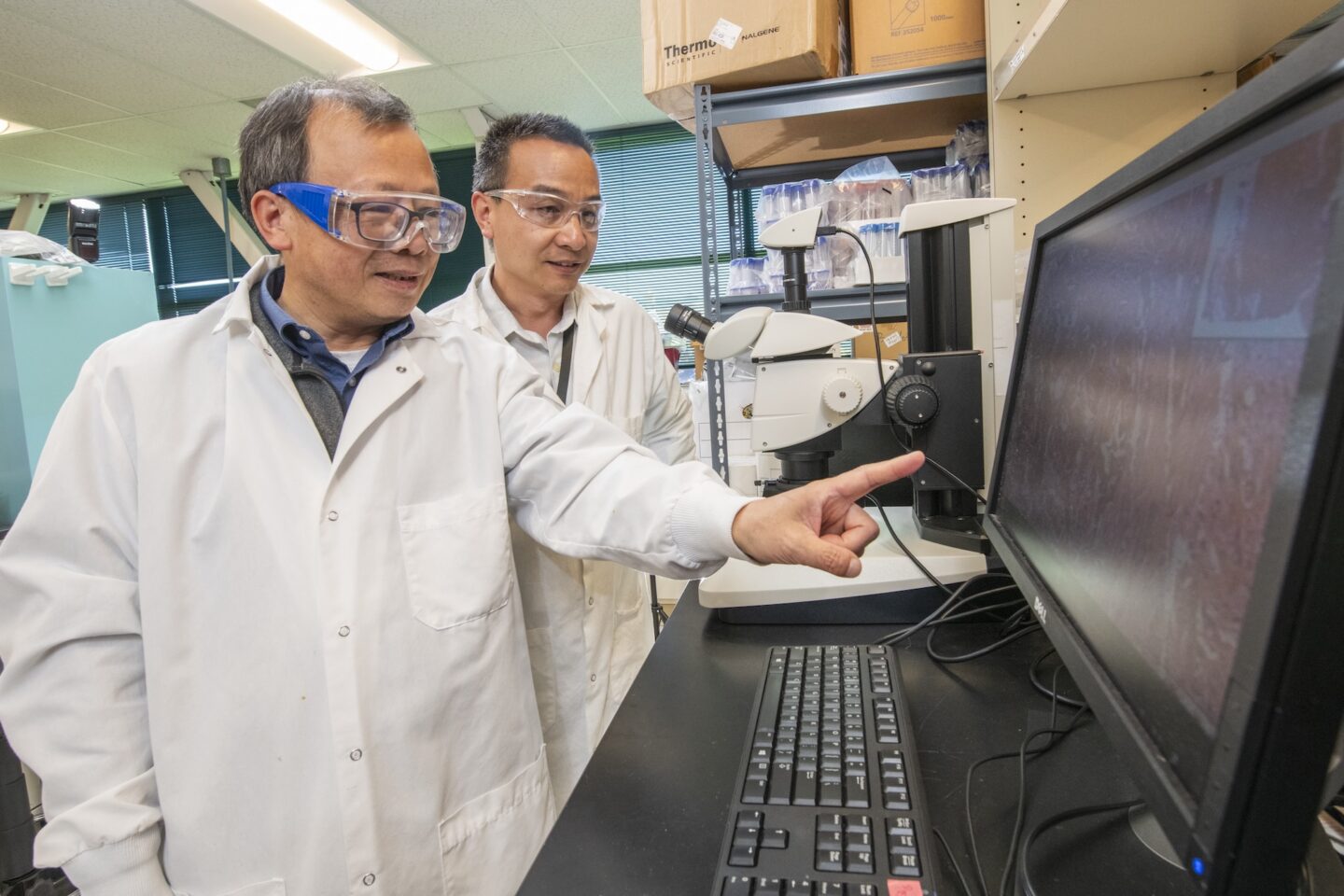
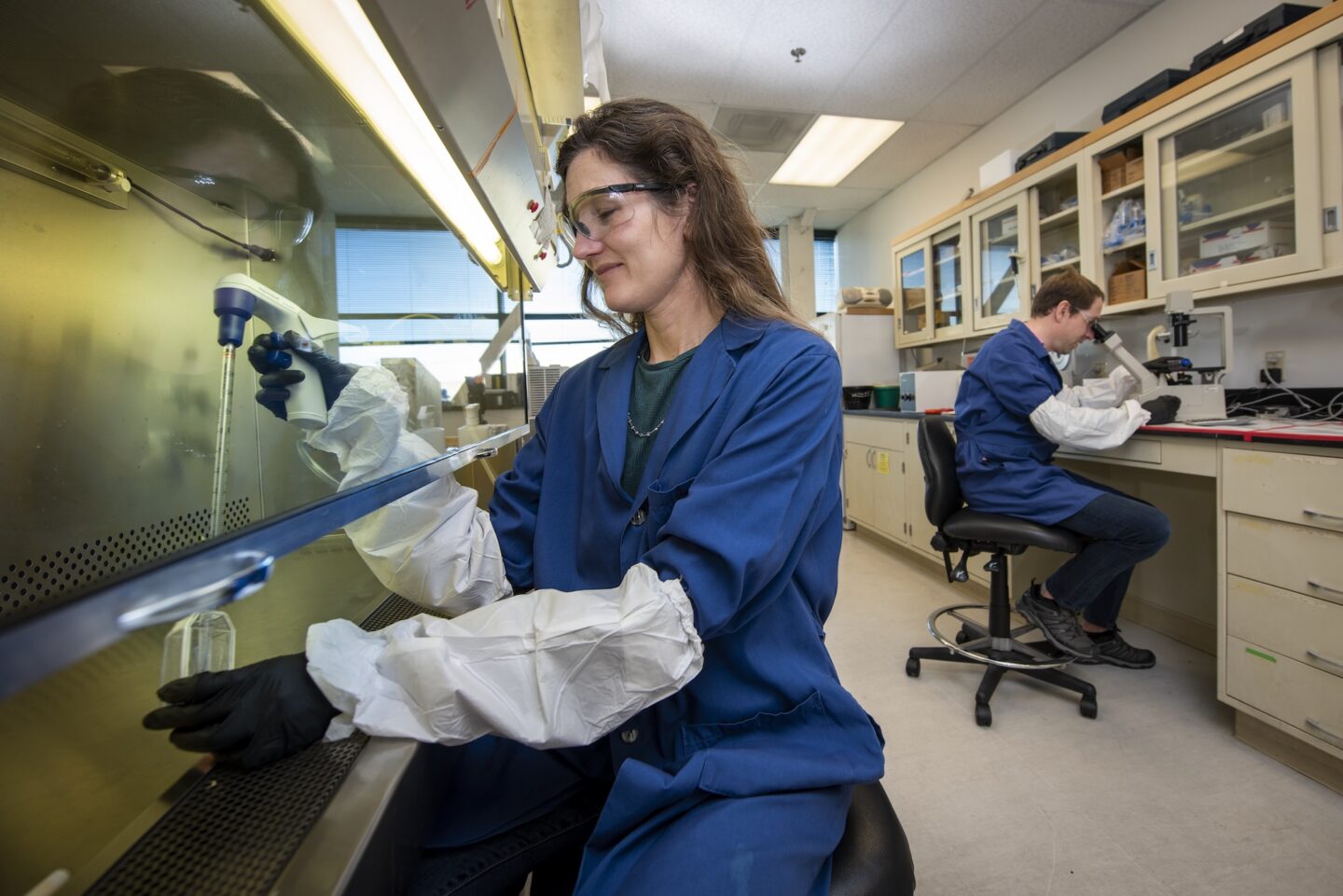
The model was then evaluated under double-blind conditions using 431 additional mice from the same two strains. Sparse CBC showed high accuracy for predicting the amount of radiation a mouse had experienced.
A major challenge in biodosimetry has been developing a standardized approach that will work for anyone. Past events and decades of research show that two people can have wildly varying responses to the same dose of radiation. Genetic background is an important contributor to this variability, along with factors such as age, health status, and the time elapsed since exposure.
To examine this challenge directly, the team next tested the model using previously published CBC results from a population of mice that were engineered to mirror the genetic diversity of humans. These specially curated mouse strains capture a broad range of genetic variation and allow researchers to investigate how genetic background influences biological responses. The team has previously used genetically diverse mouse populations to identify genetic factors associated with complex health outcomes, including stomach cancer and responses to environmental exposures.
They found the model maintained a good predictive ability, but the performance was lower and varied across mouse strains - indicating, as predicted, that genetic background changes the radiation response signature present in CBC data. The scientists note that future models building off Sparse CBC should use training data that incorporates genetic diversity as much as possible and includes samples taken at a range of post-exposure time points. This will help improve generalizability and facilitate translation to heterogeneous human populations.
"Studying radiation exposure in humans is very tough because there are so many confounding factors," said Mao. "But if we want findings from animal studies to translate to people, we need models that capture meaningful genetic diversity. Genetically diverse mouse populations allow us to examine how that variation influences both radiation response and the accuracy of our predictions."
The project to develop Sparse CBC was supported by the Intelligence Advanced Research Projects Activity (IARPA), an organization that funds collaborative research aimed at solving challenges faced by the U.S. intelligence community that are unlikely to be solved by industry. IARPA's open challenge calls have resulted in a variety of unique, unclassified technologies that also have civilian applications. In 2022, IARPA established the Targeted Evaluation of Ionizing Radiation Exposure (TEI-REX) program with the goal of developing low-dose biodosimetry approaches that could be used for field agents. The Berkeley Lab team won funding for this work thanks to their longstanding experience in both studying the effects of radiation and using particle accelerators for health research.
"An important part of this project was to develop something that is non-invasive. Our method is very simple to apply, and if this can be adopted, I think the impact could be huge," said Chang. "We would also love to do future clinical collaborations to validate this approach for human use."


