
South American National Meteorological and Hydrological Services (NMHSs) are working to modernize their observing networks, harmonize meteorological and hydrological observations, and strengthen the exchange of data across the region.
These priorities were at the center of two regional training activities held in June 2026 in Argentina, bringing together specialists to share experiences and strengthen technical capacities.
The training courses, organized by the National Meteorological Service of Argentina (SMN), with the support of the Regional Climate Centre for Southern South America (CRC-SAS), the ENANDES+ project, the WMO Regional Training Centre in Argentina and MeteoSwiss, addressed key aspects of consolidating a Regional Basic Observing Network (RBON). They also explored the evolution of observing networks, from the transition from conventional to automatic stations to the efficient management of growing volumes of meteorological and climate data.
Representatives from Argentina, Bolivia, Brazil, Chile, Colombia, Ecuador, Spain, Paraguay, Peru and Uruguay shared progress, challenges and lessons learned from the modernization processes undertaken by their respective meteorological services.
Perspectives from South American NMHSs
María de los Milagros Skansi, Coordinator of the CRC-SAS, highlighted the value of creating regional platforms for coordination and exchange, strengthening the meteorological and climate information that supports decision-making:
"Weather observations are often one of the fundamental pillars underpinning forecasts, early warning systems and climate services. Creating these spaces for exchange and discussion is ultimately a way of strengthening decision-making for the benefit of our communities."
The availability of high-quality observations is one of the fundamental pillars of meteorological, climate and hydrological services. Against a backdrop of growing demand for information to support risk management, climate change adaptation and decision-making across multiple sectors, countries in the region face the challenge of strengthening their observing systems and ensuring the sustainability of their networks.
For Jorge Chira, representative of the National Meteorology and Hydrology Service of Peru (SENAMHI), the activities provided an opportunity to bring together WMO experts and WIGOS focal points to harmonize technical criteria and modernize regional observing infrastructure.
"Although the implementation of the RBON represents a clear financial challenge for South American meteorological services, its consolidation will be a key tool in supporting the United Nations' global initiative, Early Warnings for All (EW4All)."
He also highlighted that the capacity assessment made it possible to identify operational gaps and identify droughts and floods as the region's main hazards.
Kris Correa, Deputy Director of the Data Management Office at SENAMHI, noted that the experience had enabled her to identify common challenges and opportunities for regional cooperation.
She emphasized the importance of network automation to meet the growing demands for data exchange and the provision of climate services.
"The transition towards automatic networks is a necessary and inevitable process to respond to the growing demand for meteorological and climate information, both in the context of WMO-promoted international data exchange commitments and the needs of our public, private, academic and sectoral users."
Jorge González, Coordinator of the Operational Planning Group within the Hydrology Directorate of Colombia's Institute of Hydrology, Meteorology and Environmental Studies (IDEAM), stated:
"The workshops provided an opportunity to put the current state of climate monitoring across the region into perspective and to coordinate joint efforts to reduce vulnerability to extreme climate-related events. The design of the Regional Basic Observing Network (RBON) will make it possible to understand atmospheric behaviour across the region in an integrated manner."
Representatives from Chile, Bolivia and Ecuador further highlighted the value of regional cooperation in sharing technical expertise, practical solutions and lessons learned to support the modernization of observing networks and strengthen national capacities. Discussions emphasized the need to harmonize standards, improve data management and exchange, identify observational gaps, and support more effective planning and implementation of national observing networks.
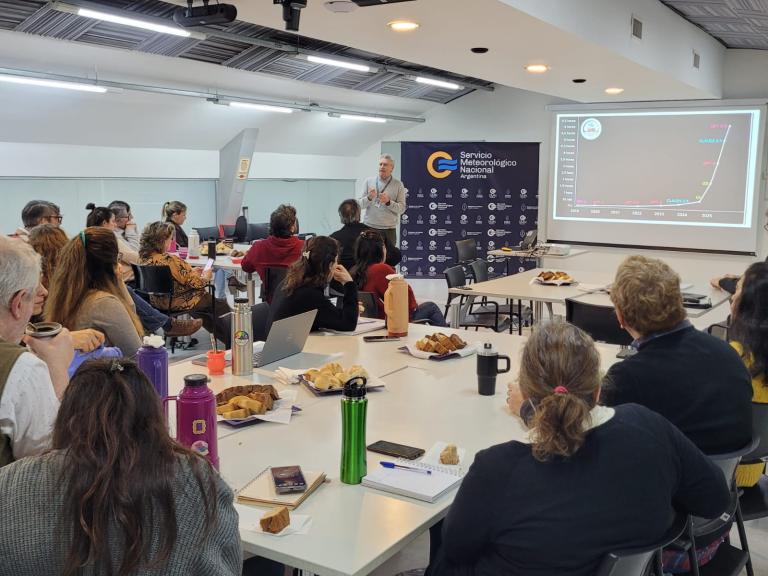
They also underscored the importance of addressing shared regional challenges, such as drought, and learning from countries' experiences in transitioning from conventional to automatic stations. These efforts will contribute to the development of a common roadmap for RBON implementation, helping to ensure the sustainability, interoperability and operational effectiveness of observing systems. They will also improve the availability of timely and reliable hydrometeorological information to support decision-making and early warning systems across South America.
Building more sustainable and interoperable observing networks
Among the key messages emerging from the activities was the importance of standardizing observations to ensure that all countries measure and share information in accordance with the same international standards. Participants also stressed that technological modernization must be accompanied by appropriate institutional planning, sustainable maintenance strategies and efficient data management.
They further agreed on the importance of preserving long-term climate stations to ensure the continuity of historical records, which are essential for monitoring climate variability and climate change.
The training courses form part of broader regional efforts to strengthen the capacities of National Meteorological and Hydrological Services and promote technical cooperation among South American countries, in line with the priorities of the World Meteorological Organization.
About ENANDES+
The ENANDES+ project aims to strengthen climate resilience in Argentina, Bolivia, Colombia, Chile, Ecuador and Peru by enhancing the capacities of their climate services to provide weather, water and climate information. Its purpose is to contribute to improved climate-related socio-economic outcomes and reduce losses caused by hydrometeorological hazards.
The project also seeks to promote and strengthen peer-to-peer cooperation across the region (South-South Cooperation), within the framework of NUREX.
ENANDES+ is funded by the Swiss Agency for Development and Cooperation (SDC) and implemented by the World Meteorological Organization.


