
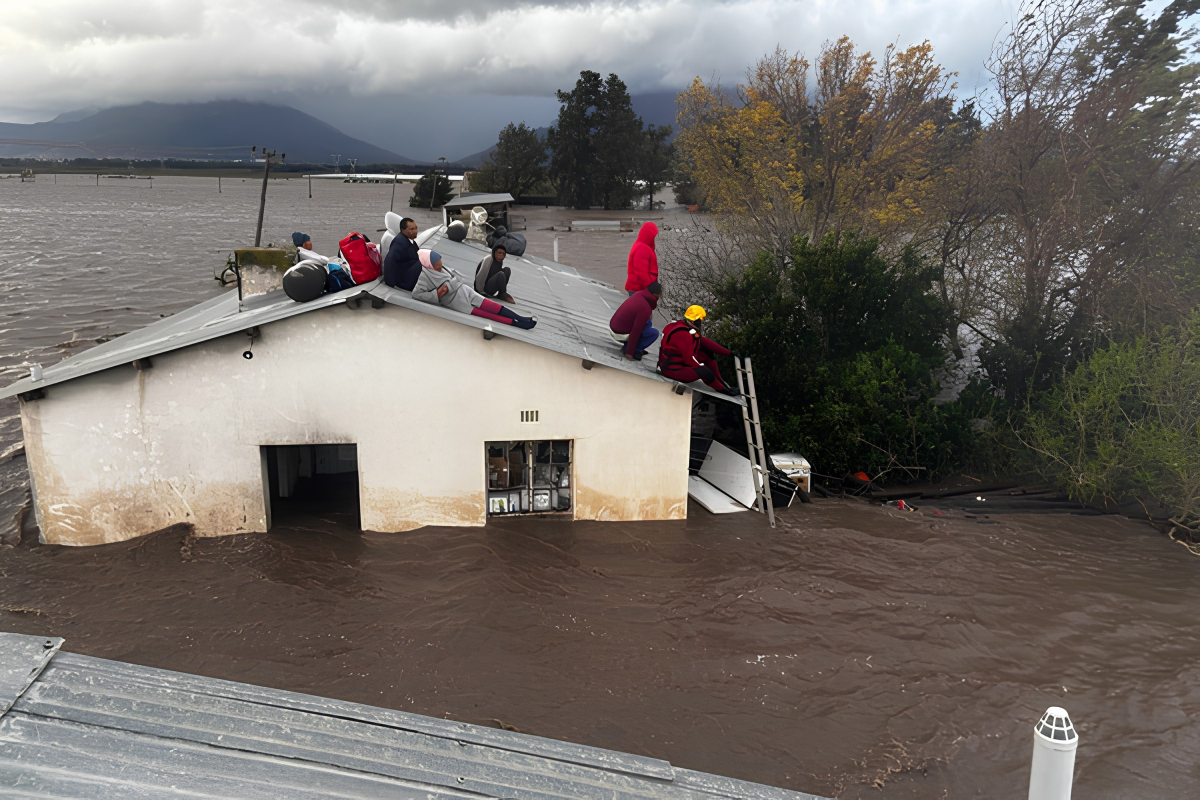
In recent weeks, severe winter storms tore through parts of my country, claiming at least 10 lives and devastating the lives of many of my fellow South Africans already living on the margins. From the flooded streets of major cities like Cape Town to informal and rural settlements left submerged under rising waters, thousands of families have watched their homes, belongings and any sense of security washed away. I watched the weather forecast closely as disaster unfurled in the provinces around mine; I wondered when the storm would hit us too.
 (@greenpeace)
Days of relentless rain, powerful winds and even snowfall battered provinces including the Western Cape, Eastern Cape, Free State and Mpumalanga. It forced our government to declare a national disaster for the second time this year. Schools closed, roads collapsed and entire communities were left stranded as floodwaters exposed the deep inequalities that continue to shape who suffers most during climate crises. For many, particularly those living in informal settlements and rural communities, extreme weather is not simply a natural disaster, it is a brutal reminder of how poverty and climate change collide to place the most vulnerable directly in harm's way.
The extent of 2026 floods in Southern Africa
In the first quarter alone, heavy rains and devastating floods swept across Southern Africa, exposing our growing vulnerability to climate-driven disasters. Millions of people across my country and our neighbours (Madagascar, Malawi, Mozambique, South Africa, Zambia and Zimbabwe) have been affected by severe flooding. Since December 2025, La Niña-induced heavy rainfall has impacted more than 2.36 million people.
Two successive cyclones, Fytia and Gezani, tore through Madagascar and Mozambique, leaving behind destruction that claimed lives, displaced families and destroyed critical infrastructure and crops. In Mozambique alone, nearly 1.3 million people now require humanitarian assistance to cope with the subsequent displacement, healthcare crisis and food shortages. The increasing severity of climate extremes is no longer a distant warning, it is a lived reality for communities throughout the region.
Food insecurity and malnutrition on the rise
As climate shocks intensify, food insecurity and malnutrition continue to tighten their grip on the region. The devastating imagery of submerged crops in South Africa's agricultural provinces frightens me. I am well aware how floodwaters destroyed crops and disrupted already fragile food systems earlier this year, leaving behind numbers that are hard to read: an estimated 13.2 million people acutely food insecure and around 672,000 children suffering from severe malnutrition by the end of March.
This crisis is unfolding within a volatile global economic climate that threatens tofurther deepen existing inequalities. Continued illegal attacks by the United States and Israel on Middle Eastern/West Asian countries have driven up oil prices; weakening exchange rates and limiting access to fertilisers ahead of the next planting season. For many Southern African countries already struggling with poverty and unemployment, these pressures could push basic food access even further out of reach. As it is, food costs since the beginning of this year have increased in my country at a rate double that of other first quarter inflation in previous years.
Disease outbreaks stretch fragile healthcare systems
On top of this, disease outbreaks are compounding the pressure on already overstretched healthcare systems. Cholera outbreaks continue to spread across Angola and Mozambique, with recent flooding in Mozambique accelerating transmission and worsening sanitation conditions. Since January's floods, it has recorded more than 9,000 cholera cases. We've also noticed a surge in malaria cases due to the heavy rains.
These healthcare issues are exacerbated by further damage to the already failing healthcare infrastructure within the region, particularly in its rural communities. In communities already battling displacement, food shortages and inadequate healthcare infrastructure, the spread of infectious diseases further exposes the deep inequalities shaping the region's experience of the climate crisis. Despite our disproportionate experiences of climate impacts, the region remains underfunded in its response efforts. Of the US$602 million requested for relief operations since January, only a quarter had been received.
Make polluters pay for their climate chaos
Southern Africa stands at the intersection of climate instability, inequality and fragile governance. And while these disasters are often framed as natural tragedies, their devastation is shaped by political choices, economic systems and a global failure to adequately confront the climate crisis.
We need bold new taxes on the profits of the fossil fuel industries exacerbating extreme weather with their climate-wrecking operations. Revenue raised can be used in the Global Majority world, which is struggling to keep up with escalating needs - as these crises are no longer seasonal, but constant. For millions across Southern Africa, survival increasingly depends not only on the strength of communities, but on whether the world is willing to act before the next flood arrives. We demand a fast fair phase out of fossil fuels and we can not allow climate culprits to continue profiting off our suffering.
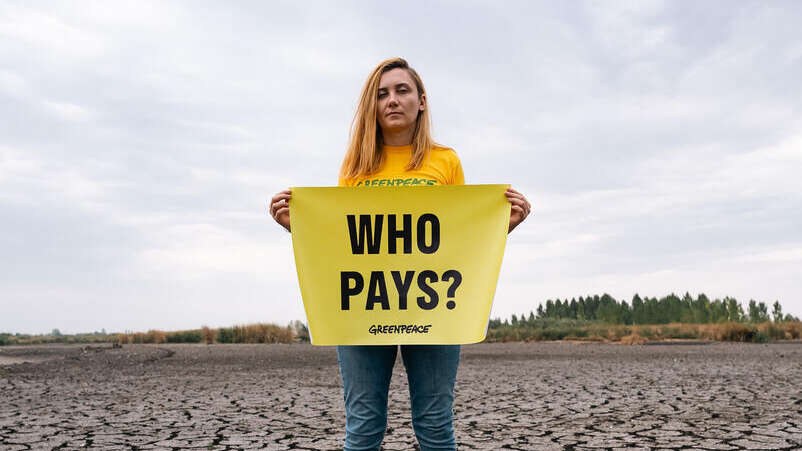
Sign the pact, record your story. Join the global movement to make polluters pay.


