
Key points
- Geopolitical volatility in Middle Eastern oil and gas markets continues to push importing nations to diversify liquid fuel sources and confirm energy security as a long-term climate goal and immediate sovereign necessity.
- No single solution can replace fossil fuels; resilient supply chains require multiple low‑carbon fuel pathways tailored to different industrial and transport uses.
- Australia's extensive natural resources and deep technical expertise position it to scale domestic low‑carbon fuels, cutting industrial emissions and reducing the impact of global supply risks.
While the United States and Iran work to reopen the Strait of Hormuz and ease the blockade on Iranian crude, months of severe disruption – on top of years of supply impacts from the Ukrainian war – exposed the vulnerability of traditional energy routes and adequacy of global fuel inventories.
Accordingly, many countries are reassessing their long-term energy strategies with an eye to building more robust domestic liquid fuel sources and supply chains.
As the International Energy Agency's 2026 World Energy Investment Report notes, shifting risk perceptions among fuel importing countries is leading to a focus on domestic resource development over reliance on imports, or a complete shift away from reliance on traditional fuels by pushing harder for alternatives.
Nowhere is this shift more critical than in Australia which is highly vulnerable to import disruptions yet uniquely equipped to address the challenge.
For a nation that imports more than 50 billion litres of petroleum products annually to keep moving and growing, the implications are considerable. Sourcing, developing, refining and supplying any new domestic liquid fuel source to commercial scale will require significant investment and time.
As public interest in fuel supply grows, the conversation frequently focuses on choosing the existing or a single 'best' technology pathway, rather than understanding the full range of options available and how different approaches make sense under different circumstances.
In this context the pursuit of alternative fuels is accelerating, driven by the imperatives of emission reductions and sovereign energy security.
More silver buckshot than silver bullet: A portfolio approach to alternative fuels
While Australia's rapid electrification is critical for net zero targets and resilience across Australia's energy system, it cannot solve the entire equation.
Hard-to-abate sectors – including aviation, heavy industry, and agriculture and mining – face challenges relating to the use of electricity at the scale and temperatures required. Major fuel users require scalable and affordable alternative fuels to lower emissions while safeguarding operational continuity.
According to CSIRO's energy technologies research director, Dr Daniel Roberts , supporting and enabling the alternative fuel transition requires a shift in mindset.
"There is no such thing as a single solution approach for a challenge of this magnitude," Dr Roberts explains.
"Ultimately we will rely on a balanced portfolio of feedstocks and technologies, with each being evaluated on a case-by-case basis from the perspectives of scale, deployment time, feedstock availability, and cost."
CSIRO is providing the new technologies, relevant expertise and collaboration needed to de-risk, scale-up and integrate an alternative fuel portfolio approach across two distinct primary pathways: Biomass-derived fuels and Power-to-Liquids (PtL or eFuels).

Biomass-derived fuels (the near-term horizon)
| The process | The raw material | The product | Maturity and CSIRO's focus |
|---|---|---|---|
| Hydro-processed Esters and Fatty Acids (HEFA) | Natural oils and fats like canola, tallow, used cooking oil | Hydrogen refining results in products such as renewable diesel and decarbonised jet fuel (SAF). | Commercially readyMain constraint is raw material scale. Focus on expanding supply, lowering costs, supporting National Bioenergy strategy. |
| Biomass and waste gasification (biomass-to-X) | Woody biomass, agricultural residues, forestry and urban waste | Gasification of feedstock and subsequent chemical processes creates fuels such as diesel, gasoline, methane or methanol. | Technically proven but complex at scaleReducing scale-up risks, testing feedstocks, and supporting industry demonstration projects. |
Power-to-liquids (the scalable future)
| The process | The raw material | The product | Maturity and CSIRO's focus |
|---|---|---|---|
| CO₂ to-methanol and synthetic hydrocarbons | Carbon dioxide and hydrogen | Use of renewable energy converts feedstock into methanol leading to products like synthetic diesel and jet fuel. | Early-stage and emergingAdvancing CO₂ capture, hydrogen production and catalysts to improve efficiency and reduce costs. |
| Renewable ammonia (non-carbon fuels) | Hydrogen and nitrogen | Green hydrogen replaces fossil fuel inputs with the resulting ammonia used as fuel or in fuel cells. | Developing with strong potentialImproving low-carbon production and enabling use in heavy industry, including shipping and mining. |
Pathway 1: Biomass-derived fuels (the near-term horizon)
Biofuel pathways utilise biomass and waste – ranging from agricultural crops to industrial waste – as the primary carbon source. Because some of the technology behind many of these processes is reasonably mature, biofuels represent some of Australia's most immediate opportunities to reduce emissions and improve fuel resilience.
Hydro-processed Esters and Fatty Acids (HEFA)
- The feedstock: Natural oils and fats, primarily oilseed crops like canola, as well as tallow and used cooking oils.
- The process: Refining these natural oils using hydrogen and specialised catalysts to produce fuels with properties very similar to conventional fossil fuels, most commonly renewable diesel and sustainable aviation fuel (SAF).
- Maturity and CSIRO's focus: HEFA is currently the most mature, commercially ready technology available. However, the key challenge is scale. If Australia dedicated its entire national canola crop exclusively to fuel production, it would only satisfy roughly five to 10 per cent of our domestic diesel needs. CSIRO is focused on diversifying sustainable feedstock supply chains, lowering production costs, and partnering with government on the National Bioenergy Feedstock Strategy to maximise crop opportunities without compromising food security.
Biomass and waste gasification (biomass-to-X)

- The feedstock: Woody biomass, agricultural residues, forestry waste, and urban waste such as municipal solid waste.
- The process: Gasification partially oxidises the feedstock to create syngas [a mixture of carbon monoxide, carbon dioxide (CO₂), and hydrogen (H₂)] that can then be converted into fuels such as diesel, gasoline, methane or methanol using established chemical processes like Fischer-Tropsch synthesis.
- Maturity and CSIRO's focus: While gasification is a mature technology at large scale for coal, and at smaller-scales (mostly for power generation) from biomass, adapting it to highly variable biomass and waste streams for fuels production at scale introduces significant technical complexity. CSIRO work at unique gasification research facilities in Brisbane and Perth is focused on reducing technical risks and improving system integration at the industrial-scale required to convert Australian biomass and waste resources into domestically produced low carbon fuels.
Pathway 2: Power-to-Liquids (the scalable future)
Where biomass pathways may help Australia reduce emissions in the near term, they are ultimately constrained by feedstock supply. Power-to-Liquids pathways may eventually offer much greater scalability without the need for a secured supply of biomass feedstock.
In these pathways, feedstocks are CO₂ (captured from point sources, or the ambient air) and H₂ (often created via electrolysis), supported by access to low cost, plentiful renewable electricity.CO2 to-methanol and synthetic hydrocarbons
CO2-to-methanol and synthetic hydrocarbons
- The feedstock: Carbon dioxide and hydrogen.
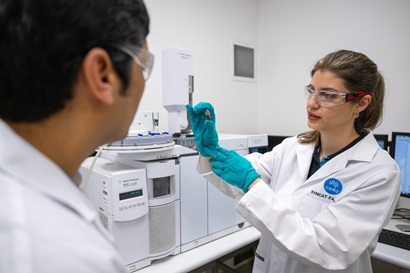
- The process: CO₂ is one of the most chemically stable forms of carbon, meaning significant amounts of energy are required to convert it into useful fuels. Renewable electricity, heat and advanced catalysts are required to drive reactions between CO₂ and H₂, producing methanol or synthetic methane that can then be further refined into e-fuels such as synthetic diesel, jet fuel or other hydrocarbons.
- Maturity and CSIRO's focus: These technologies are being actively developed and optimised. Demonstration and pilot work is underway in CO₂ capture and low carbon hydrogen production, and proof-of-concept stage work is emerging in the integration of these for fuel production. Cost remains a key challenge but given the scale of ongoing work in this space, significant improvements can be expected over time. CSIRO is commercialising CO₂ capture and H₂ production technologies with industry partners and is actively developing next-generation technologies to improve efficiency, exploring novel catalyst designs and the use of plasma to help crack the CO₂ molecule.
Renewable ammonia (non-carbon fuels)
- The feedstock: Hydrogen and nitrogen.
- The process: Ammonia is currently produced using the hundred-year-old Haber Bosch technology . Currently, the hydrogen required for the process is sourced from natural gas. By replacing this with low-emissions hydrogen we can use existing infrastructure and reduce the carbon intensity of ammonia production. Moving away from the Haber-Bosch process, emerging pathways offer distributed production of 'green' ammonia more readily integrated with intermittent renewable energy. Ammonia can be used in modified diesel engines as a fuel, making it an option for shipping, or directly fed into special fuel cells for power generation.
- Maturity and CSIRO's focus: Ammonia contains no carbon, making it a powerful alternative for large diesel engines and other emerging applications. CSIRO is researching both low-carbon synthesis methods and downstream applications. While you likely won't see a passenger car running on ammonia, heavy industrial assets – such as marine shipping vessels and large-scale remote mining diesel generators – can be retrofitted to run on ammonia fuel cells and engines, decoupling heavy industry from global oil supplies.
The reality of 'drop-in' fuels
A critical distinction across these technologies is whether they produce a 'drop-in' fuel: a general description for alternatives that require little-to-no modification of existing engines or infrastructure.
Biomass pathways such as HEFA, or gasification pathways followed by downstream fuel synthesis, can be configured to produce these drop-in replacements.
Methanol can serve as an intermediate feedstock for producing other fuels; and additional processing pathways – such as Methanol-to-Gasoline (MtG) conversion – may allow some synthetic fuels to eventually function as drop-in replacements. The most advanced of these pathways is Methanol-to-Jet (MtJ) , which is currently undergoing certification.

By contrast, directly using synthetic fuels such as pure methanol or ammonia typically require modifications to existing engines and fuel systems.
For sectors such as aviation, drop-in compatibility is a critical requirement, and being able to use renewable diesel is particularly attractive for sectors that have invested significantly in diesel generators and transport systems. Planes and heavy vehicles are big financial outlays that have long lifespans with fleets often having a 40+year turnover.
Retrofitting a commercial aircraft to accommodate a completely different fuel system would require major changes to engines, onboard fuel storage and aircraft certification processes, essentially a new plane. It would also require major airport infrastructure changes in fuel storage and distribution systems. So drop-in replacement fuels provide an alternative for those investments that will take time to be replaced.
"Developing the technology is only half the battle; scaling it requires the entire ecosystem to move together," says Dr Roberts.
"By aligning technology providers, feedstock producers, and end-users on issues like supply security and regional certification, we can build a truly viable, end-to-end value chain for alternative fuels."
Scaling the transition
While existing Australian facilities may be able to increase biofuel production relatively quickly under the right economic conditions, establishing new large-scale production facilities and associated supply chains is likely to take several years. 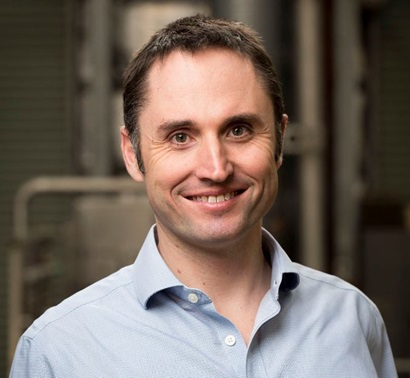
Many of the technologies likely to play a major long-term role – particularly power-to-liquids pathways – still require substantial research, demonstration and cost reduction before they can be deployed at scale.
That means Australia must work across multiple time horizons simultaneously: accelerating technologies that are close to deployment, while continuing to invest in pathways that may take longer to mature.
CSIRO's role spans the entire fuel system, from feedstock production through to lifecycle analysis, techno-economics and industrial integration. Researchers are working across hydrogen, bioenergy, carbon utilisation, agriculture and energy systems to understand how different pathways may contribute to Australia's future fuel mix.
That multidisciplinary approach is increasingly important because alternative fuel systems do not exist in isolation. Decisions about fuel production can directly affect agriculture, land use, water demand, industrial infrastructure, regional supply chains and communities.
"The real strength of CSIRO is that we are a multidisciplinary organisation actively breaking down research silos," Dr Roberts explains. "We approach these challenges with a systematic view."
That whole-of-system approach is increasingly important as Australia attempts to address two challenges at once: reducing emissions while strengthening long-term fuel resilience.
"Every technology has its place and its role," Dr Roberts concludes. "Even the niche ones. It's always about finding the proper use case."


