
New research shows how natural processes shape the development of early cities. An international study, involving Wageningen University & Research, reveals that the ancient city of Napata in present-day Sudan owed its success to a remarkably stable Nile River.
The study was led by researchers from the University of Michigan, in close collaboration with Liz Chamberlain of Wageningen University & Research and Sudanese archaeologists. Napata flourished between around 800 BCE and 100 CE as a major political and cultural centre of the Kushite Empire.
By combining geological and archaeological data, the researchers investigated why this location supported long-term settlement. Their findings show that the Nile remained relatively stable in this region for thousands of years, depositing thick layers of fertile clay and silt. This created a landscape with reduced flood risk while maintaining reliable access to water.
The team collected 26 sediment cores across the Nile valley. Using luminescence dating, they reconstructed up to 12,500 years of river history.
"River landscapes are often composed of sand and mud, with little organic material suitable for radiocarbon dating," says Chamberlain.
"Luminescence dating allows us to directly determine when sediments were last exposed to light, helping us link landscape changes to human activity.""
- Elizabeth Chamberlain
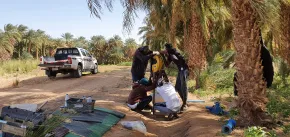
Researchers

Researchers
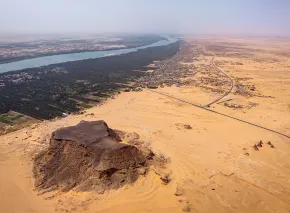
Landscape

Napata
Results
The results show that the Nile initially carved its valley, but around 4,000 years ago it stabilised and began depositing sediment, forming a fertile and relatively secure environment for settlement.
The researchers also point to the role of the Nile's Fourth Cataract. This stretch of rapids and islands likely reduced the river's energy, allowing sediment to accumulate near Napata.
The study highlights the strong connection between natural processes and human societies. It also underscores the importance of international collaboration. Fieldwork was carried out in close partnership with Sudanese researchers and the National Corporation for Antiquities and Museums. Despite the ongoing war, research continues thanks to their efforts.


