
Through a partnership between Brown researcher Kristine Durkin and Providence nonprofit Young Voices, local teens are shaping an adolescent health program while gaining firsthand experience in research.
PROVIDENCE, R.I. [Brown University] - What if high schoolers could help design health programs meant to serve them while gaining firsthand research experience in the process?
That's the idea behind a partnership between Brown University researcher and pediatric psychologist Kristine Durkin and Providence nonprofit Young Voices. Since 2022, Durkin and the youth advocacy organization have worked with local teens to co-create a community-based program focused on improving nutrition and physical activity among adolescents.
Supported by funding from the National Institutes of Health, Durkin's research addresses gaps in teen health programming - challenges that Wujuudat Balogun experienced firsthand.
After years of struggling with her weight, Balogun remembers leaving a nutritionist's office overwhelmed by charts, serving sizes and recommendations that didn't reflect the food available to her. Instead of answers, she left with more questions. So when Balogun, already a participant in Young Voices' after-school programs, learned about the project in 2023, she immediately got involved.
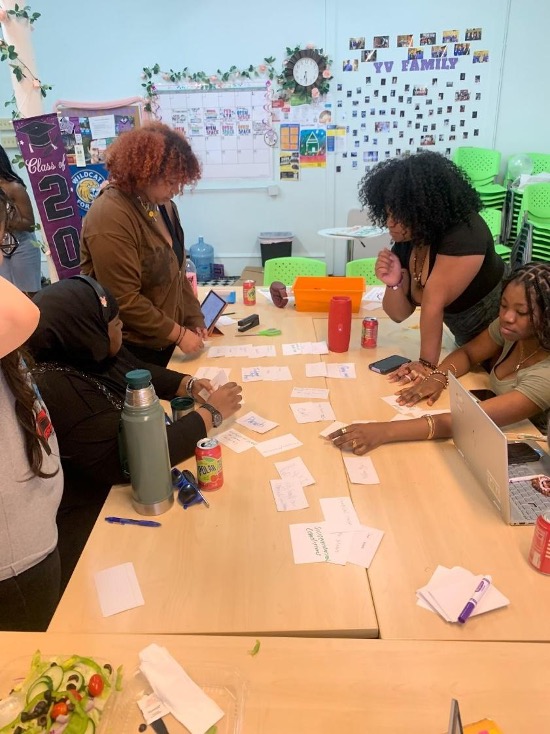
"If I can help build a program that will work for me and maybe work for everyone else, too, then I have to do it," said Balogun, now a junior at Massachusetts College of Pharmacy and Health Sciences. "For me, the motivation was about, 'What can I do to make sure it's better for the next person coming along?'"
Nutrition and physical activity programs are often medically based, geared toward younger children or adults, or housed in schools where teachers already face competing demands, Durkin said. Her goal is to anchor a program where high schoolers already gather - places like libraries, recreation centers and youth organizations - with strategies that reflect the realities of teens' lives, including limited access to healthy food, safe recreation spaces and culturally relevant health information.
The intervention, which the research team plans to pilot next year, will take the form of a weekly, peer-led after-school program covering topics such as balanced diets and meal planning while teaching skills including healthy cooking and personal fitness. At the students' recommendation, it will also help teens identify barriers to nutritious food and physical activity in their communities and advocate for better resources.
Durkin, an assistant professor of psychiatry and human behavior (research) at Brown's Warren Alpert Medical School, said research is often stronger when the people most affected by an issue play a role.


