
Cattle farmers in Timor-Leste are adopting safer practices to reduce brucellosis risks, supported by an ACIAR project, co-funded with Canada's International Development Research Centre (IDRC).
The project, to be concluded in October 2026, developed practical solutions for farmers using a One Health approach that connects human, animal and environmental health. The project also helped to strengthen collaboration between communities, researchers and government partners.
Understanding the local challenge
In rural Timor-Leste, cattle are an important source of income and hold significant cultural value for many families. Yet they are vulnerable to brucellosis, a zoonotic disease that can be transmitted to humans via contact with infected animals and their products.
Brucellosis affects cattle health and productivity while also posing serious risks to human wellbeing.
In many Timorese communities, livestock practices are strongly shaped by traditions. Some practices, such as handling or consuming animal birth materials, can increase the risk of infection.
While brucellosis is recognised as a priority by Timor-Leste's agriculture and health sectors, limited disease detection capacity and the absence of a coordinated national control strategy add to the challenge.
Against this backdrop, locally designed approaches introduced through the project are leading to tangible changes.
Research promotes community-led solutions
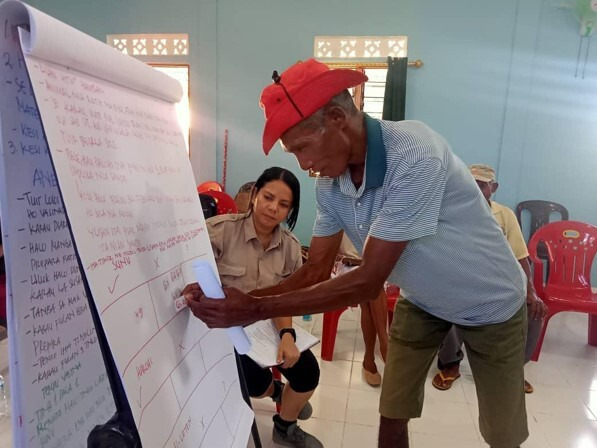
The project began by building a shared understanding of how brucellosis spreads. Researchers worked closely with farmers to identify key risks, including free-roaming cattle, limited monitoring of animal births and unsafe handling of birth materials.
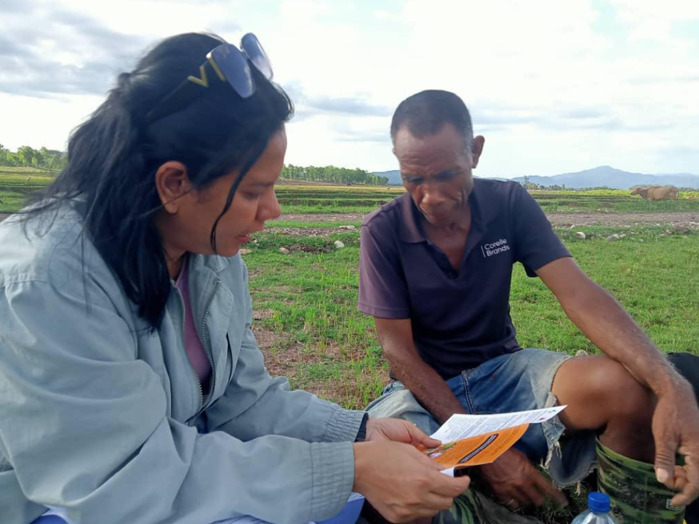
Communities and government stakeholders then co‑designed solutions to meet their needs, including safer handling practices, improved awareness and reporting of animal health risks, as well as preparation for vaccination. Delivered through farm visits and illustrated materials in local languages, these approaches were designed to improve existing farming practices.
At the national level, the project has improved the capacity to test for brucellosis and supported the development of a pilot cattle vaccination program. The project is also supporting lasting behaviour change at the community level.
After the project, farmers are implementing control measures, such as burying animal birth materials, avoiding their consumption, using protective equipment and engaging with vaccination efforts.
We respect our traditions, but we are also making small changes to protect our health.
Cattle farmer in project survey.
Stronger links between farmers and government technicians are also improving access to veterinary services.
Working with veterinarians who explain that we can ask for help when an animal is sick is very beneficial. Now we know how to better take care of our cattle and ourselves.
Another cattle farmer in the same survey.
The project also facilitated closer collaboration among agriculture, health services and local authorities, enabling a more coordinated response.
Supporting change in practice
'Working closely with communities and the government was central to this project,' said Project Leader Associate Professor Shawn Ting from Menzies School of Health Research. 'Through a co-design approach, farmers and local stakeholders helped shape the strategies, ensuring they reflect everyday needs and realities, and are more likely to be adopted over time.'
'Brucellosis is not only an animal health issue, but also a public health concern for our communities,' said Dr Joanita Jong from the Ministry of Agriculture, Livestock, Fisheries and Forestry. 'This collaborative work is strengthening our knowledge and capacity and supporting us in implementing practical measures such as vaccination and safer livestock practices to protect both our livestock and people.'
Dr Florindo Pinto Gonzaga from the Ministry of Health noted that brucellosis remains a public health concern in Timor-Leste and emphasised the importance of ongoing collaboration. 'Efforts like this create an important space for stakeholders to come together and discuss how to better control the disease, given its impacts on both human health and the economy.'
Building foundations for the future
The project has generated new evidence on brucellosis exposure, informed vaccination planning and strengthened the case for a coordinated national response. These changes are laying the groundwork for more sustainable brucellosis control across Timor-Leste.
'This collaborative work shows how locally driven solutions can strengthen livestock systems, improve health outcomes and support more resilient communities in Timor-Leste,' said ACIAR Research Director Dr Steve Crimp. 'It also highlights the importance of long-term partnerships in addressing shared challenges.'
This work also showcases collaboration of another kind: The one between ACIAR and IDRC.
'This collaboration between ACIAR and IDRC brings together complementary research-for-development expertise and regional partnerships to support practical and participatory approaches to One Health in Timor-Leste,' said Dr Bosibori Bett ACIAR Director, Multilateral and Strategic Partnerships.
'By investing together, we can help strengthen capacity, generate evidence for coordinated action and support communities to reduce the risks of brucellosis in sustainable ways.'
Learn more about the project: 'Developing strategies to reduce brucellosis transmission in Timor-Leste based on One Health collaboration' (LS/2022/161).


