
By listening to the buzz of a mosquito's wings, UOW academic Kiran Trivedi is redefining how communities track the diseases mosquitoes carry
A University of Wollongong (UOW) academic has developed a low-cost device that identifies disease-carrying mosquitoes by the sound of their wingbeats, offering a faster alternative to traditional surveillance methods used to track malaria and dengue.
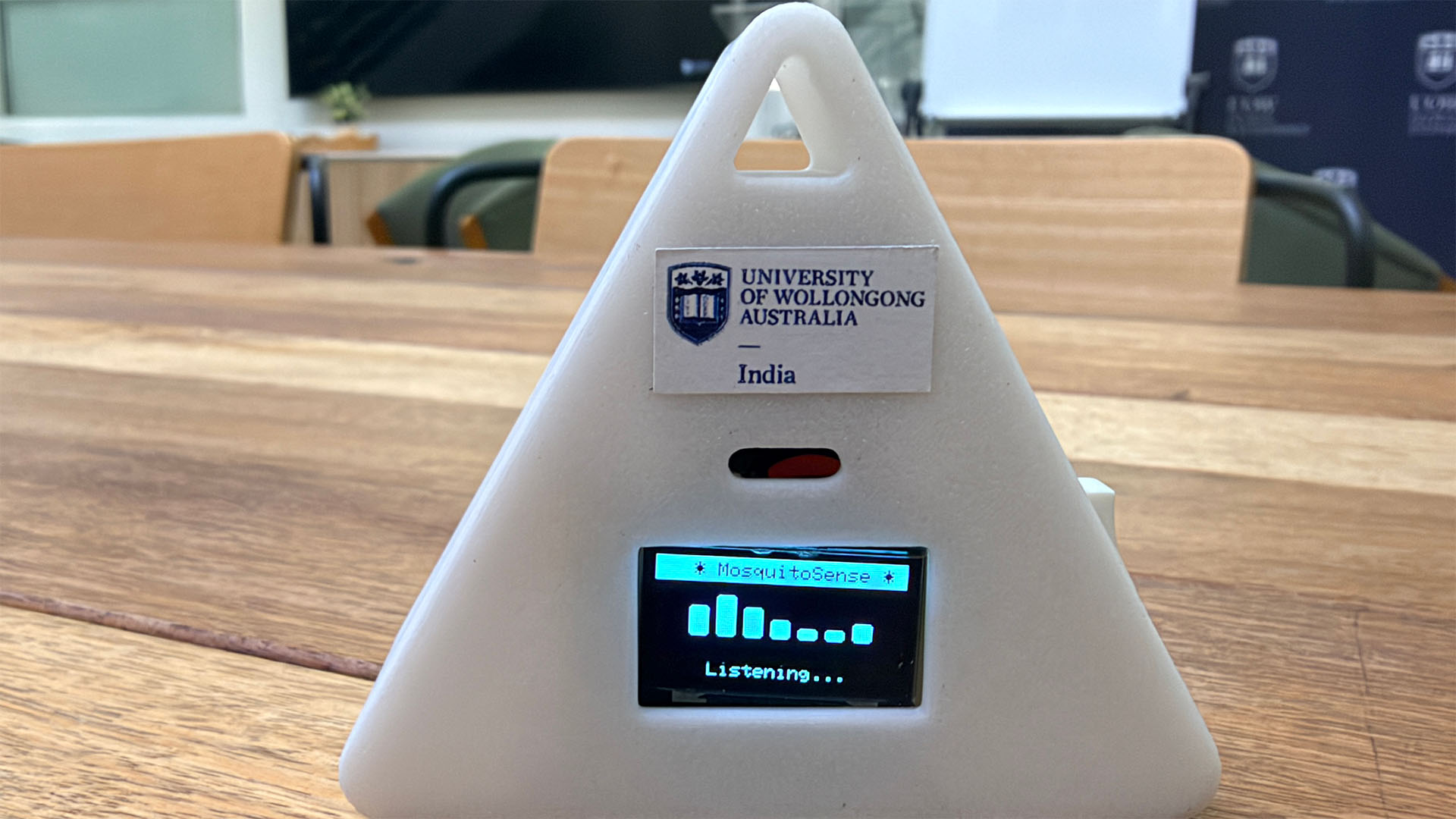
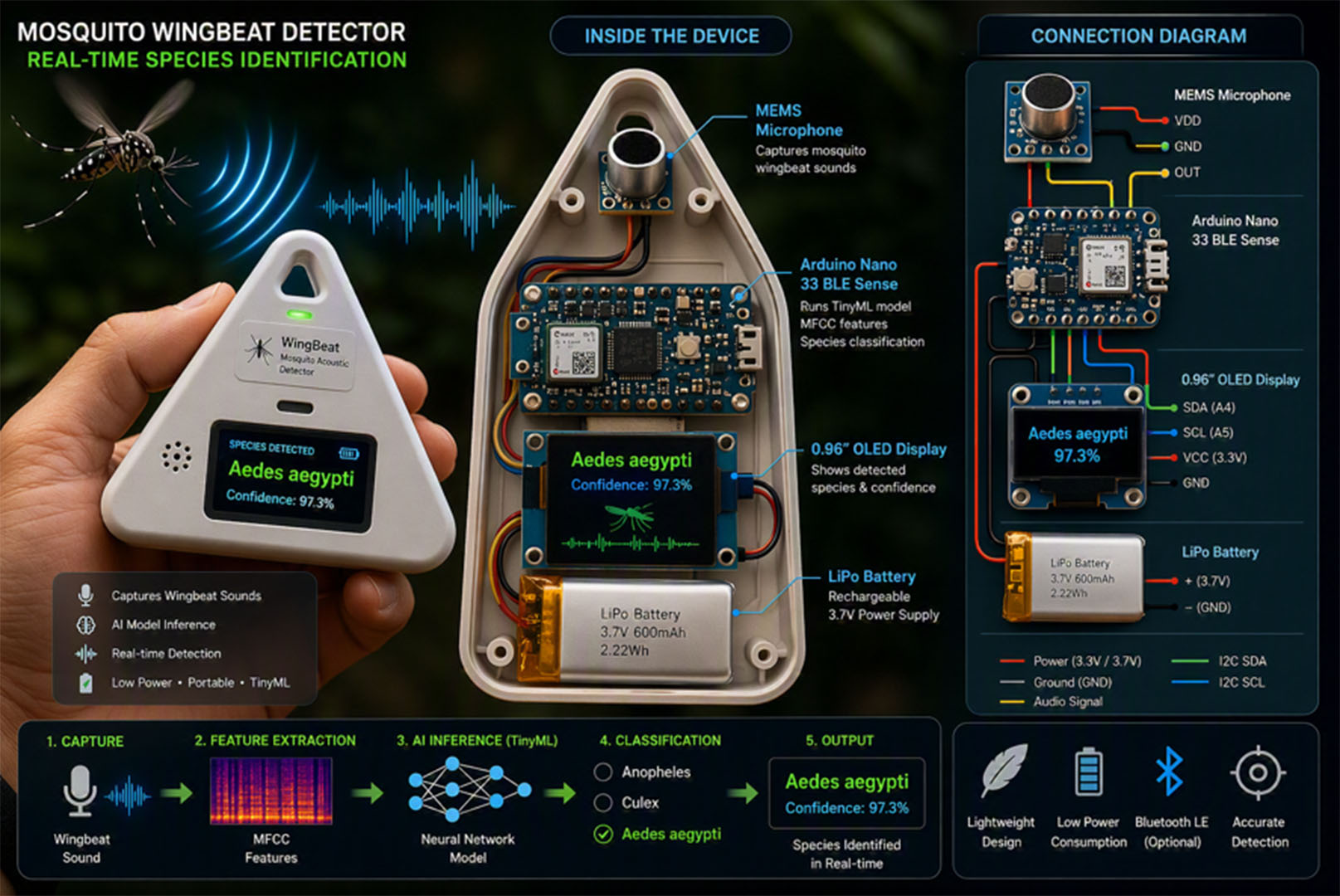
Designed by Associate Professor Kiran Trivedi, the portable system uses AI to identify three of the world's most significant disease-carrying mosquito species – Aedes, Anopheles and Culex – in seconds, with no internet connection required. The device is built on Tiny Machine Learning, or TinyML, a fast-growing field that lets AI models run directly on small, low-power chips rather than relying on powerful computers or the cloud.
The World Health Organisation ranks the mosquito as the world's deadliest animal, responsible each year for hundreds of thousands of deaths. The heaviest toll falls on developing nations and remote communities, many of which lack the laboratory resources needed for current surveillance methods.
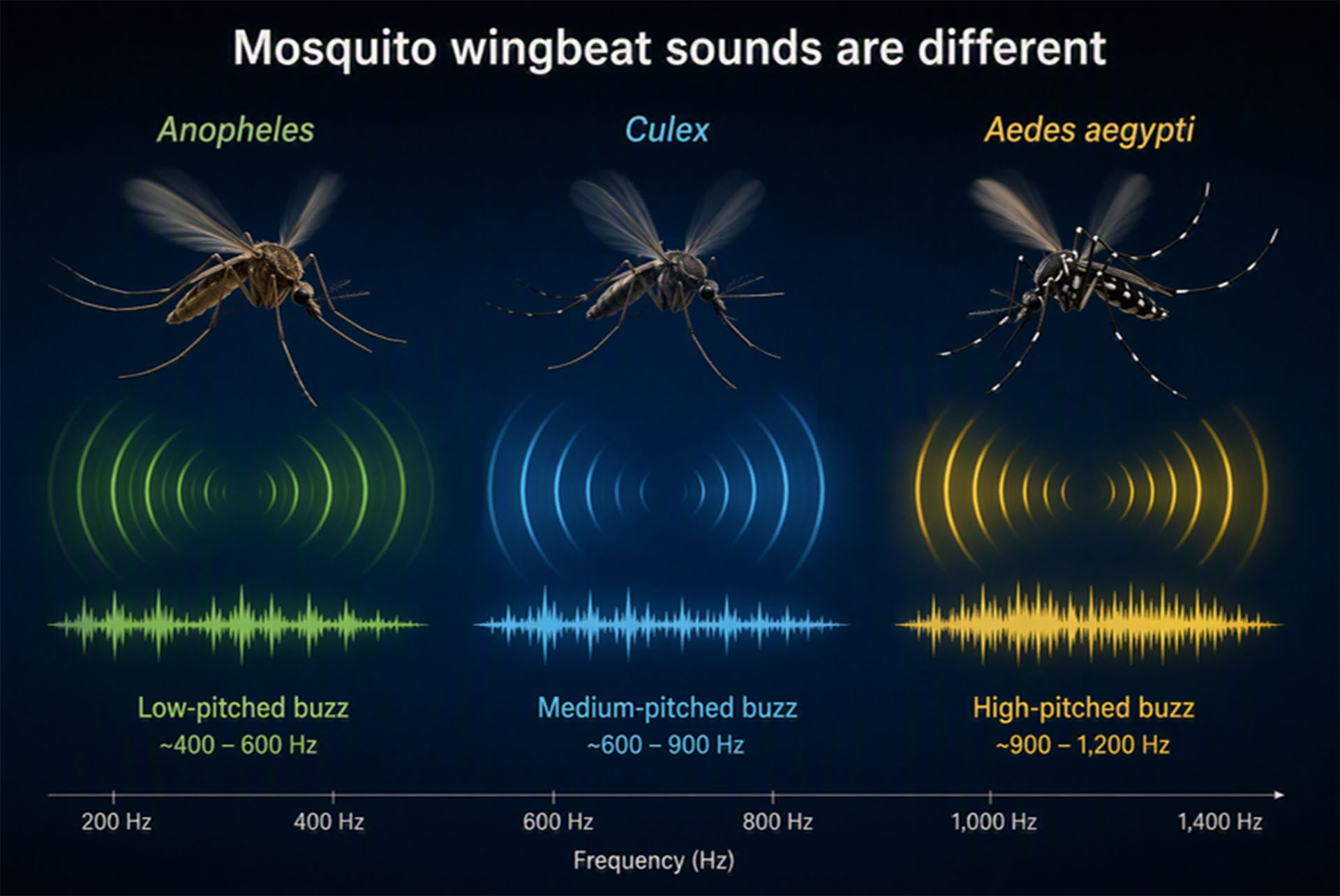
Traditional mosquito surveillance is accurate but slow as it requires collecting water samples from breeding sites and analysing larvae in a laboratory to identify the species. Associate Professor Trivedi found sound could do the same job faster, because each species beats its wings differently and produces a subtly distinct acoustic fingerprint.
"When people think about AI, they imagine huge systems running in the cloud," Associate Professor Trivedi said. "TinyML lets us put the intelligence directly onto the device. It identifies the mosquito in seconds, with no internet, no cloud costs and no privacy concerns."
Trained on publicly available recordings, the model reached 88.3 per cent accuracy, a level Associate Professor Trivedi says is solid for this kind of audio classification and could climb further with better microphones and cleaner recordings. It runs on a small Arduino-based device (a low-cost, programmable circuit board popular for prototyping electronics) with a built-in microphone and display.
"Just as a navigation app shows you traffic in real time, this could show where disease-carrying mosquitoes are building up," he said.
"Instead of waiting for an outbreak, communities and public health agencies could see the hotspots early and respond."
The research, co-authored with his then-student Harsh Shroff, was first published in 2021 in the International Telecommunication Union's Kaleidoscope conference proceedings.


