
New impact assessments have found strong economic returns from ACIAR-supported biosecurity projects in Southeast Asia. The projects also improved the health and safety of livestock production and supply chains, and generated knowledge and partnerships that support Australia's preparedness for pests and diseases.
Three impact assessments were conducted by the University of Melbourne's Centre of Excellence for Biosecurity Risk Analysis (CEBRA) and the Centre for Environmental and Economic Research (CEER). The University of Melbourne team had previously developed a framework that estimates direct and indirect environmental, social and economic impacts of ACIAR's biosecurity-focused research investment. The new framework takes into account the biological nature of pests and diseases, and their potential impacts at a national scale.
Using the new framework, the impact assessments found benefits at several levels. In partner countries, these included reduced risk of pest and disease outbreaks, improved on-farm practices and stronger understanding of biosecurity. These changes contributed to increased productivity, better market access and improved incomes. The projects also strengthened the skills of in-country scientists and biosecurity managers, supporting ongoing work beyond the life of the projects.
For Australia, the benefits included a stronger disease-free and pest-free buffer in the region, new knowledge to support preparedness planning, and closer international research relationships. Professor Tom Kompas, a Chief Investigator at CEBRA and Research Group Director of CEER, said the analysis consistently showed that pre-border initiatives, including ACIAR-supported projects, delivered higher returns than spending focused only on border quarantine or post-border surveillance.
Small investments, strong returns
One impact assessment focused on a project managing livestock diseases in eastern Indonesia. Professor Kompas highlighted a component of the work at the Sindhu live bird market in Lombok, Indonesia, as one of the strongest examples of benefit identified in the assessment.
As part of a broader project, researchers traced poultry movement through Bali and Lombok and examined how highly pathogenic avian influenza (HPAI) spread through those systems. An awareness campaign then worked with farmers, traders and stallholders to improve the separation of sick birds and strengthen market biosecurity practices.
The physical upgrade to facilities at Sindhu market cost about A$100,000. Based on the evaluation, that investment helped increase stallholder incomes and produced wider social and cultural benefits along the supply chain. The estimated return on investment was 151:1, with a net benefit of A$1.1 million a year.
It's quite clear that even small investments can have big returns in countries such as Indonesia, and it shows how valuable ACIAR-supported projects can be. Returns of 151:1, and even 30:1 as demonstrated by other initiatives, are amazing. They save millions of dollars and potentially billions of dollars in the long term.
Professor Tom Kompas,
Chief Investigator at CEBRA and Research Group Director of CEER
Dr Muktasam Abdurrahman from the University of Mataram worked with the Indonesian team on the avian influenza initiatives in West Nusa Tenggara. She said outbreaks of H5N1 avian influenza variants have caused major losses for producers in Indonesia. Poultry deaths, control efforts and reduced consumption had cost trillions of rupiah. In one outbreak, the industry lost 9 billion rupiah in value in one week.
Dr Abdurrahman said the project's interventions delivered practical benefits for local communities and government. Since the project, there have been no reported cases of avian influenza in West Nusa Tenggara. Improved market management, including cleanliness and waste handling, has attracted more traders and customers, while mobile traders are carrying biosecurity messages back to producers in villages and other live bird markets.
Trade routes and disease risks for pigs
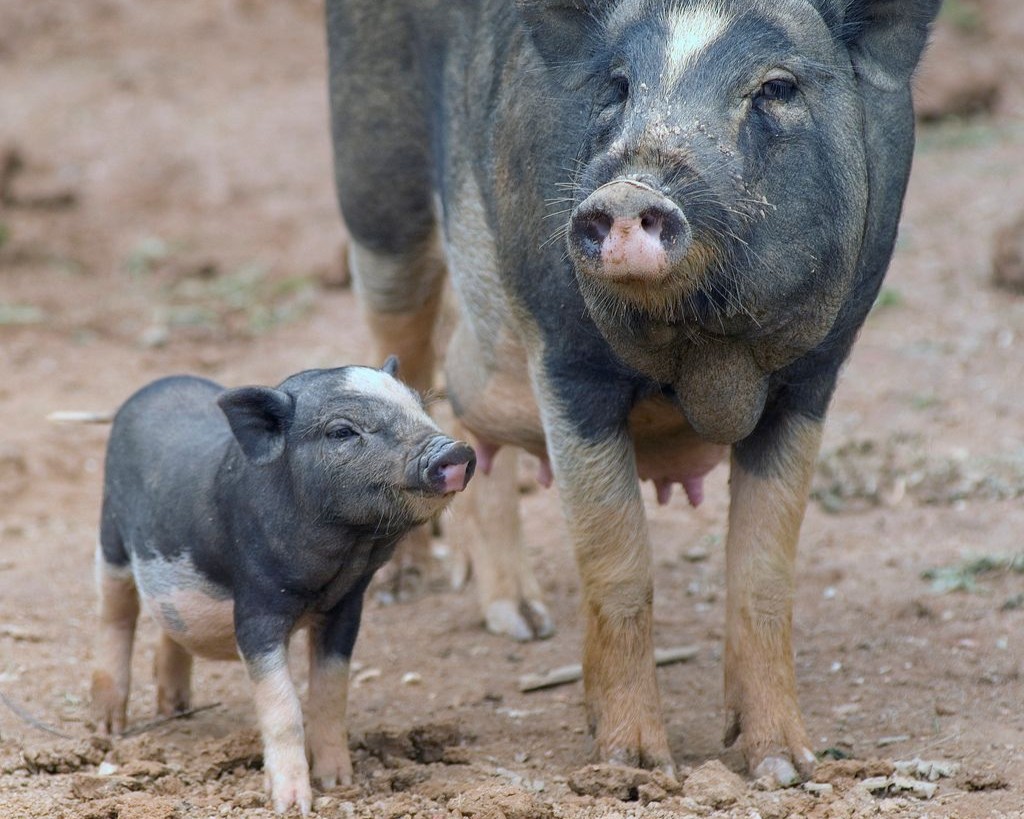
Another component of the same livestock project focused on pig trade routes and disease spread in eastern Indonesia, with particular attention to classical swine fever in East Nusa Tenggara. Researchers traced animal movement pathways and introduced a more effective vaccine, helping reduce livestock mortality and improve pig productivity and farmer incomes.
The move to the new vaccine produced an estimated return on investment of 37.8:1, and a net benefit of A$56.3 million over 10 years. The project also supported strategic partnerships, including collaboration between Indonesia and Timor-Leste to strengthen cross-border disease surveillance and management.
Mr Melky Angsar, head of the Animal Health Department of East Timor Livestock Services, is involved in that ongoing collaboration.
'This mapping and the estimates of economic losses as a result of increased disease also help us justify budgets for our laboratory and biosecurity efforts,' he said.
The research identified entry points for pigs moving from island to island, including movements between Indonesia and Timor-Leste. While African swine fever has become a greater concern than classical swine fever in recent years, the mapping work continues to support disease control and improve the region's capacity to prevent and manage outbreaks.
He also said the ACIAR-supported project strengthened the long-term capability of Timor-Leste's animal health experts, who continue to monitor and test for disease.
The project also generated benefits for Australia. Better understanding of livestock movement and disease spread contributed to disease prevention and control planning for Australia's pig industry, including support for an industry-wide animal tracking program and a disease awareness campaign targeting smallholder farmers. Australia remains free of classical swine fever, foot-and-mouth disease and African swine fever.
Disease-free chicken and eggs
A second impact assessment looked at an ACIAR-supported project to improve biosecurity among non-industrial commercial poultry farmers in Indonesia. The project responded to the severe impact of HPAI H5N1 in that sector, where smallholder farmers had lost millions of birds. Australia's poultry sector remains free of this virulent strain.
The project developed a clean market chain and certification system for poultry and eggs under the 'Healthy Farm' brand. The evaluation found that more than 80% of premium prices flowed to retailers rather than farmers. Healthy Farm poultry was marketed for up to 2 years, and branded eggs remained on sale in Bali supermarkets for more than 14 years, although the eggs were later sold without continued auditing of biosecurity practices.
ACIAR Director of Impact and Learning, Dr Katherine Martin, said the Healthy Farm project showed promise in building more sustainable and resilient value chains for local producers, even though the assessed return on investment from farm improvements was only 1.06:1.
'While the certification program ended, even after the project, the farmers who participated still know what to do for better biosecurity and safer food,' said Dr Martin.
She said the impact assessment highlighted the importance of well-defined value chains, effective coordination between actors and identifying the partnerships needed to maximise long-term impact.
She also noted the difficulty of assigning a dollar value to social benefits such as new knowledge, training and accreditation, even though these were central to ACIAR's work and to the long-term effect of the project.
Mango pest control

The third assessment focused on several ACIAR-supported projects researching mango pests in the Philippines, including mango seed borer, fruit fly and cecid fly, as well as fruit spotting bug in Australia. Researchers found that integrated pest management practices developed through the project helped Philippine producers reduce chemical use while improving yields and cutting production costs.
The assessment estimated that producers in the Philippines gained A$15.7 million in benefits between 2005 and 2022. Avoided damages were valued at more than A$2,000/ha.
In Australia, related integrated pest management strategies helped growers target fruit spotting bug hotspots instead of spraying whole orchards. The work improved pest control, reduced chemical use and supported market access to China for Australian mango producers.
Dr Edith Arndt, a Senior Research Fellow at CEBRA who also worked on the impact assessment, said the results would help ACIAR improve the return on investment from future projects. The assessment process also identified factors influencing success, or otherwise. Recommendations for future project design include stronger engagement with farmers in partner countries and better data collection to support impact assessment after project completion.
Professor Kompas said that while some elements of biosecurity work are difficult to value precisely, especially capacity building and community education, they remain central to ACIAR-supported research.
'These 3 impact assessments are the first by ACIAR to use the purpose-designed framework for dynamic biological systems, which will better capture the impact of ACIAR's biosecurity-related research investments,' he said in the report.


