
New research from the University of St Andrews shows that disturbing seabed sediments through trawling could cause significant losses of carbon stored in Scotland's sea lochs.
The study, published in Marine Environmental Research, shows that organic carbon stored in seabed sediments can be released into the surrounding seawater when disturbed. This carbon is then more likely to be broken down and ultimately returned to the atmosphere as carbon dioxide, contributing to climate change.
The findings suggest that protecting specific areas of seabed, in particular at the heads of Scottish sea lochs, could play an important role in safeguarding natural carbon stores.
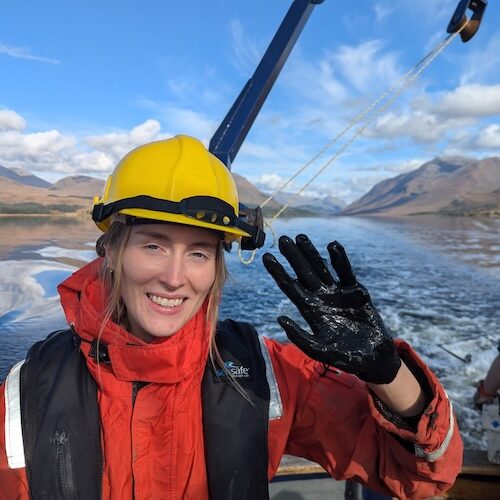
Lead author Lauren South, a PhD candidate in the School of Geography and Sustainable Development, supported by the Jane Lively Steward PhD Scholarship, said the research provides important new evidence about the vulnerability of these carbon-rich sediments.
"Previous research showed that the seabed in our upper sea lochs store substantial carbon, much of it sourced from run-off from peatlands," she said.
"What makes these results so important is the use of sediment from along the length of Loch Etive and their use in carefully designed lab-based experiments. Our results show that the maximum disturbance effects will be felt at the upper end of the loch where the sediment is both high in organic-carbon content and in the most reactive forms of organic matter."
The experiments found that even a single disturbance event could cause rapid losses of sedimentary organic carbon, with the strongest effects observed in sediments from the upper part of Loch Etive.
"The results are startling, indicating that even a single disturbance event in these locations can cause very rapid losses of sedimentary organic carbon," Lauren said.
"This is part of a growing body of research which points in the same direction: if we care about natural carbon stores it's time to protect the most vulnerable seabed stores of carbon and those at the heads of these sea lochs in particular."
Scotland's sea lochs, which scientists classify as fjords, are important natural stores of so-called blue carbon - carbon captured and stored in marine and coastal ecosystems.
They are estimated to bury around 84,000 tonnes of organic carbon each year, despite being a fraction of the size of the North Sea. Around 252 million tonnes of organic carbon is estimated to be stored within Scotland's sea lochs.
Much of this carbon originates on land. Rivers carry organic material, including carbon from surrounding peatlands, into the sea lochs where it can become trapped in seabed sediments.
The research suggests that these deposits are not equally vulnerable to disturbance. The upper reaches of sea lochs, where carbon-rich material accumulates, appear to be particularly sensitive.
Senior co-author Professor Bill Austin, in the School of Geography and Sustainable Development and member of the University's Environmental Change Research Group, said the use of real sediments from Loch Etive was central to the study.
"Our samples from Loch Etive reflect a wide range of seabed organic carbon contents and reactivities," he said. "The samples offer an ideal opportunity to use 'real world' samples for these strictly controlled disturbance experiments."
Professor Austin, author of the Scottish Government's Blue Carbon Action Plan, said the experiments demonstrated the potential consequences of seabed disturbance.
"The experiments likely highlight a maximum disturbance effect, but not outside the bounds of a direct trawl disturbance on the seabed," he said.
"More importantly, the experiments show that a single disturbance event can drive significant losses in the most reactive organic carbon in marine sediments - particularly at the heads of the lochs."
The researchers say that existing maps showing the distribution of organic carbon in seabed sediments could be combined with information on seabed fishing activity to identify areas where management measures could have the greatest benefit.
"Scottish marine sediments from inshore waters, and particularly from upper sea lochs, are shown to be extremely vulnerable to the resuspension processes associated with bottom trawling," Professor Austin said.
"These experiments contribute to the call for evidence that the Scottish Government's Blue Carbon Action Plan identified as a priority for understanding the impacts of bottom trawling."
The research comes as Scotland considers how best to protect its marine environment while managing fisheries.
The Scottish Government's 2025 Fisheries Management Plans recognised that fishing practices which disturb the seabed may affect carbon stored in marine habitats. The plans highlighted the importance of protecting and restoring blue carbon habitats to help build resilience to climate change.
The researchers say their findings provide further evidence for targeted measures to protect the seabed areas where carbon stores are both concentrated and particularly vulnerable to disturbance.
Charles Millar, Executive Director of the Sustainable Inshore Fisheries Trust, said the findings demonstrate the importance of protecting carbon-rich sediments at the heads of Scottish sea lochs.
"This new research confirms that the heads of Scottish sea lochs, which collect peat washed down by rivers from surrounding glens, contain some of the most vulnerable carbon stores in the country," he said.
"With Scottish peatlands at ever greater risk of fire, we must urgently act to protect our equally important seabed carbon from disturbance."
He called for measures to protect these areas from seabed trawling, arguing that doing so would support wider efforts to protect and restore Scotland's blue carbon habitats.
The University of St Andrews researchers say the study highlights the need to identify the most vulnerable marine carbon stores and ensure that their protection is considered as part of Scotland's response to climate change.
Category Research


