
Sudan remains the world' s largest humanitarian and displacement crisis, UN agencies and partners said on Tuesday, calling for an end to the war between rival militaries on the eve of the three-year mark.
"This grim and chastening anniversary marks another year when the world has failed to meet the test of Sudan," UN Emergency Relief Coordinator Tom Fletcher said in a statement from Berlin, where the international community will meet on Wednesday, amid continuing efforts to end the war.
The deadly fighting that erupted on 15 April 2023 between the Sudanese Armed Forces (SAF) and former allies the Rapid Support Forces (RSF) has left nearly 34 million people - a staggering 65 per cent of the population - in urgent need of humanitarian support.
Millions forced to flee
Some 14 million have been displaced, with nine million seeking safety elsewhere in the country and 4.4 million crossing the border to countries such as Chad, Egypt and South Sudan.
Nations like these are now "at breaking point," according to the UN refugee agency, UNHCR .
Even though nearly four million people have begun returning to their communities, "they find broken water systems, destruction, and a lack of basic shelter and healthcare," said Zoe Brennan of UN migration agency IOM , speaking to journalists in Geneva.
'No end in sight'
The crisis in Sudan "continues to deepen with no end in sight," a senior official with the World Food Programme ( WFP ) said at the same briefing.
"We are two years into a famine in parts of the country, and this is simply unacceptable in this day and age," said Ross Smith, WFP Director of Emergency Preparedness and Response, speaking from Rome.
"Millions of Sudanese are trapped in a daily struggle to secure food safety, basic dignity. Families have exhausted every coping mechanism. Parents are skipping meals so the children can eat-and children are going hungry."
Middle East war's impacts
Famine has been confirmed in Darfur and the Kordofans, where fighting is heaviest, but the overall crisis in Sudan "is being dangerously compounded by the wider global instability and the recent escalation of conflict in the Middle East," he said.
The Iran war has disrupted shipping routes which is driving up the costs of food, fuel and fertilizer - core commodities that Sudan imports and heavily relies on.
"Fuel prices have already increased by over 24 per cent on average. In some remote areas, much more than that. This will have a knock-on effect on all the prices of all staple goods and food commodities, pushing more people into hunger," he warned.
War on women
Another battle is raging within the armed conflict in Sudan, according to the UN's gender equality agency, UN Women .
"As we enter a fourth year of war in Sudan, it is important that we be clear about what this means for women and girls, because ultimately, this is a war on them," said Anna Mutavati, Regional Director for East and Southern Africa, speaking from Berlin.
UN Women have issued a report which estimates that 12.7 million people - mainly women and girls - require support related to sexual and gender-based violence, up from 3.1 million in 2023.
Ms. Mutavati stated that "widespread killings, mass displacement, and most definingly the use of sexual violence…is embedded in the blueprint of Sudan's war."
Dark days for children
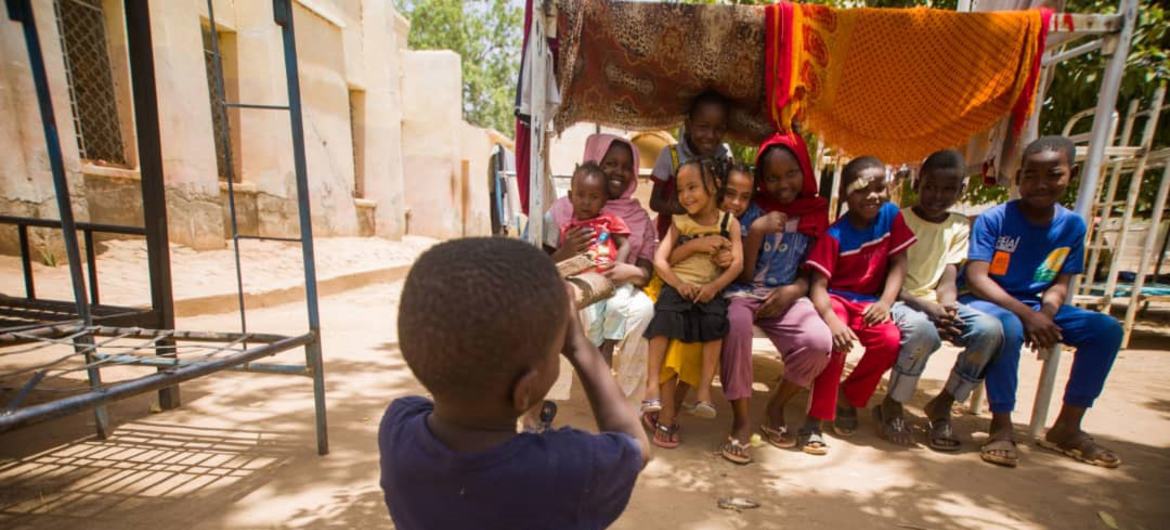
Meanwhile, "the reality for children in Sudan is growing darker hour by hour," said Eva Hinds, communications chief with child rights agency UNICEF .
More than 4,300 have been killed or maimed since the war began, and more than 5,700 grave violations against children have been recorded.
Sudan's youngest citizens are bearing the heaviest toll in a war where drone attacks are responsible for 80 per cent of all child killings and injuries.
At least 245 such casualties were recorded in the first three months of the year, mostly in Darfur and the Kordofans, representing a sharp increase over the same period in 2025.
Drones deepening the suffering
Far from the battlefield, "drones are killing and wounding girls and boys in their homes, in markets, on the roads, near schools and health facilities - all places that should never be targets," he said.
UN figures show that nearly 700 civilians were reportedly killed in drone strikes during the first three months of this year.
In addition to harming civilians, drones and other new technologies are "destroying vital infrastructure, as well as disrupting humanitarian work," added James Reynolds, deputy regional director for the International Committee of the Red Cross (ICRC) in Africa.
He said some 70 to 80 per cent of health infrastructure in conflict areas is non-operational or critically under-resourced and many communications networks have been destroyed.
Diplomatic efforts, aid appeal
As the war grinds on, UN Secretary-General António Guterres continues to reiterate his longstanding call for an immediate ceasefire, unrestricted humanitarian access, and safe passage for people wanting to flee their homes.
His Personal Envoy Pekka Haavisto presses ahead on the diplomatic front and was in Kenya last week where he held productive engagements with Sudanese armed groups, civilian political actors and others.
He will attend the Berlin conference, as will UN humanitarian chief Mr. Fletcher, who ended his statement by highlighting the need for greater support to deliver life-saving aid in Sudan.
Humanitarians aim to support 20 million people this year, up from 17 million in 2025, but their nearly $3 billion plan remains critically underfunded.
He called for action now "to stop the violence, protect civilians, ensure access to communities in greatest danger, and fund the response."


