The UN's peacekeeping chief warned on Wednesday that the withdrawal of "Blue Helmets" from Lebanon and Western Sahara risks leaving a dangerous security vacuum, while the Security Council remains divided over what, if anything, should replace them.
The UN mission in Western Sahara closed on 31 October after 35 years. In Lebanon, the peacekeeping force that has patrolled the border with Israel since 1978 is due to cease operations at the end of the year.
"What happens when there is no longer a third-party presence between the Lebanese army and the Israel Defense Forces?" asked Jean-Pierre Lacroix , Under-Secretary-General for Peace Operations.
Briefing journalists at UN Headquarters in New York, Mr. Lacroix said the organization was losing some of its longest-standing military deployments, with no guarantee that the countries concerned could maintain stability on their own.
Fears for Lebanon's border
Around 7,500 peacekeepers are still serving with the UN Interim Force in Lebanon ( UNIFIL ). The force acts as a go-between for the Lebanese and Israeli armies, monitors violations and helps humanitarian aid get through.
Mr. Lacroix has just returned from Lebanon. He said President Joseph Aoun and Prime Minister Nawaf Salam had told him they feared a "security vacuum" once the peacekeepers leave, with no one left to stop border incidents from turning into clashes.
He also raised questions over the future of the Blue Line, which the UN drew to mark Israel's withdrawal from Lebanon in 2000.
There is a humanitarian cost too. Mr. Lacroix offered a cautious estimate that about 10,000 people are still living between the Blue Line and the forward defence line Israel has set up inside Lebanese territory. Their access to aid depends heavily on UNIFIL.
UN Secretary-General António Guterres put forward options in June, but the Security Council has yet to agree on any follow-on arrangement. Mr. Lacroix urged council members to decide what form a future international presence could take.
End of the line in Western Sahara
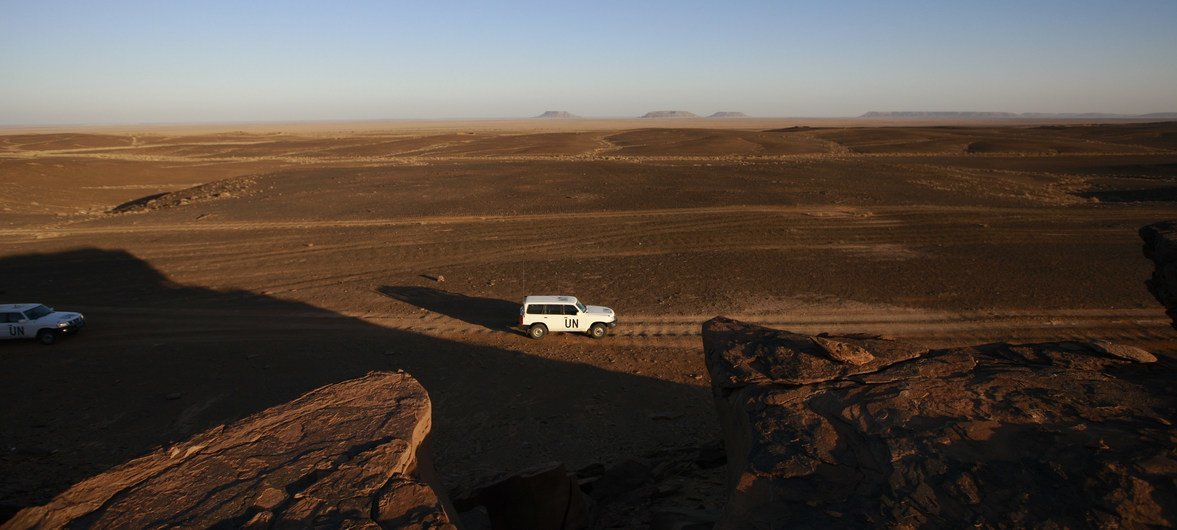
The same deadlock has already ended the UN's presence in Western Sahara. The UN Mission for the Referendum in Western Sahara (MINURSO) shut down on 31 October after council members failed to agree on renewing its mandate.
Russia vetoed a United States draft that would have reshaped the mission around a solution based on autonomy under Moroccan sovereignty. A rival Russian text calling for a one-year renewal fell short of the nine votes needed to pass.
MINURSO was set up in 1991 to monitor a ceasefire between Morocco and the Polisario Front. It never held the self-determination referendum it was created to organize, and hostilities in the territory resumed in 2020.
Mr. Lacroix confirmed that the mission was now in its liquidation phase. The UN is urging the parties to show restraint and remains committed to a political solution that provides for the self-determination of the people of Western Sahara.
New threats to peacekeepers
Mr. Lacroix also recently visited Syria and peacekeepers serving in the Golan. He said UN observers there were receiving complaints from civilians about detentions, movement restrictions and property seizures linked to the Israeli military presence. He said their mediation had led to several people being released and some property being returned.
In Abyei, the territory disputed by Sudan and South Sudan, recent drone attacks have highlighted another growing danger. Blue Helmets are having to adapt to technologies that put both their own personnel and the civilians they protect at risk.
The UN is reviewing its military and technological capabilities. But Mr. Lacroix said the answer could not be purely technical. Above all, he said, it was a matter of "political responsibility".