
This summer, 115 participants in Leiden and The Hague worked with scientists from Leiden University to investigate the soil life in their community garden plots. With mangetout peas, a taste test, a buried pair of underpants, culminating in a harvest festival, they helped scientists better understand the connection between soil, plants and people.
'From 27 April onwards, you can bury the underpants.' It is a somewhat unusual gardening instruction. Yet every participant in the Proef je Tuin! (Taste Your Garden!) Project buried a pair of cotton underpants in their garden/allotment this spring. Weeks later, they dug them up again. The more fabric had disapeared, the more active the soil life in their garden was likely to be.

The invisible life beneath the soil
A decayed pair of underpants is a simple and visible way of revealing something that usually remains hidden: the vast army of microorganisms living in the soil.
Forher PhD research, biologist Marieke Elfferich studies the relationship between this microbiome and plants health. 'We now know quite a lot about microbes that can harm plants. We know much less about the microbes that play a beneficial role. I'm interested in how they relate to the chemical composition of plants, and perhaps even their flavour.'
Together with her colleague Shana Hepping, she enlisted the help of allotment gardeners in Leiden and The Hague. Every participant received the same mangetout pea seeds and the same instructions, but planted them in different plots of land.
'There is no way we could have planted so many different locations ourselves,' says Elfferich. Each gardener also leaves their own mark on the soil. 'That hopefully means we'll have a lot of variation within this relatively small region.'

Changing views of the microbiome
For Hepping, the soil itself was not the main focus. As a PhD candidate in Public Administration, she investigated what the project did for the participants. 'I'm the project's social mirror,' she says. She studied how people thought about the microbiome and whether those views changed during the project.
That matters because, according to Hepping, the microbiome forms an important link between agriculture, food and health. 'Good food with a rich microbiome creates value for agriculture and helps us stay healthy.'

The community garden as a mini society
As they cycled from garden to garden, the researchers also got to know the world of community garden associations. 'They are almost miniature societies', says Hepping. 'Each with its own rules and customs.' The researchers were regularly offered treats, and on one occasion even found a note inviting them to take a well-earned rest.
This level of engagement is exactly what makes citizen science so interesting to Hepping. 'The gardeners were the true experts here. They have the practical experience. They were far more than an extra pair of hands. We learned a great deal from them.'
From root nodules to harvest festival
The choice of pea plants was not accidental. They grow relatively quickly and form small nodules on their roots, where the plant works together with specific microorganisms from the soil. Participants had to examine and count these root nodules. When active, they are pink inside.
'It provided an almost tangible example of the influence of the microbiome,' says Ellferich. 'People immediately started reflecting on what they were seeing and what it meant for their plants.'
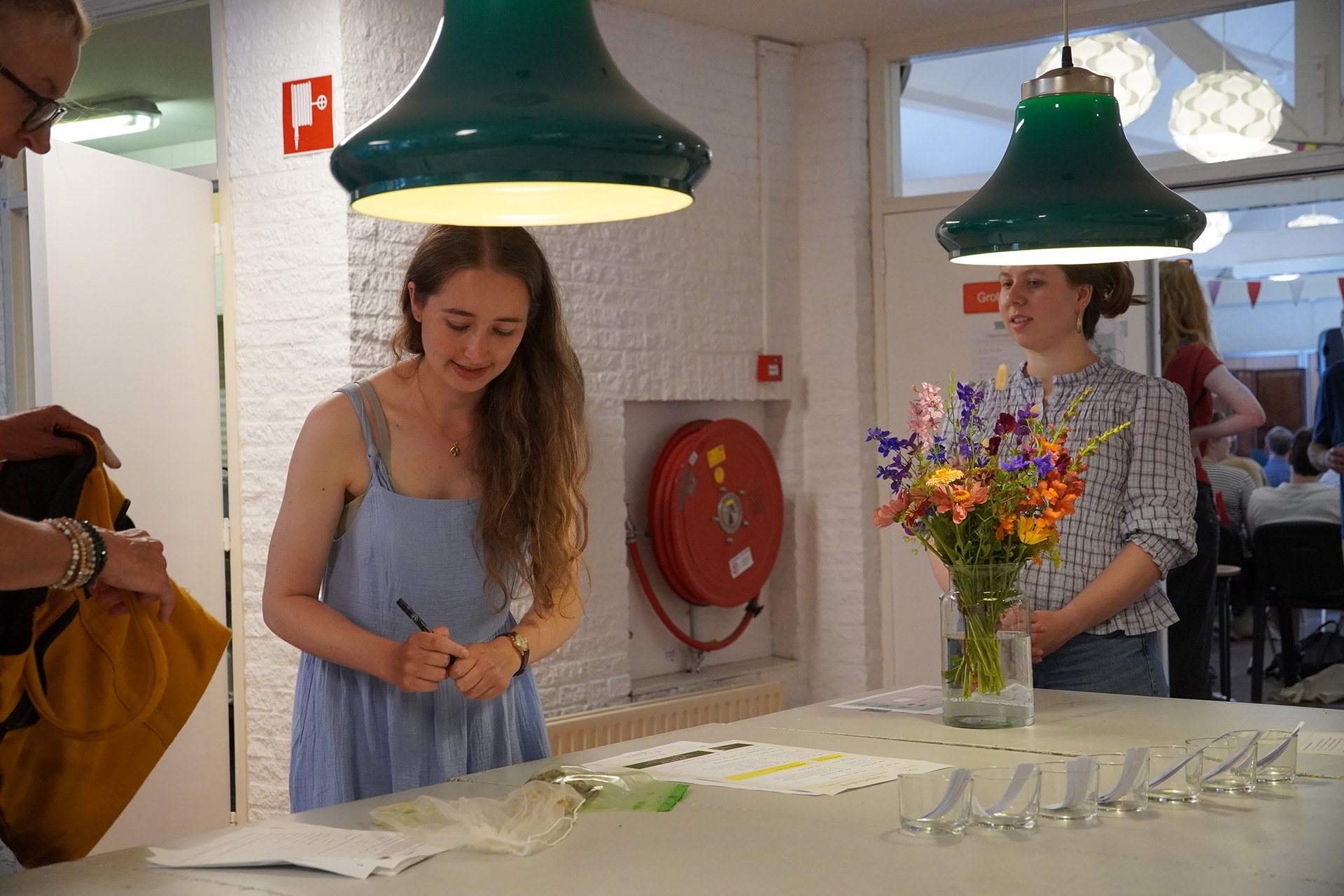
Marieke Elfferich takes in the participants' harvest 
Nature-based cooking 
The big taste test 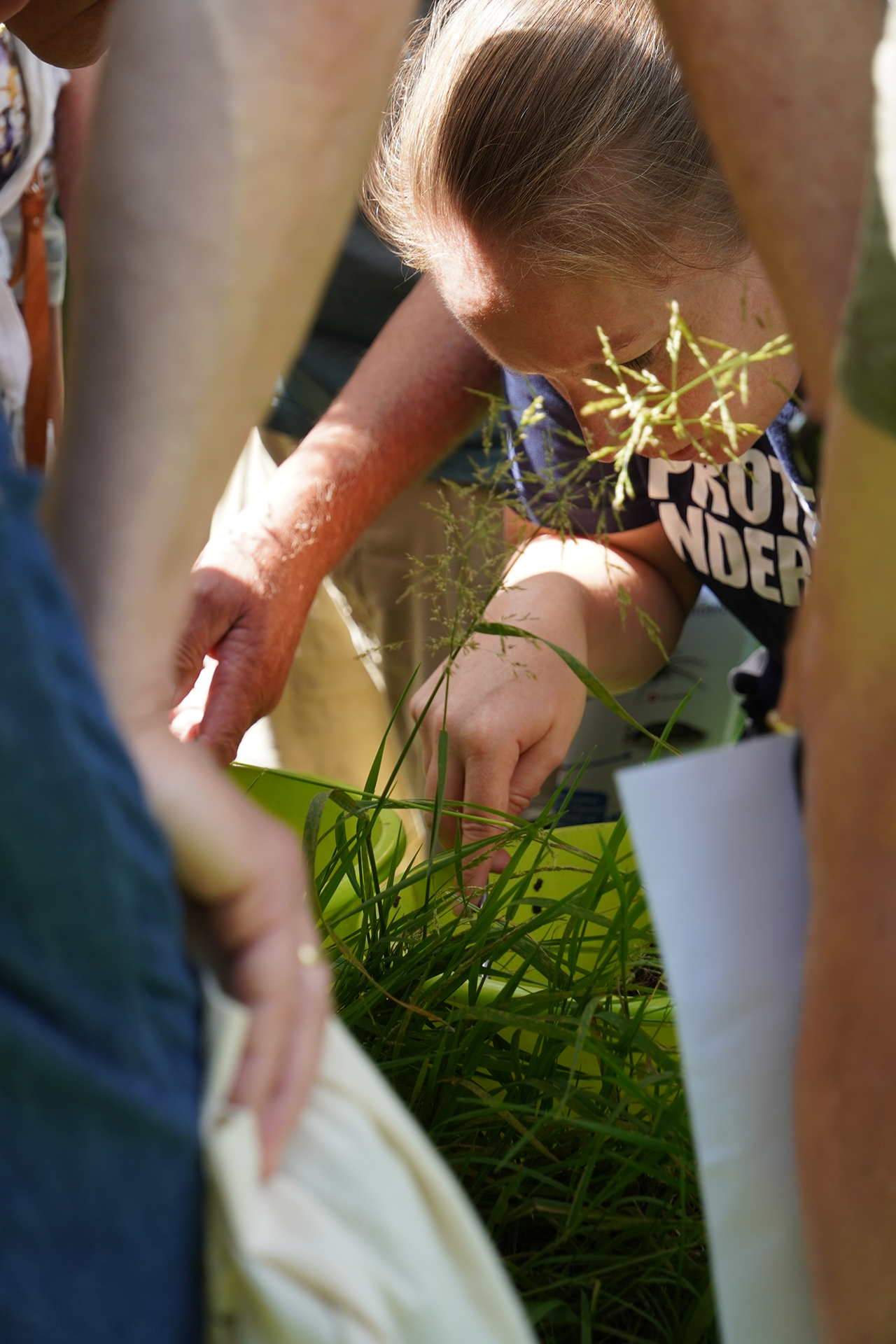
Looking for soil life Emilia Hannula 
Examining water life under the microscope
The peas themselves also became part of the research. At the harvest festival, participants tasted peas grown in different gardens. Elfferich: 'There were a few that people consistently rated as the tastiest. Now the question is whether there is also a chemical explanation for that.'
The festival was also an opportunity to give something back to the participants. There were talks about the microbiome, but also a food forest walk, nature-based cooking activities, a tour of a school garden and a microscope for examining tiny water life.
Under the guidance of soil ecologist Emilia Hannula, participants could even search for soil organisms with the naked eye.

'Gardening means working together with an entire ecosystem'
For Hepping, the most interesting question is what all these experiences did to the participants' way of thinking. 'Beforehand, participants mainly associated the microbiome with the human gut. And with diseases.' People had a more abstract idea of soil life: tiny creatures, bacteria and fungi.
During the project, that picture began to change. 'People increasingly started to see soil, plants and humans as one connected system.' As a result, gardening came to mean more than simply sowing, weeding and harvesting. Gardeners began to see their work as part of a small ecosystem, in which they needed to work together with the life in the soil.
And the underpants? 'At the harvest festival we could immediately see there was quite a lot of variation,' says Ellferich. Some pairs had largely decomposed, while others had barely changed. 'Some people were genuinely disappointed about that. They thought: but surely my soil was very active?'
From buried underwear to an Ig Nobel Prize
Did you know that the research behind the buried underwear won an Ig Nobel Prize this year? Dutch scientist Marcel van der Heijden and colleagues used the experiment to study soil health. Thousands of volunteers buried a pair of cotton underwear. The Ig Nobel Prize celebrates research that makes people laugh and think.
What else the soil may tell us
The research is not finished yet. DNA extracted from the soil samples will be sent to a specialist lab, where DNA analysis will determine which microorganisms are present in each soil.
Elfferich is also investigating the chemical composition of the mangetout peas plants. She hopes to uncover links between specific soil mico-organims and plant characteristics, such as compounds associated with flavour or resilience, like antioxidants.
Whether this will prove to be the case remains to be seen. But one thing has already become clear this summer: far more is happening beneath our feet than most of us realise.
About Soils2Guts
Soils2Guts is a large research project led by Leiden University. The project investigates how soil health and agricultural practices are related to the quality of our food and the health of our gut. Researchers are looking at the role of microorganisms in soil, plants and the human microbiome.
The project runs from 2023 to 2029 and is funded by the Dutch Research Council (NWO). Researchers from Leiden University, NIOO-KNAW and medical centres are among those involved in the research.


