

Moose have long been transient animals in northern New Mexico, moving back and forth from southern Colorado for decades. In recent years, their presence has increased, and locals in northern communities such as Chama and Taos are being asked to keep their distance for safety reasons when one appears in town. This has increased land managers' concern about how to manage this population.
In a recent study titled Understanding Ancient Moose Populations in the Southern Rocky Mountains, the research team sought to determine whether moose are native to the area, which would help land managers manage this increasing population.
The study was led by University of Colorado Boulder Associate Professor and Curator of Archaeology and University of New Mexico doctoral alumnus William Taylor; he partnered with experts across several disciplines, including archaeologists, biologists, land managers and Tribal members.
One research partner was his former department chair and UNM anthropology Professor, Regents' Lecturer and Director of UNM's Zooarchaeology Lab Emily Jones.
"Most biologists and land managers believe that moose are not native to the Southern Rockies, based on the fact that there are few mentions of them in historic documents," said Jones. "In response, land managers in New Mexico and Colorado have often treated these animals as "exotic" and managed the species accordingly."
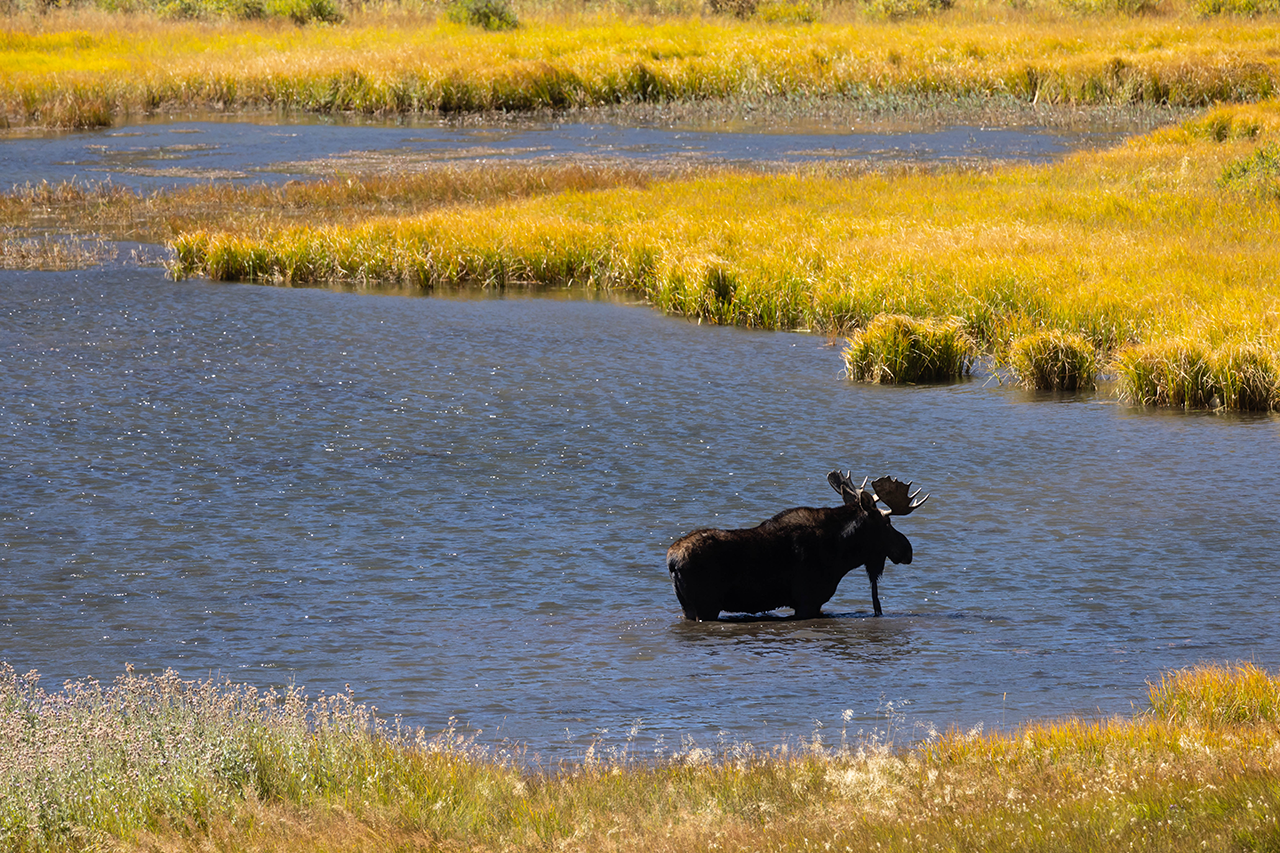
Reflecting their historic rarity and 'exotic' classification, moose are protected in New Mexico, so there is no open hunting season for the species.
Jones, Taylor and 11 other researchers conducted a large-scale, multidisciplinary literature review of evidence documenting historical moose sightings in Colorado and the Southern Rockies.
The team combed through historical archives, including newspapers, photos, journals and other written accounts, along with ethnographic stories, songs and oral traditions from Tribal communities. They also reviewed published archaeological records of moose remains found in the region.
"What we found is that, while more study of collections is needed, moose have been present in the southern Rockies from the Early Holocene through the present," Jones said.
The Early Holocene began approximately 11,7000 years ago. This significant finding dates moose in the southern Rockies much earlier than scientists previously believed, making this study a monumental breakthrough in understanding the species' history in the area.
Jones explained that determining whether a species is native to a region is important for many aspects of environmental management, but it's not always straightforward. More often than not, the answers are more complicated than they first appear.

The study provides a framework for scientists and land managers to make more informed decisions about developing and updating management plans for public and private lands. It also offers a model for researching the historical presence of other species in the area, such as elk, which were reintroduced in the early twentieth century and remain the subject of ongoing debate over how populous they were prior to European colonization.
The research team attributes their success in this study to its interdisciplinary partnerships and the careful assessment of cultural and palaeoecological data.
"When wildlife biologists, land managers, zooarchaeologists and Tribal members work together, we can find stronger answers, leading to better management choices," Jones said. "This study highlights the importance of multidisciplinary collaborations."


