
A new University of New Mexico faculty member is joining a national research effort aimed at better understanding one of the universe's most mysterious phenomena: gravitational waves.
Timothy Dolch, an associate professor in UNM's Department of Physics and Astronomy, is part of the North American Nanohertz Observatory for Gravitational Waves (NANOGrav) Collaboration, which recently received $5.9 million from the National Science Foundation (NSF) to continue research into low-frequency gravitational waves.
Approximately $100,000 of the award will support research at UNM beginning this fall.
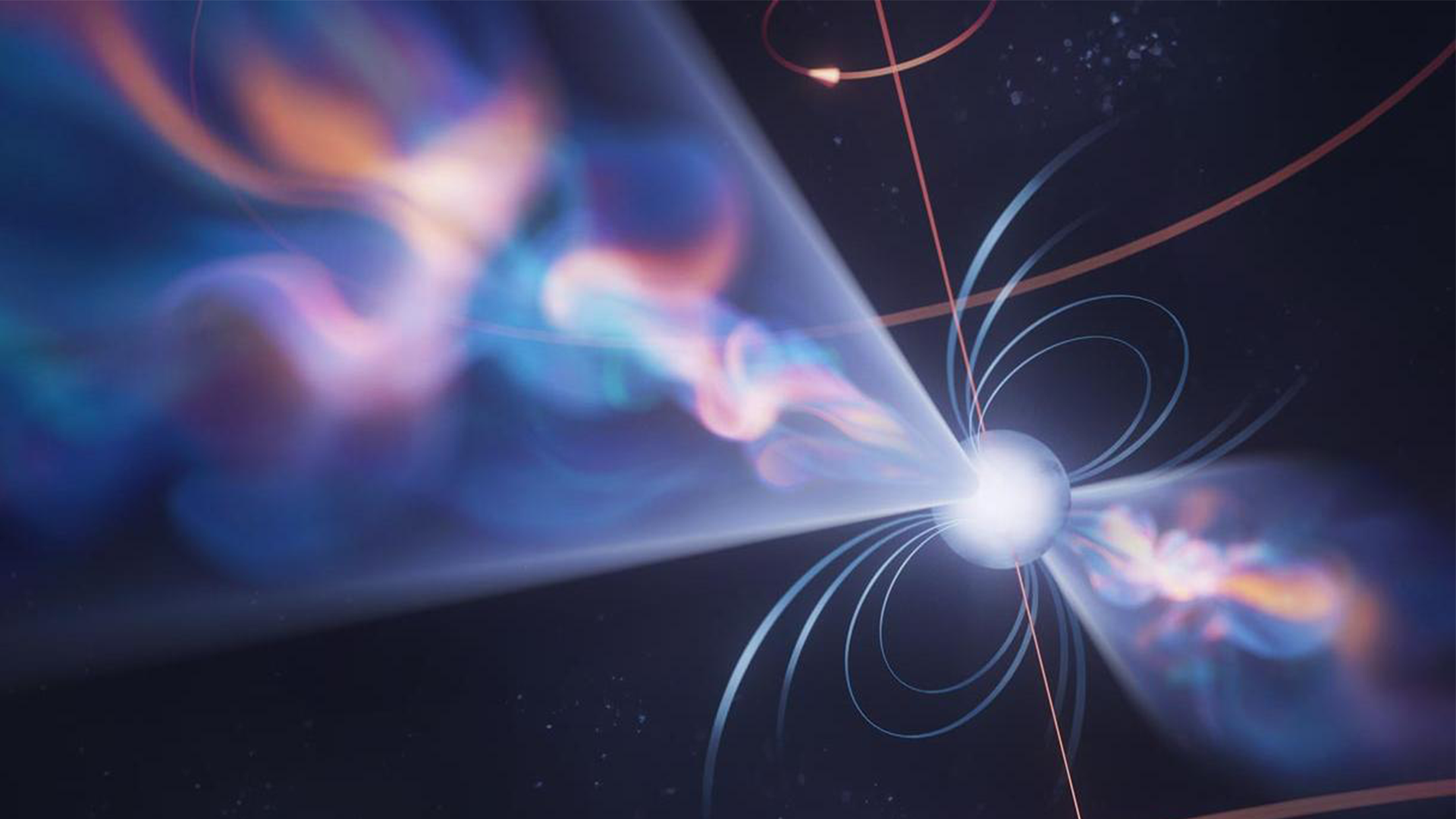
Dolch and a graduate student at UNM will work to improve observations of pulsars — rapidly rotating neutron stars that emit regular pulses of radio waves — making them more sensitive detectors of gravitational waves.
"Gravitational waves are ripples in space itself that move at the speed of light," Dolch said. "We can now 'hear' the universe by listening to vibrations in spacetime. Nature has only just begun to reveal the phenomena that we can probe using gravitational wave astronomy."
Gravitational waves can be produced when massive objects accelerate through space, including pairs of supermassive black holes spiraling toward one another. Unlike traditional astronomy, which observes the universe using forms of electromagnetic radiation such as visible light, infrared, radio and X-rays, gravitational-wave astronomy gives researchers another way to study the cosmos.
NANOGrav uses a network of pulsars as a galaxy-sized detector to search for these waves. Because pulsars rotate with remarkable regularity, researchers can precisely measure when their radio signals arrive at Earth. Tiny changes in those arrival times can reveal the passage of gravitational waves.
The NANOGrav collaboration reported the first evidence of a low-frequency gravitational-wave background in 2023, using observations of millisecond pulsars collected with giant radio telescopes.
The new NSF funding will allow researchers to build on that work and investigate the origins and characteristics of these gravitational waves.
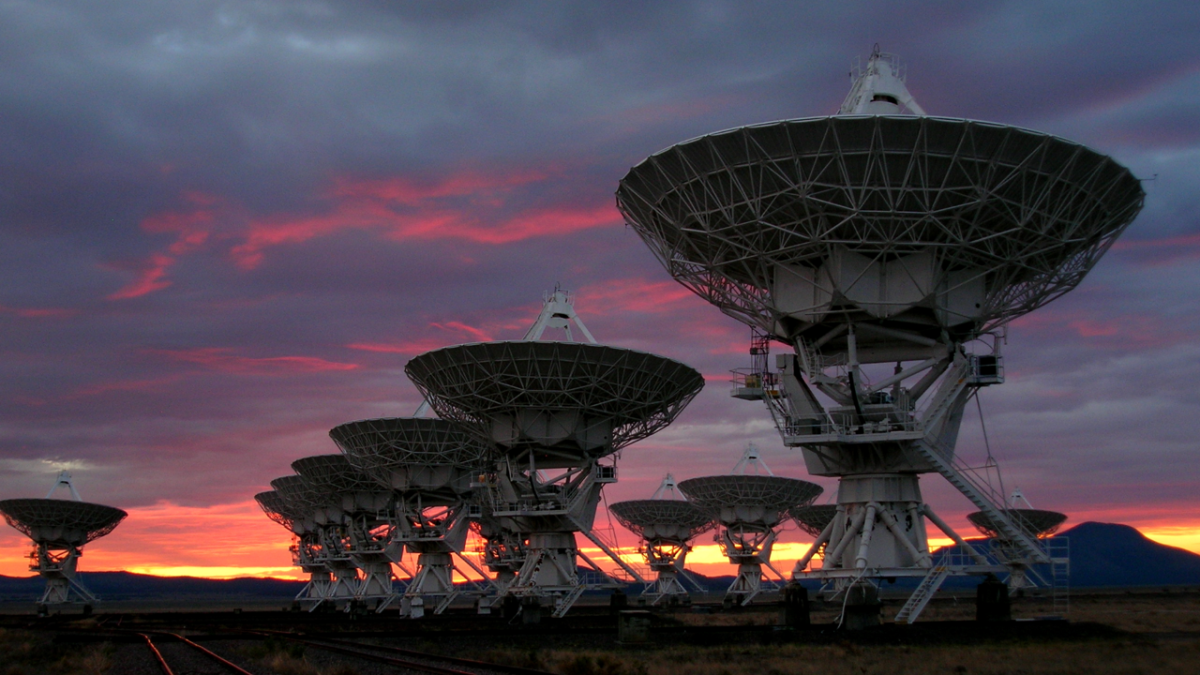
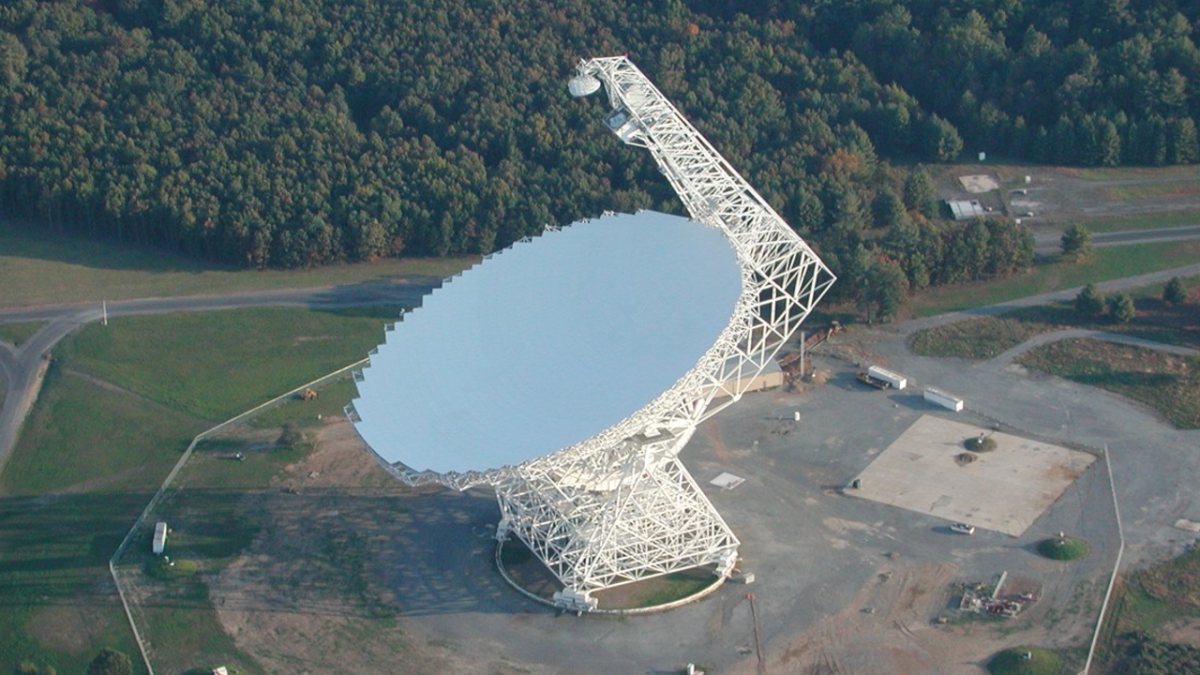
At UNM, Dolch's research will use data from several NSF-supported radio telescopes, including the National Radio Astronomy Observatory's Very Large Array in New Mexico and the Green Bank Telescope in West Virginia. Researchers will also incorporate data from UNM's Long Wavelength Array (LWA), a radio telescope located in central New Mexico.
"Our goal is to improve the quality of our pulsar observations with radio telescopes, which will make the pulsars more sensitive to gravitational waves from merging supermassive black holes," Dolch said.
The research could help scientists learn more about how supermassive black holes and the galaxies that host them form and evolve over billions of years.
"These gravitational waves come, in large part, from supermassive black holes billions of times the mass of the Sun that are spiraling toward one another," Dolch said. "This gives us a picture of how these black holes and their host galaxies have formed and evolved over the history of the universe."
The research could also provide an opportunity to investigate physics that cannot be replicated on Earth.
"There is also a chance that some of these waves come from more exotic physics that we don't understand yet," Dolch said. "So these pulsars provide a laboratory to discover new laws of nature, a laboratory otherwise impossible to set up on Earth."
The NANOGrav collaboration brings together researchers from universities and research institutions across North America. In addition to West Virginia University and UNM, participating institutions include Cornell University, George Mason University, Franklin & Marshall College, the University of Montana, Montana State University, the University of Michigan, Oregon State University, the University of Wisconsin-Milwaukee, the SETI Institute, Yale University, Lafayette College, Texas Tech University, the National Radio Astronomy Observatory, Wake Forest University, Widener University, the University of Central Florida, the University of Florida, Vanderbilt University, and the U.S. Naval Research Laboratory.
For UNM students, the project also provides opportunities for hands-on experience in radio astronomy and gravitational-wave research.
"Of course it goes without saying that the STEM training this project provides to our students will help keep the U.S. at the scientific forefront, during the project and beyond," Dolch said.
The NSF-funded research comes as Dolch joins the UNM Department of Physics and Astronomy, adding expertise in radio astronomy, pulsars and gravitational waves to the department's research portfolio.
As gravitational-wave astronomy continues to develop, researchers hope that increasingly precise observations will allow them to move beyond detecting a background of gravitational waves and identify individual sources — potentially allowing scientists to trace a gravitational wave back to a specific supermassive black hole binary and its host galaxy. The Next-Generation Very Large Array radio telescope in New Mexico, currently under development, would be a key instrument used to study the specific galaxy in which the black hole binary would reside.


