
UConn Health, JAX partner to offer methylome profiling, enabling precision treatment
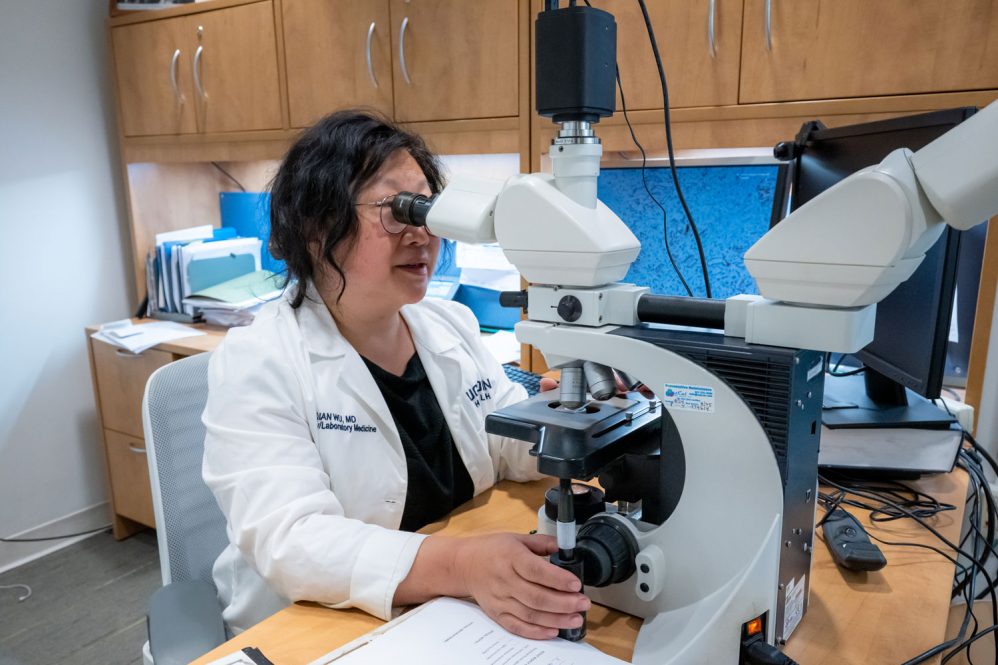
Dr. Qian Wu, UConn Health neuropathologist, collaborates with The Jackson Laboratory for Genomic Medicine to offer an advanced method of diagnosing brain and spine tumors. Outside of the National Cancer Institute, only two other medical centers in the country offer methylome profiling. (Tina Encarnacion/ UConn Health photo)
 An advanced method of diagnosing brain and spine tumors known as methylome profiling enables targeted treatment with previously unattainable levels of precision.
In 2017, UConn Health's Division of Neurosurgery (today the Department of Neurosurgery) started a campus-wide clinical precision genomics initiative. Through the Department of Neurosurgery and the Department of Pathology and Laboratory Medicine, UConn Health, in partnership with The Jackson Laboratory for Genomic Medicine (JAX), validated state-of-the art methylome profiling. This made it one of four locations in the country with the capability to provide this advanced diagnostic method on-site.
The precision genomics clinical initiative for brain and spine tumors is advanced biweekly through a multidisciplinary conference by Dr. Kevin Becker, director of medical neuro-oncology and assistant professor in the Department of Neurosurgery.
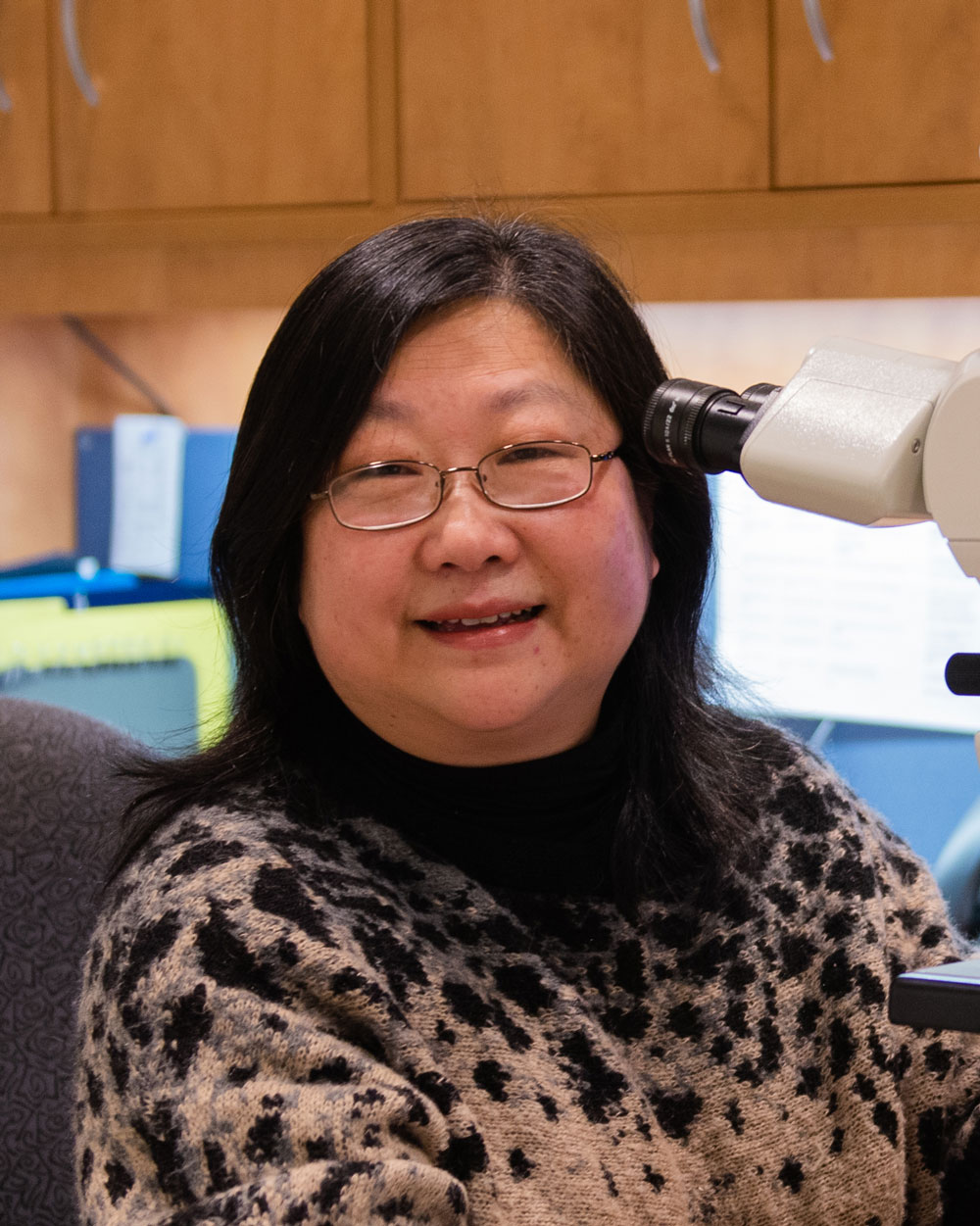
"We are sending our samples to JAX, but JAX not only receives our samples, they are capable of receiving the samples from the world through the initiative established at UConn Health," says Dr. Qian Wu, UConn Health's neuropathologist, who combines her expertise with that of JAX to gain a greater understanding of the brain tumor cells' biology.
Methylome profiling classifies brain tumors using a machine-learning algorithm based on DNA methylation patterns, which is now the World Health Organization's standard for classifying central nervous system tumors.
"This technology is very powerful, because it provides accurate diagnosis and reclassifies some of the brain tumors that we previously had just diagnosed based on less advanced methods," Wu says. "Every brain and spine tumor diagnosis is attached with molecular signatures of that tumor. So this opens the doors to targeted therapy. Molecular testing of these tumors became an essential part of diagnosis, and methylation tumor classifiers allow further precise tumor classification."

Medical centers around the U.S. send their tumor samples to the National Cancer Institute for methylation profiling, but the NCI can take six to eight weeks to return results. Wu's collaborator at JAX is Melissa Kelly, who directs the JAX Advanced Precision Medicine Laboratory, where results are reported within two weeks.
"Using the methylation signatures of a tumor can provide a more accurate and specific diagnosis than standard histopathologic assessment alone, and combined with other technologies, such as NGS, methylation profiling can guide physicians toward the best treatment/care plan for their patients," Kelly says. "We also turn the methylation profiling results around in two weeks or less, which means patients can get answers quickly and start critical therapies sooner."
In addition to serving on UConn Health's brain tumor board, Wu is part of the Maine Cancer Genomics Initiative, a JAX molecular brain tumor board with national experts that seeks to expand access to precision cancer care in the underserved regions.
"Our collaboration with JAX raises UConn's clinical service in the fields of neuropathology, neurosurgery, and neuro-oncology to a national/international level," Wu says. "I think this is the beginning of a new era. The expansion of the clinical departments of neurology and neurosurgery in combination with the modern technology available at JAX sets the stage for future endeavors, such as clinical trials."
"Cancer diagnosis has evolved from conventional morphology to integration with immunophenotyping and molecular profiling of tumors," says Dr. Enrique Ballesteros, chair of UConn Health's Department of Pathology and Laboratory Medicine. "Subspecialist pathologists can best manage and integrate this information with prognostic and therapeutic significance to optimize patient care. Dr. Wu provides this valuable neuropathology service for the diagnosis of brain and spine tumors."

Wu, one of fewer than 10 neuropathologists in Connecticut, and the only one at UConn Health, says the number of brain and spine tumor patients treated at UConn Health has increased exponentially.
"The development of methylome profiling through a multidisciplinary team at UConn Health in collaboration with JAX lab provides unparalleled diagnostic and then treatment options for patients with brain and spine tumors," says Dr. Ketan Bulsara, chair of the Department of Neurosurgery. "Dr. Wu has emerged as a national and international leader in his arena as we continue to provide patients care second to none now and continue to shape the future of treatments."
Learn more about the Brain and Spine Institute at UConn Health.


