
A researcher at The University of Texas at Arlington is developing new technology to help neurodivergent teenagers and young adults learn how to drive—an effort aimed at addressing a gap in traditional driver education programs.
Supported by a grant from the Texas Department of Transportation, the project focuses on improving driver education and training for individuals ages 16 to 22 with conditions such as ADHD, high-functioning autism and developmental coordination disorder, also known as dyspraxia.
"Many driver education programs focus primarily on helping students pass the written exam," said Kate Hyun, associate professor in the Department of Civil Engineering. "But there are fewer opportunities that prepare people for the real-world situations they encounter behind the wheel."
Dr. Hyun said the research addresses a lack of accessible training resources for young neurodivergent drivers, who may face challenges related to inattention and distractibility, impulsivity and reduced cognitive flexibility. Professional driving instruction can be costly, and many teenagers rely on parents or online videos to learn driving skills.
"Many students tell me they learned to drive from friends or YouTube," Hyun said. "That shows there's a gap in structured training opportunities."
Recruitment for the study is underway, with simulator testing expected to begin before summer.
Using simulation to identify challenges
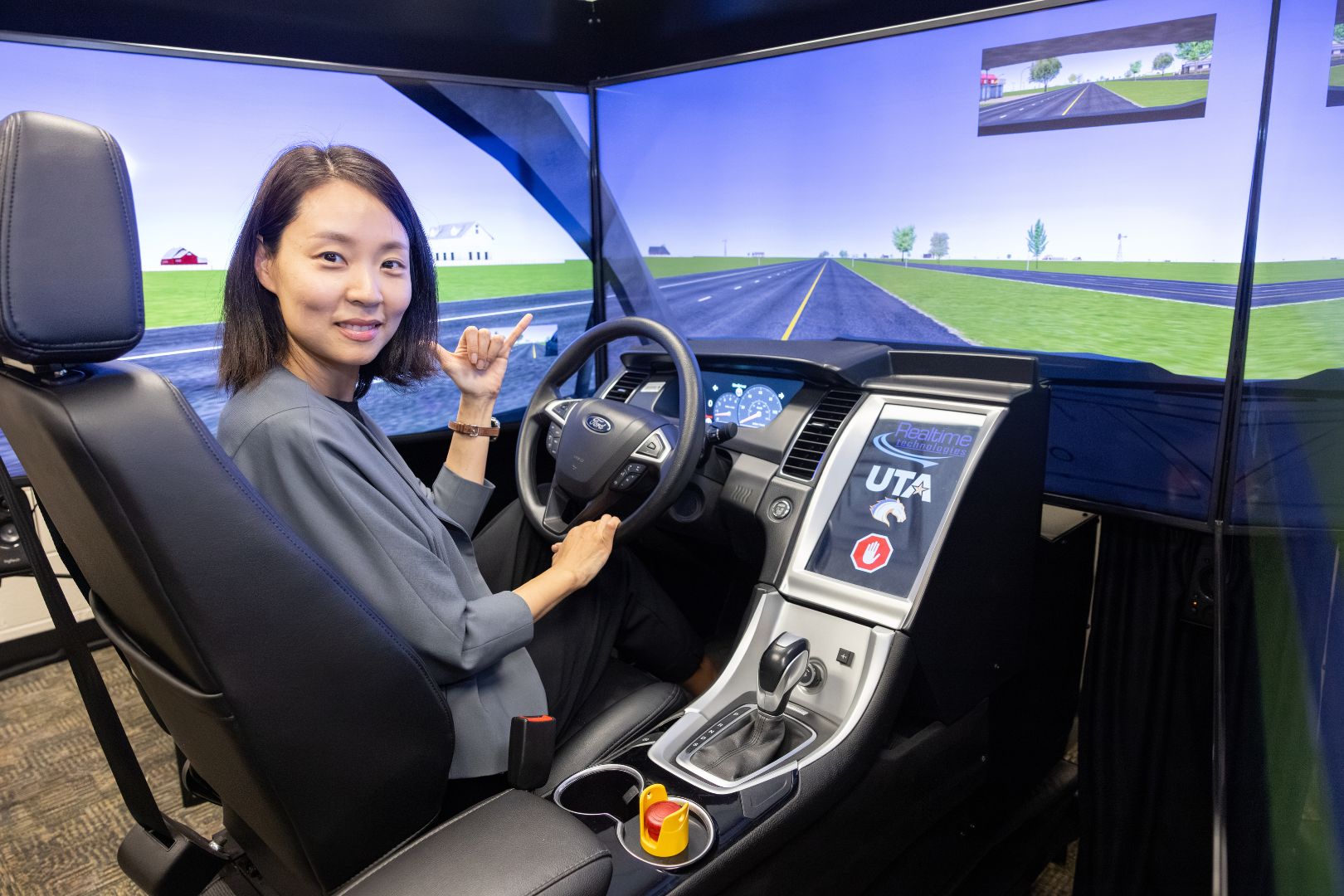
To better understand how neurodivergent drivers respond to real-world conditions, Hyun's team is using an advanced driving simulator that replicates the experience of operating a vehicle.
Related: UTA supports neurodivergent students at every stage
The simulator includes a full driving unit modeled after a Ford Focus with a 270-degree visual display that recreates realistic traffic conditions. Researchers can simulate everything from routine highway driving to complex urban environments that include pedestrians, cyclists and other unexpected hazards.
By analyzing how participants respond to these scenarios, researchers can measure reaction times, decision-making and driving behaviors.
For example, the simulator can introduce sudden situations—such as a pedestrian entering a crosswalk or a cyclist appearing near an intersection—to evaluate how quickly drivers react and how safely they respond.
Related: Many children seem on track—but struggle with motor skills
"These simulations allow us to pinpoint where drivers may struggle," Hyun said. "If we identify challenges in recognizing hazards or reacting to complex situations, we can develop training that specifically addresses those gaps."
Building AI-driven training tools
The project includes three major components: surveys and interviews to identify challenges faced by neurodivergent drivers; simulator-based research to study driving behavior; and the development of interactive training tools.
Using data from the simulations, the research team will create AI-driven education modules designed to guide learners step by step through complex driving situations. Unlike traditional instruction materials, these modules are designed to be interactive and tailored to the needs of neurodivergent drivers.
The team is also developing guidelines for parents to help them support new drivers during real-world practice sessions.
"Parents often focus on helping teens pass the driving test," Hyun said. "But they also need exposure to real conditions like driving at night or in the rain so they can adapt safely to different situations."
A long-term goal for safer roads
Ultimately, Hyun hopes the research will inform new driver education approaches that could be adopted by driving schools, licensing agencies and training programs.
Several decades ago, driver education was commonly offered in high schools, but many of those programs have disappeared. Hyun believes new technology could help fill that gap.
"Our goal is not to train perfect drivers," she said. "It's to help people become safer drivers by focusing on the situations that create the greatest risk."
If successful, the research could expand driver education resources not only for neurodivergent individuals, but also for all new drivers.
"Eventually, everyone is going to be on the road," Hyun said. "If we can better prepare young drivers for real-world situations, we can improve safety for entire communities."
About The University of Texas at Arlington (UTA)
The University of Texas at Arlington is a growing public research university in the heart of Dallas-Fort Worth. With a student body of over 42,700, UTA is the second-largest institution in the University of Texas System, offering more than 180 undergraduate and graduate degree programs. Recognized as a Carnegie R-1 university, UTA stands among the nation's top 5% of institutions for research activity. UTA and its 280,000 alumni generate an annual economic impact of $28.8 billion for the state. The University has received the Innovation and Economic Prosperity designation from the Association of Public and Land Grant Universities and has earned recognition for its focus on student access and success, considered key drivers to economic growth and social progress for North Texas and beyond.


