

© 2026 EPFL
In collaboration with municipalities across Western Switzerland, hospitals, and partner institutes, EPFL is launching URBASAN, a project that will map how urban environments influence the way people sleep.
Data shows that nearly half of Switzerland's population reports sleep-related problems. The prevalence of these disorders has increased in recent years, and sleep quality has now become a public health problem. Poor sleep can reflect and contribute to broader health issues, including depression and neurodegenerative diseases.
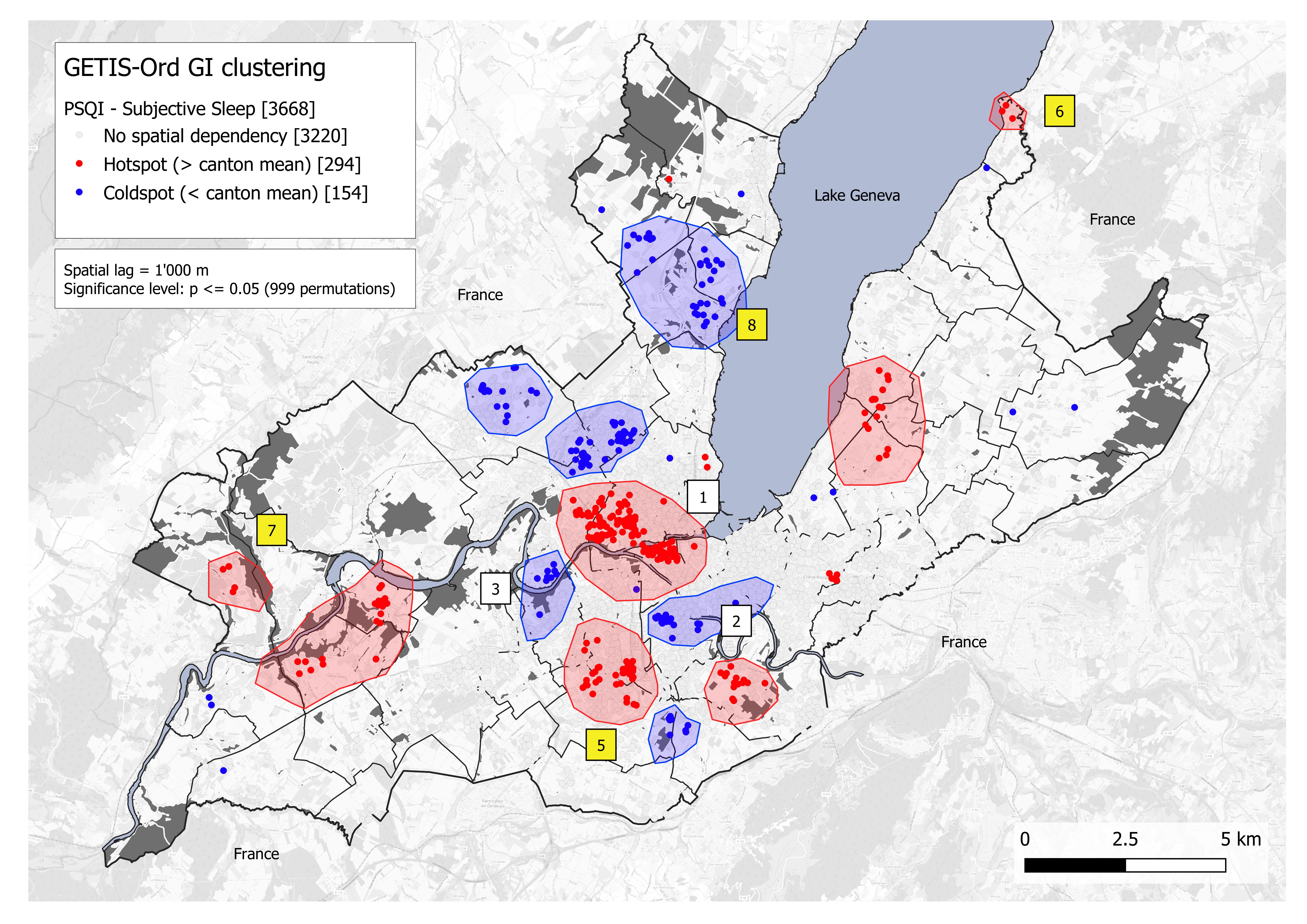
To address this challenge, the project URBASAN will map the sleep habits of the population. Researchers will analyze the data collected, early detect sleep troubles, and evaluate the influence of factors such as traffic noise, housing density, green spaces, and nighttime light exposure.
The initiative is led by Stéphane Joost, senior scientist at the Laboratory for biological geochemistry at the ENAC School, and Philippe Voruz, psychologist at the Geneva University Hospitals (HUG) and EPFL postdoctoral researcher. "We combine data collection, analysis, and public-health interventions through a secure and independent platform," explains Joost. The goal is to create a reproducible model that administration can use to define public policies.
The project has received CHF 1.5 million in funding from Promotion Santé Suisse, a private foundation supported by the cantons, the Federal Office of Public Health (FOPH), and health insurance companies, with the collaboration of the municipalities of La Chaux-de-Fonds and Le Locle in the canton of Neuchâtel, Yverdon-les-Bains in Vaud, and Onex in the canton of Geneva.
Good sleep means good mental health
While Switzerland is considered a country with one of the best health systems, much of the resources are focused on treatment rather than on prevention. The goal of the project URBASAN is to evaluate sleep health and take targeted preventive actions based on the findings. "This is a project about sleep quality, but what we are really evaluating is the mental health of the population," says Phillipe Voruz. While the clinical sleep data reveals individual struggles, aggregating this information geographically allows discovering the bigger picture about how our neighborhoods and city designs influence the collective well-being.
Through the accessible platform, participants will complete a set of questions that evaluate their sleep habits alongside indicators related to depression and anxiety, physical activity, and environmental conditions. "These are the same tests we use in our practice in the hospital to diagnose sleep troubles," comments Phillipe Voruz. The methodology has been approved by the ethics committees of each of the three participating cantons.
The data collected by the platform is anonymized and stored on EPFL servers, where researchers will conduct the analysis. According to Joost, hosting and analyzing the data at EPFL helps strengthen public trust in data protection and cybersecurity.
A key collaboration with municipalities and hospitals
All municipalities participating in URBASAN share a commitment to developing a long-term public health culture. Local administrations such as Yverdon-les-Bains want to use field data to better tailor public-health policies to local needs. The results of the project will help administrations better understand how urban factors and socioeconomic dynamics impact the lives of their citizens and define targeted initiatives that promote public health.
The project combines EPFL's expertise in environmental geography with the clinical expertise of the hospitals that collaborate. For instance, the HUG hosts the platform in SPECCHIO-HUB, a website created by the Unit of Population Epidemiology (UEP) of the Division of Primary Care Medicine (SMPR) that hosts the different studies carried out by the UEP. These studies aim to better understand the risk and protection factors that impact the health of the population in Geneva. At the Lausanne University Hospital (CHUV) the project is led by the center for sleep research (CIRS).
After analyzing the data collected by the platform, EPFL researchers will design, propose, and execute prevention and public awareness campaigns. "We will focus our interventions on neighborhoods where the data reveals signs of sleep-related problems," explains Stéphane Joost. These interventions will be based on well-established protocols that are designed to maximize impact while remaining cost-effective and optimizing the patient's journey.
A long-term multipurpose platform
Although other projects developed in Japan, the Netherlands, and Scandinavia followed a similar approach, the uniqueness of the URBSASAN platform lies in the intersection between the academic environment in spatial epidemiology and the authorities and institutions managing public health.
In about one year, Joost expects to have the first significant data to launch precise actions. But the platform will remain open, and participants can fill the questionnaire again in the future so researchers can evaluate the evolution of the results over time. The platform, designed by the HEIG-VD, is designed to be flexible enough to be used by more cities and adapt to future studies that can address other health issues. The long-term ambition of URBASAN is to transform how Swiss cities design urban environments that allow better sleep and a healthier life.


