
"She's your mom." "They're your family." "Blood is thicker than water."
For generations, these familiar idioms have illustrated what Rin Reczek and Emma Bosley-Smith, co-authors of the 2022 book "Families We Keep: LGBTQ People and Their Enduring Bonds with Parents" (NYU Press), term compulsory kinship: the social expectation that biological and legal family ties must be preserved at all costs.
In their book, Reczek, a professor of sociology at The Ohio State University, and then-Ohio State doctoral student Emma Bosley-Smith (now an assistant professor at Alma College) examined the great effort adult children often make to maintain strained or painful ties with their families of origin. Now, in Reczek's follow-up book, "Families We Lose: A New Explanation for Family Estrangement," published this week by NYU Press, Reczek explores what happens when adult children decide that family obligation is no longer reason enough to stay.
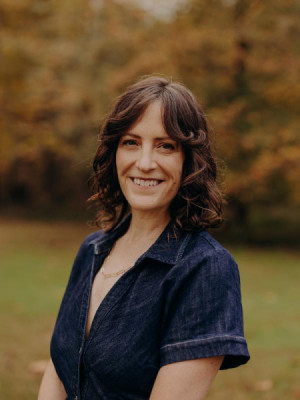 Overall, her research has found that adult children who go "no contact" with one or both parents elect estrangement as a last resort, and to free themselves to create a chosen family environment that meets their needs.
Reczek has studied complex family dynamics for about 20 years, and she said that changing family structures often shoulder the blame for the social problems of our time. While researching "Families We Keep," she was surprised by the lack of scholarly literature available on the topic of family estrangement. And when she looked at the current cultural conversations happening around adult children going "no contact" with family members - in the news, on podcasts, on social media, etc. - the dominant narrative was one of panic and stigmatization.
Family estrangement is the latest in a long history of what Reczek calls "family panics." Take, for example, rising divorce rates. "When divorce rates were rising and we saw increases in states allowing no-fault divorce, we also saw a lot of panic around the fall, or decline, of the family," she said.
According to prior research cited in the book, about 6% of U.S. adults are estranged from a mother, while roughly 23% are estranged from a father at some point in adulthood. Reczek notes there is no empirical evidence showing estrangement rates are surging.
As shifts in American family life stream across our 24/7 content feeds, historically private decisions become public conversations - and people can mistake them for the end of family life as we know it.
"To frame estrangement as just bad for society is inappropriate," Reczek said. "When we see that kind of panic around it, it's a signal that it's touching on a change in how people think about family. Estrangement has been happening throughout history; maybe the publicness of it has become really scary to people."
There's an unspoken societal expectation that parents will take care of kids when they are little, and when those kids grow up, eventually the roles will reverse, with the kids caring for their aging parents. "Estrangement really cuts to the heart of that agreement, which never really was agreed upon by the child who was brought into the world," Reczek said. "That is why it's so painful for a lot of parents, understandably. They thought that their life would look a certain way, and now it doesn't."
In "Families We Lose" and a related article in the Journal of Marriage and Family, Reczek sought out the real-life stories behind the current estrangement panic. She conducted in-depth interviews with 68 estranged adults across the U.S. in 2023, tracing their family histories from childhood to the present day. Each participant was actively "no contact" with at least one family member, and their periods of estrangement ranged from short-term to decades-long, sometimes repeating in cyclical patterns.
The data shows that estrangement is rarely the direct result of a single childhood event, a social media trend or "therapy speak." Instead, Reczek found it is driven by an unresolvable culture clash between those holding onto compulsory kinship and those embracing a different way of doing family: democratized kinship.
"If compulsory kinship creates the burns of inequality, then democratized kinship and its values of quality and equality are the balm," she writes in "Families We Lose." Familial relationships created under democratized kinship - with friends, co-workers, neighbors and others - are guided by shared values like accountability and growth, deep connection, mutual respect and safety. Estrangement, she argues, is caused by "the conflict that arises when one family member changes from compulsory to democratized kinship but the others fail to make the same transition."
Reczek also debunks the myth that adult children who experience or initiate estrangement do so because they don't care about family - that they're selfish and individualistic. "That couldn't be further from the truth," she said. "They care so much about family. They want to have healthy families, and they have very high standards for what a healthy family is."
Going no contact is rarely a spontaneous or easy decision. More often, it's the final straw after years of mistreatment, miscommunication or boundary violations. Pundits have blamed mental health professionals for driving estrangement trends, but Reczek found nothing to validate that claim.
The people she spoke with described therapy as a space where they were able to work through some of the pain of their family relationships, and, through that process, learn more about the kinds of values that they had for their relationships. "It wasn't that the therapist was encouraging them to do anything," Reczek said. "It was more that the therapist was teaching them about what healthy relationships could look like."
Another powerful catalyst for adult children, Reczek found, is becoming a parent. Raising children brings memories of their upbringing into sharp relief, prompting them to set firm boundaries, or sever ties entirely, to protect the next generation from experiencing similar harm.
Ultimately, Reczek hopes the public conversation around estrangement moves toward a broader acceptance of modern family life - one that honors personal choice and agency in adult relationships.
"Maybe family doesn't look like the way we thought it would, but it hardly ever does," she said. "Being open to those possibilities is a really important thing for all of us."


