
As eastern Congo battles the fastest-growing Ebola outbreak on record - with nearly 3,800 confirmed cases and more than 1,700 deaths - health officials are confronting another public health crisis: fear of health facilities.
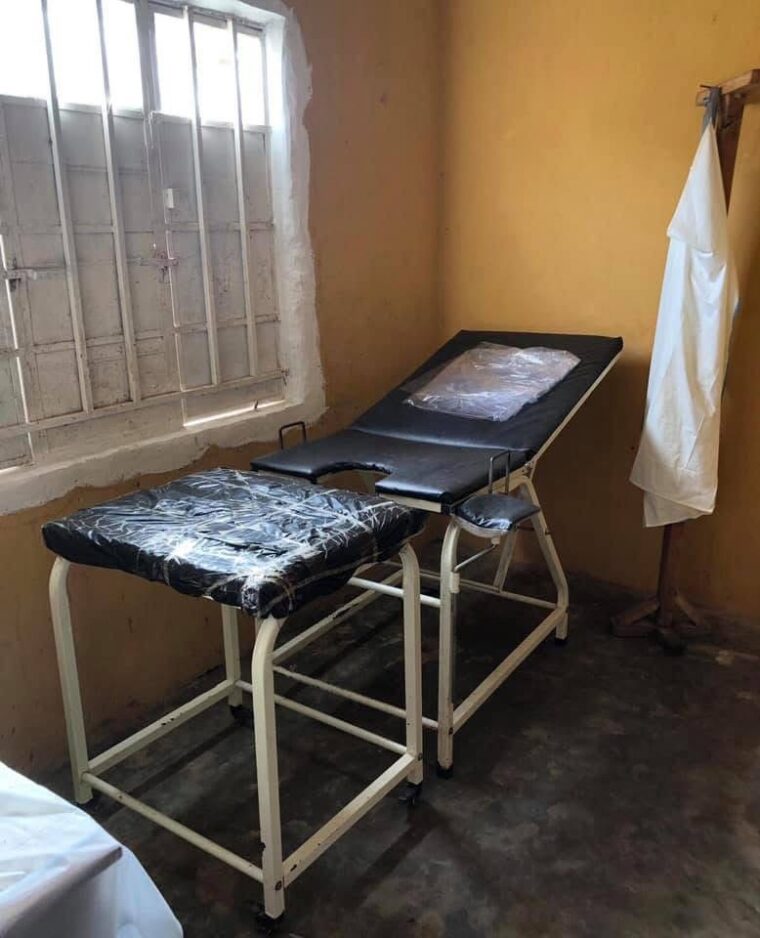
Pregnant women are delaying or avoiding prenatal care because they fear being mistaken for Ebola patients and placed into isolation. At the same time, health facilities are stretched by the Ebola response, treatment centers have been attacked, and widespread mistrust has left many women questioning whether it is safe to seek maternal healthcare. The United Nations Population Fund estimates that about 37,800 pregnant women live in the Ebola response area in Ituri province, the outbreak's epicenter. There, maternal deaths nearly doubled after the outbreak began, rising from an average of 3.1 deaths per week before the outbreak to 5.8 per week in the months that followed. More women also died outside health facilities - from 9.1% before the outbreak to 17.4% afterward.
For researchers Lindsay Stark and Ilana Seff at Washington University in St. Louis Bursky School of Public Health, these consequences are part of a pattern seen during infectious disease outbreaks around the world. Their work highlights a broader public health lesson: An outbreak's success depends not only on controlling the disease but also on maintaining enough trust in the health system that people continue seeking essential care. In communities that have endured repeated Ebola outbreaks, armed conflict and years of strained health systems, mistrust is often rooted as much in lived experience as in misinformation.
The researchers examine how outbreaks disrupt essential health services, increase risks for women and girls, and create harms that often go unmeasured as emergency responses focus on containing the disease. They recently received funding to partner with UNICEF and organizations responding to the Ebola outbreak in Congo to help establish one of the first real-time surveillance systems designed to monitor how outbreaks and the public health response affect violence against women and girls.
Here, Seff and Stark explain how fear and mistrust can undermine outbreak response; why women and girls are disproportionately affected; and what public health leaders can do to reduce those risks.
How can fear become a public health risk during an outbreak?

Seff: Fear, misinformation and loss of trust in health facilities can quickly translate into preventable deaths. The increase in maternal deaths is not just an unfortunate side effect of Ebola; it reflects whether the response is designed to preserve access to essential services and whether communities view those services as safe and trustworthy.
What role does trust play in an effective outbreak response?
Seff: Trust is fundamental. Our research shows that mistrust is not simply a deficit in community knowledge. People's fears are shaped by prior experiences with health systems, coercive outbreak measures, insecurity, attacks on facilities and whether services are actually available and safe.
When trust breaks down, the consequences extend well beyond the outbreak itself. During outbreaks, women may face increased caregiving exposure; interruptions in maternal and reproductive healthcare; greater economic strain; and heightened risk of violence, while the services intended to identify and respond to these harms are also disrupted. Importantly, we are looking at harms that often remain invisible when success is measured primarily through infections and deaths from the disease itself.
Why is it so important to protect women's health and social services during an outbreak?

Stark: This increase in maternal deaths underscores the costs to mortality and morbidity when medical and public health responses do not consider how to tailor services specifically for women and girls. We see time and time again that this inattention to tailored services leads to maternal mortality. It also leads to increased violence against women.
The worst part is that the mistrust that arises from one poorly designed public health response can carry over to the next emergency. We saw mistrust from the 2015 Ebola outbreak resurface during the COVID-19 response. The mistakes that are leading to mistrust and increased maternal mortality today are likely to affect women in future outbreaks unless we can break the cycle and create an atmosphere where women feel safe seeking the health and social services they need.
What can governments and health systems do during an outbreak to reduce harms?
Seff: First, protect essential maternal, reproductive health and gender-based violence services rather than allowing staff and supplies to be absorbed entirely into the Ebola response.
Second, work through trusted women-led organizations, community health workers, midwives and other local networks to explain clearly what happens when someone seeks care and to identify rumors and barriers in real time.
Third, establish rapid community-level monitoring of indirect harms, paired with functioning referral pathways. It is not enough to document that women are avoiding care; officials need mechanisms to learn why and respond quickly.
Stark: These services need to remain open and operational and serve as listening points to understand what women and girls need during this outbreak to stay healthy and safe.
What other lessons from this outbreak apply beyond Congo?
Stark: One of the most important lessons is that outbreaks do not occur in a vacuum. They expose and often intensify vulnerabilities that already exist, particularly for women and girls. An effective outbreak response cannot focus only on controlling the disease. Preparing for the next outbreak means investing in that trust before a crisis begins. Communities that are engaged, informed and able to access care are better positioned to respond not only to Ebola, but to future public health emergencies as well.


