
Long-term observations and international cooperation help WMO and its partners monitor the recovery of the ozone layer and keep track of new developments.
The stratospheric ozone layer, located between approximately 10 and 50 km above Earth's surface, contains 90% of atmospheric ozone. It plays a vital role in protecting life on Earth by absorbing harmful ultraviolet (UV) radiation. Ozone is also an important greenhouse gas, especially in the upper troposphere and lower stratosphere.
In the 1980s scientists observing stratospheric ozone detected a significant thinning of the ozone layer. This depletion was soon linked to substances such as chlorofluorocarbons (CFCs) and halons, which had been widely manufactured over the 20th century. CFCs were commonly used largely in refrigeration and air conditioning systems, while halons were used as fire suppressants in large computer installations and commercial aircraft engines, among other things. These substances release chlorine and bromine in the stratosphere, which destroy ozone through chemical reactions. This led to severe depletion of the stratospheric ozone over Antarctica, forming the annual "ozone hole".
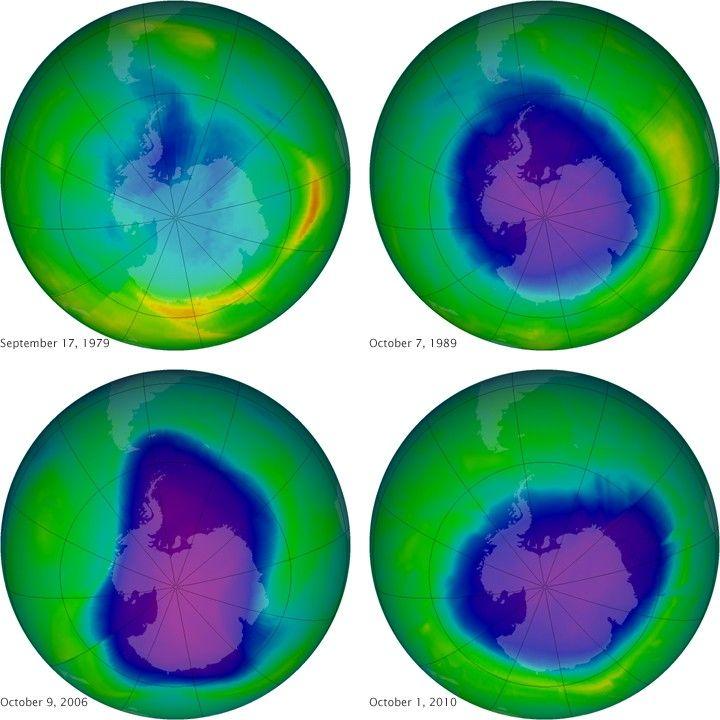
The need for international action became clear and began with the Vienna Convention for the Protection of the Ozone Layer in 1985, followed by the Montreal Protocol on Substances that Deplete the Ozone Layer in 1987.
When the Montreal Protocol came into force in 1989, it established controls on the production and consumption of a defined list of ozone-depleting substances (ODSs), primarily CFCs, halons, and related compounds, setting the world on a path to phase them out.
Over the decades, that list has expanded considerably through successive amendments and adjustments. The Protocol now controls nearly 100 substances, most recently including hydrofluorocarbons (HFCs) under the 2016 Kigali Amendment. At the 37th Meeting of the Parties (MOP-37), held in 2025, Parties took another significant step by advancing pilot projects and funding mechanisms to strengthen regional atmospheric monitoring of controlled substances.
The governance structure protecting the ozone layer
To understand the urgency behind this expansion, it is first necessary to understand how the ozone layer is governed internationally. Today global efforts to protect the ozone layer are guided by the two treaties mentioned above: the Vienna Convention and the Montreal Protocol. Each treaty has its own governing body: the Conference of the Parties (COP) for the Vienna Convention and the Meeting of the Parties (MOP) for the Montreal Protocol. Both are coordinated through the Ozone Secretariat of the United Nations Environment Programme (UNEP).
The General Trust Fund for Financing Activities on Research and Systematic Observations (GTF), a voluntary funding mechanism established in 2003 under the Vienna Convention, supports research and systematic observation activities related to ozone layer recovery, taking into account the recommendations of the Ozone Research Managers (ORM), a forum of atmospheric scientists focused on monitoring the recovery of the ozone layer. Developing countries and countries with economies in transition are regularly invited to submit project proposals for support by the GTF. These proposals are evaluated by the Advisory Committee of the GTF taking into consideration the availability of funds.
The implementation of the Montreal Protocol is supported by the Multilateral Fund (MLF), which helps developing countries meet their obligations to phase out and phase down ozone-depleting substances. Managed by an Executive Committee, its activities are implemented through UNEP, the United Nations Development Programme (UNDP), the United Nations Industrial Development Organization (UNIDO), and the World Bank or bilateral agencies.
The role of WMO in ozone observations and scientific assessment
Through long-term monitoring coordinated under programmes such as the Global Atmosphere Watch (GAW), WMO works closely with UNEP, the Scientific Assessment Panel (SAP) and the wider scientific community to provide observational data and scientific expertise that support assessments of the state and recovery of the ozone layer and help inform discussions and decisions under the treaties.The implementation and evolution of the Montreal Protocol on Substances that Deplete the Ozone Layer are guided by its three Assessment Panels: SAP, the Technology and Economic Assessment Panel (TEAP), and the Environmental Effects Assessment Panel (EEAP). Facilitated by the Ozone Secretariat, the work of these panels informs treaty decisions.
Within this framework, WMO works closely with UNEP to support the scientific assessment process through complementary roles in advisory bodies, joint convening of key meetings and collaboration on major assessment outputs such as the quadrennial Scientific Assessment of Ozone Depletion.
The Global Ozone Observing System was established in 1957 during the International Geophysical Year, to standardize ozone observations worldwide. It later became part of GAW, with a mandate of monitoring the recovery of the ozone layer, including the ozone hole over the Antarctic, through long-term, high quality observations. The GAW mandate also supports the continued development of ozone-related research and observations through the Scientific Advisory Group for Stratospheric Ozone and Ultraviolet Radiation (SAG-O3UV), whose members include leading atmospheric scientists and instrument experts from around the world.
Several members of the SAG-O3UV are also active members of ORM and SAP, which helps maintain coherence across this complex international system.
The wake-up call: Why monitoring became a priority
In 2018, scientists detected an unexpected increase in global emissions of CFC-11, a substance that was supposed to have been fully phased out, possibly originating from a number of regions across the globe, but in particular East Asia. The discovery highlighted the importance of robust scientific monitoring in supporting the implementation of the Montreal Protocol.
In response, SAP produced a white paper titled Closing the Gaps in Top-Down Regional Emissions Quantification: Needs and Action Plan, which concluded, amongst other things, that existing regional-scale monitoring was insufficient to identify the sources of anomalous emissions.
The Parties responded by gradually strengthening support for regional monitoring. From MOP-33 in 2021 onward, decisions charted a progression from identifying gaps in monitoring coverage to planning concrete expansion measures. Decision XXXIII/4 first called for an exploration of regional monitoring options, gaps in coverage and costs. Two years later, Decision XXXV/14 expanded this work to include mapping potential station locations and estimating the costs of strengthening the global monitoring network.
By MOP-36, the focus had shifted from planning to implementation. Through Decision XXXVI/1, the Parties encouraged the evaluation of suitable monitoring sites and expanded the mandate of GTF to include atmospheric monitoring of controlled substances and called on MLF to consider modalities for supporting a limited number of pilot projects to enhance regional monitoring. The message was clear: without measurements, the effectiveness of international action cannot be verified.
WMO: The infrastructure behind the science
Monitoring ozone recovery relies on a combination of ground-based instruments and satellites working together to provide a complete and reliable picture of the atmosphere. First, scientists measure the total ozone column, meaning the amount of ozone above a given location, and its vertical distribution in the stratosphere.
Ground-based instruments such as Dobson and Brewer spectrophotometers have been used since the 1920s and provide long-term, highly accurate records. These measurements are essential to detect slow trends, since ozone recovery happens gradually over decades. Satellites, operating since the late 1970s, complement this work by providing near-global coverage, frequent observations, and high spatial resolution. They allow scientists to monitor ozone over remote regions, including oceans and polar areas, where ground stations are sparse.
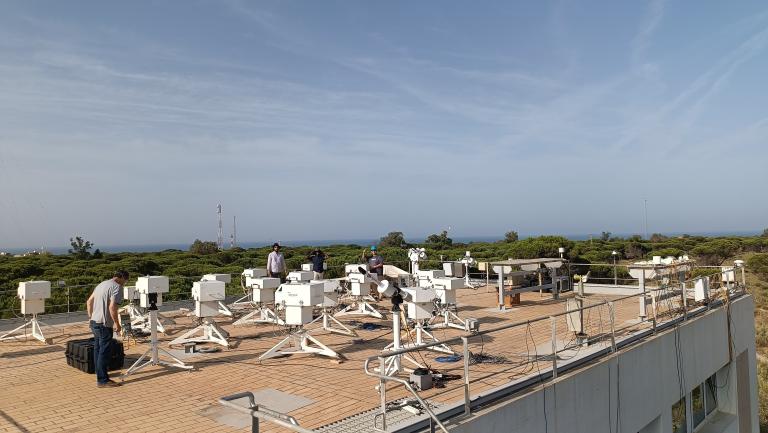
Both systems are necessary because they have different strengths: satellites offer near-global, continuous coverage while ground-based stations provide highly accurate, stable, long-term reference measurements. Ground-based observations also play an important role in the calibration and validation (Cal/Val) of satellite observations, helping ensure that satellite data remain accurate and consistent over time. Without this process, it would be far more difficult to distinguish genuine ozone recovery from measurement errors.
Building and maintaining a global observing network
The global ozone monitoring system depends on a wide range of observing networks and scientific partnerships including the Network for the Detection of Atmospheric Composition Changes (NDACC), the Southern Hemisphere Additional Ozonesondes (SHADOZ) and the Inflight Atmospheric Global Observing System (IAGOS). WMO has established Memoranda of Understanding (MoUs) with several of these networks and is part of the steering committees of NDACC and IAGOS.
At the operational core of this system is the WMO Ozone Monitoring Network, a chain of more than 50 Dobson and 85 Brewer spectrophotometers deployed across 55 countries and operated by National Meteorological and Hydrological Services (NMHSs) and other partners. These instruments measure the thickness of the ozone layer (total, tropospheric and stratospheric ozone columns), recognized as essential climate variables by the Global Climate Observing System (GCOS). Complementing these measurements are ozone soundings conducted at approximately 50 sites across the globe, providing vertical profile data that surface instruments alone cannot capture.
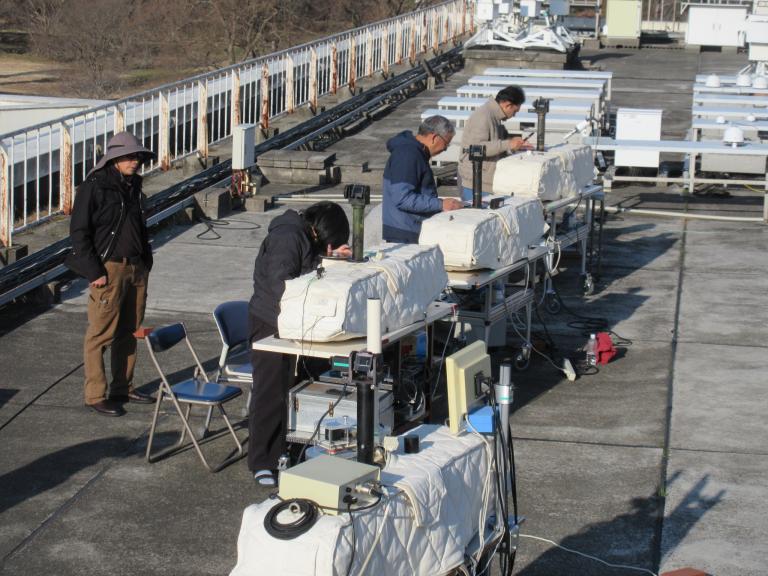
Underpinning all of this is an internationally coordinated quality system under the WMO GAW Programme. This includes Central Calibration Laboratories (CCLs) which maintain reference instruments; Quality Assurance/Scientific Activity Centres (QA/SACs), which coordinate data quality, training, and scientific activities; World and Regional Calibration Centres (W/RCCs), which support GAW stations in ensuring the traceability of their observations to reference standards, conduct intercomparison campaigns (ICs), and provide training and advice; and the World Ozone and UV Radiation Data Centre (WOUDC), responsible for archiving, curating, and providing access to stratospheric ozone data and associated metadata. ICs are essential for maintaining data quality and comparability across borders. Brewer instruments require calibration every two years, while Dobsons require it every five. These exercises often rely on extrabudgetary support from GTF and the Canadian Brewer Trust Fund which supports WMO Brewer spectrophotometer activities.
As of early 2026, GTF has funded 21 such projects and activities globally, including ICs in Spain in 2025 and Japan in 2026, both coordinated by WMO. Another campaign is planned in Argentina in late 2026 to support Regional Associations (RAs) III and IV.
These campaigns are crucial because even small measurement errors can affect the detection of long-term ozone trends. Maintaining the accuracy around 1%-3% and the stability of observation over decades is essential for reliable climate monitoring.
Sustaining such a large global network comes with considerable challenges, including maintaining ageing Dobson and Brewer instruments and the closure of regional centres, such as the QA/SAC and RCC in Japan , which served RAs II and V. The closure poses a significant risk to the continuity of monitoring in the region.
Growing demands for atmospheric monitoring
In 2023, atmospheric measurements put global HFC-23 emissions at around 14200 tonnes, according to the UNEP SAP Report on HFC-23 . HFC-23 is a potent greenhouse gas produced mainly as a byproduct of manufacturing Hydrochlorofluorocarbon-22 (HCFC-22), a refrigerant. Under the 2016 Kigali Amendment to the Montreal Protocol, countries are required to report and reduce these emissions.
However, when all known sources and reported abatements are taken into account, the expected emissions should range between 1600 and 3700 tonnes per year. Atmospheric measurements, however, indicate emissions nearly four times higher. This gap, estimated at between 9600 and 13300 tonnes in 2023, cannot currently be explained by known source, and has persisted for years.
The discovery of unexpected CFC-11 emissions and a continuing gap in HFC-23 reporting have made clear that commitments alone are insufficient without robust atmospheric monitoring systems. The real state of the atmosphere can only be reliably tracked through a sustained, well-calibrated global observing system operated by skilled staff across many countries. Satellites provide a global view of the atmosphere, while ground-based observations ensure the long-term accuracy and consistency needed to assess the progress of international agreements like the Montreal Protocol.
The evolving role of WMO in monitoring controlled substances
The importance of strengthening atmospheric monitoring was further highlighted in 2025 during the 47th meeting of the Open-ended Working Group of the Parties to the Montreal Protocol, held in Thailand.
During the meeting, Decision 96/56 of the Executive Committee of the Multilateral Fund considered the potential for WMO to take on a role as implementing agency for pilot projects to enhance regional atmospheric monitoring of controlled substances.
This role would build on the long-standing work of WMO in atmospheric composition monitoring. Through its GAW Programme, WMO already coordinates stations that measure HFCs and HCFCs, the principal substitutes for CFCs, often as part of the Advanced Global Atmospheric Gases Experiment (AGAGE), which has provided continuous observations since 1978. This possible role remains under consideration with the MLF Secretariat.
As the list of controlled substances has expanded, the need for sustained atmospheric observations has grown alongside it. The long-standing investment by WMO in observation infrastructure, calibration systems, scientific advisory bodies and international partnerships make it uniquely placed to support this next chapter of the Montreal Protocol.


