
Direct dialogue and shared experiences are essential for young people to contribute meaningfully to peace and security in their communities. For participants of recent OSCE initiatives - from the Model OSCE in Tashkent to cross-border dialogues in the Fergana Valley - these platforms offer a space to exchange ideas and turn their perspectives into practical contributions.
Building on these efforts, the OSCE Project Co-ordinator in Uzbekistan organized the Model OSCE Alumni Meeting on 20 October in Tashkent. Bringing together alumni of the Model OSCE alongside young people involved in other OSCE youth activities, including the Young Peacebuilders Cross-Border Initiative, the gathering served as a follow-up consultation to reflect on their experiences and discuss prospects for future collaboration. Discussions focused on overcoming barriers to youth engagement, exploring potential grassroots initiatives, and identifying possible areas for further cooperation, building on the outcomes and lessons learned from previous initiatives.
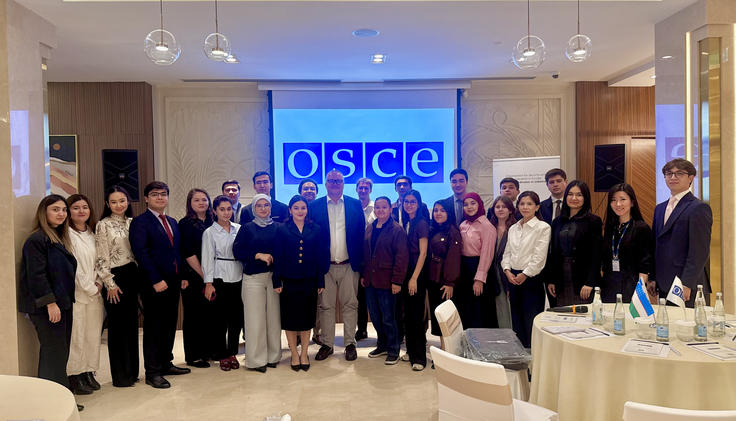
Group photo of participants at the Model OSCE Alumni Meeting in Tashkent, bringing together young peacebuilders and decision-makers
Highlighting the practical impact of the Young Peacebuilders Cross-Border Initiative in the Fergana Valley, Anastasiya Shikina, Co-Chair of the Youth Sounding Board established by support of the Delegation of the European Union to Uzbekistan, emphasized:
"Young people should not be seen simply as an audience for discussions on peace and security, but as partners who can help shape them. Through this initiative, young people from Uzbekistan, Kyrgyzstan, and Tajikistan developed concrete recommendations on building trust, countering misinformation, and addressing shared environmental challenges. Meaningful participation is about having the opportunity to influence what happens next."
For Otabek Turgunboev, who participated in the first edition of Model OSCE in Uzbekistan in 2024, diplomatic simulations complement field experience by developing critical negotiating skills.
"Since then, my engagement with diplomacy, preventive diplomacy, and youth participation in peace and security has continued to grow," Otabek noted. "Looking back, I see the value of initiatives like Model OSCE not only in the skills they teach, but also in the questions they leave you with long after the simulation ends."
The insights, innovative recommendations, and practical proposals shared during the meeting highlighted key priorities and opportunities for advancing the Youth, Peace and Security agenda. By connecting youth, the event reaffirmed the importance of sustained spaces for meaningful youth engagement with decision-makers to strengthen inclusive approaches to peace and security.


