

New research using an artificial intelligence (AI) system is helping to develop new gallium-based semiconductor materials much faster than traditional methods.
The international study, led by Flinders University in collaboration with Khalifa University UAE, built the machine-learning platform to act like a "smart materials discovery engine," which is capable of dramatically reducing the time spent on complex computer or lab experiments to test and find new materials for future semiconductors.
Semiconductors are used in high-tech applications from wearable electronics, communication systems and smartphones to medical and LED devices and solar panels.
"The challenge is that there are millions of possible material combinations, and testing them one by one in the laboratory or with complex computer simulations is extremely slow and expensive," says Flinders University ARC Future Fellow Associate Professor Vi-Khanh Truong, lead author of a new article in ACS Materials Letters, published by the American Chemical Society.
"Instead of randomly searching for materials, the AI we developed learns the hidden chemical rules that control how gallium-based materials behave and then predicts entirely new material compositions with desired electronic properties."
Gallium is one of 31 critical minerals sourced in Australia, and has a wide range of uses. It is commonly used in electronics but it has gained attention recently for its efficiency in computer chip technology. Gallium arsenide, the primary chemical compound of gallium in electronics, is used in microwave circuits, high-speed switching circuits and infrared circuits.
The AI system was trained using thousands of known semiconductor materials from international materials databases. It then used Bayesian optimisation, a form of intelligent decision-making, to continuously search for promising new gallium-containing materials while avoiding chemically impossible combinations.
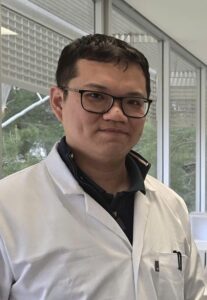
"Importantly, the system does not simply generate random formulas. It checks whether the proposed materials are chemically realistic and physically stable before recommending them. This significantly reduces wasted effort and accelerates the pathway toward experimental validation," says Associate Professor Truong, from the Flinders College of Medicine and Public Health Biomedical Nanoengineering Laboratory.
"The study successfully generated multiple, completely new gallium-based semiconductor candidates that were not present in existing databases."
Associate Professor Truong says one of the key properties targeted in this study is the "band gap," which determines how a semiconductor interacts with electricity and light.
"Different band gaps are needed for different technologies. Smaller band gaps are useful for solar energy harvesting. Medium band gaps are important for LEDs and optical devices. Larger band gaps are critical for high-power electronics and radiation-resistant systems."
The article - 'Bayesian optimization-guided discovery of gallium-containing semiconductors with targeted band gaps' (2026), by Tarek Khater, Aamna AlShehhi, Thong Nguyen-Minh Le, Vincent Chan and Vi Khanh Truong - has been published in ACS Materials Letters DOI: 10.1021/acsmaterialslett.5c01482#15ed0a50-2a95-4059-8e27-2f12821fc5a7
Acknowledgements: Associate Professor Vi Khanh Truong acknowledges support from Australian Research Council for FT240100067 and Channel 7 Children's Research Foundation. High-performance computing resources were provided by the Institute of Atomic and Molecular Sciences, Academia Sinica, Taiwan.


