
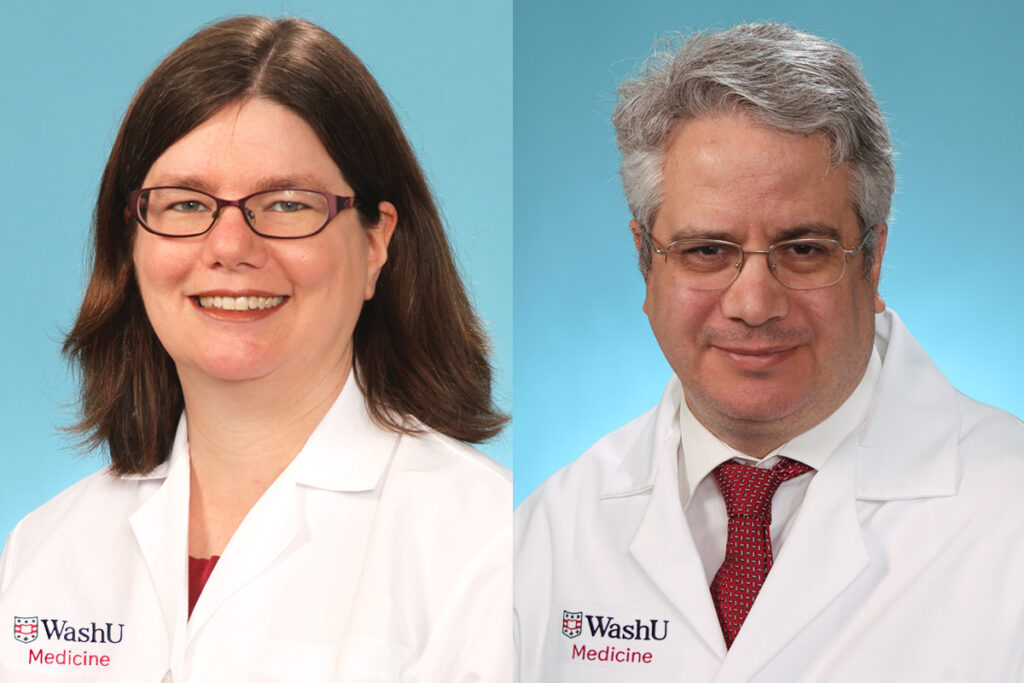
Tammie L.S. Benzinger, MD, PhD, the Hugh Monroe Wilson Professor of Radiology, and Thomas H. Schindler, MD, PhD, a professor of radiology and medicine, both of WashU Medicine's Mallinckrodt Institute of Radiology (MIR), have been recognized with prestigious awards from the Society for Nuclear Medicine & Molecular Imaging (SNMMI).
Benzinger received SNMMI's Brain Imaging Council Kuhl-Lassen Award, given annually for outstanding contributions to the discipline of functional brain imaging. Benzinger, who is chief of MRI service for MIR, researches Alzheimer's disease, mild cognitive impairment and related disorders. Her work has led to new ways to track Alzheimer's indicators and predict risk for the disease using MRI scanning.
Schindler received SNMMI's Cardiovascular Council Heinrich R. Schelbert Award for Excellence in Education. The annual award recognizes excellence in nuclear cardiology education, mentorship and service. Schindler is a physician-scientist who studies risk factors that lead to coronary artery disease and heart attack. He has led several courses a year for clinicians on cardiac imaging and mentors medical students, residents and postgraduate students. His research focuses on the detection and characterization of obstructive coronary artery disease, circulatory dysfunction and scarring in the tissues of the heart that results in a condition called cardiac sarcoidosis.
SNMMI is an international organization dedicated to advancing nuclear medicine, molecular imaging and related therapies and diagnostic tools through education and research programs. It has approximately 15,000 members worldwide.
The honors were presented during SNMMI's annual meeting in Los Angeles May 30 to June 2.


