With more accuracy and less time, a new deep-learning method called PRIME makes the search for metal-binding sites easier.
In the living world, roughly a third of all proteins we know rely on metals to function. Zinc helps enzymes break down molecules, iron helps carry oxygen in the blood, calcium helps relay signals in cells, and potassium flows through the channels that help keep our heart beating. But despite the important role they play, scientists have long struggled to pinpoint exactly where in a protein do the metal ions bind in order to get the job done.
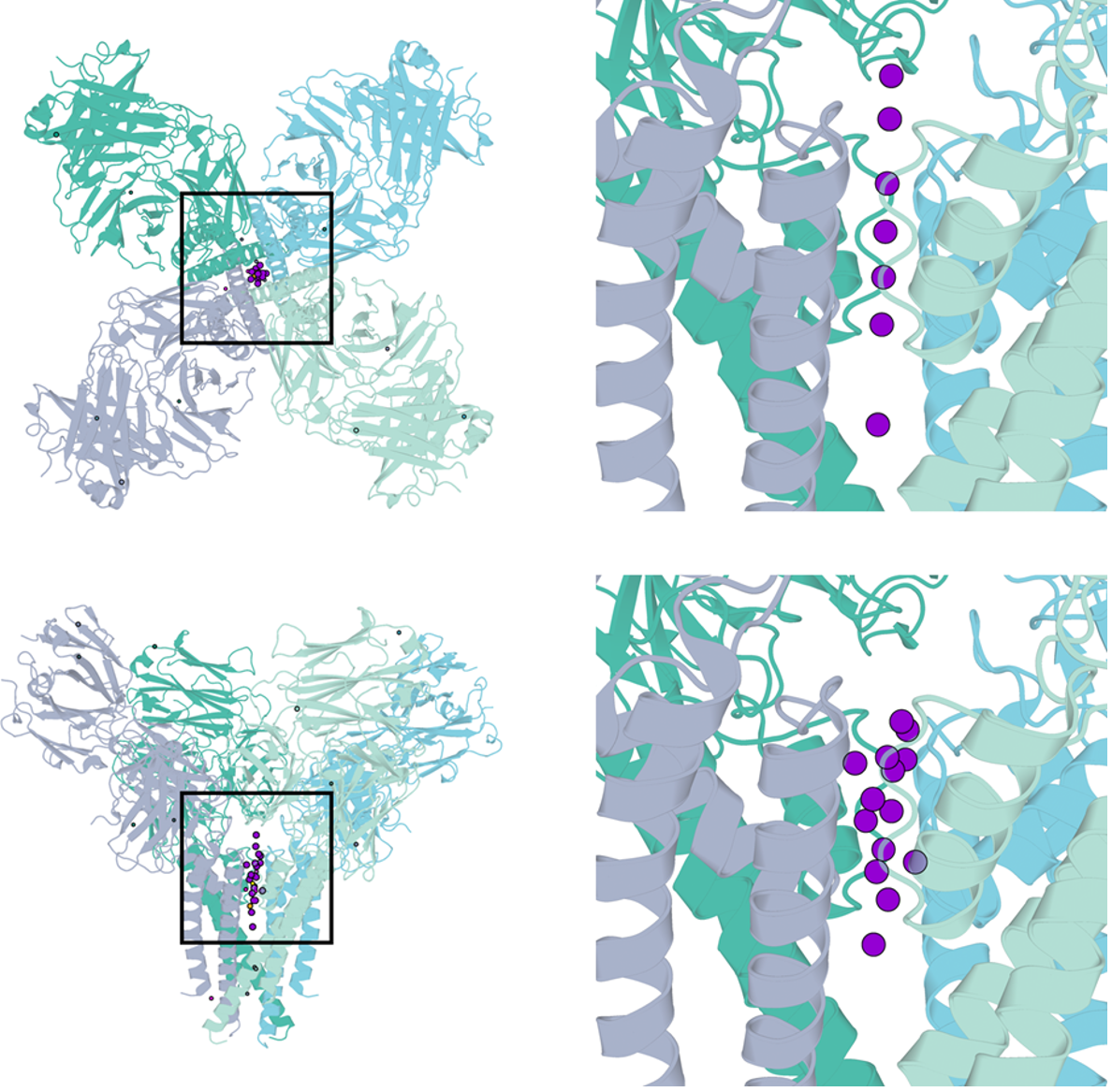
Now, researchers from Hokkaido University have developed a new, fast, and accurate way to predict these metal-binding sites. Their method, called PRIME (Probe-based Identification of Metal-binding sites), is described in Nature Communications and uses a deep-learning approach to solve this long-standing challenge.
"Finding a tiny metal-binding site in a large protein is like searching for a needle in a haystack," said Professor Akira Onoda, lead author of the study. "PRIME uses the unique binding patterns of each metal to overcome this challenge."
Explaining how PRIME is able to accomplish this, Onoda says, "It works in two main stages. First, a language model is used to analyze a protein's sequence-the order of amino acids that make up the protein-and score how likely each part is to come into contact with a metal. Next, it places virtual 'probes' at these promising candidate locations and evaluates the surrounding three-dimensional environment with another model to decide whether a metal is likely to bind there and to predict its exact location."
Over millions of years, evolution has preserved parts of proteins that are essential for their function, including many metal-binding sites. Onoda explains, "That information still survives in today's protein sequences. And so, a great deal of information about where metals bind is written in our DNA." The team combined this information with large datasets of protein structures to make PRIME's predictions.
When researchers tested their new method across 14 different metal ions, they found that PRIME not only performed better than existing tools for well-studied transition metals like zinc, copper, and iron, but also excelled at predicting the binding sites for more loosely interacting metals such as sodium and calcium-cases that have traditionally been difficult to predict. And, PRIME does this in just 11 seconds, about ten times faster than current approaches.
"We were surprised to find a large, almost hidden world of metalloproteins. When we screened 1,000 randomly chosen protein families, about 14% were confidently predicted to bind metal ions, and yet nearly 8% of these were not annotated with binding sites according to existing databases."
Because PRIME runs in seconds and works for both picky transition metals and the more loosely interacting metals, such as calcium and potassium, it can be applied to whole organisms or large protein databases to map metal chemistry on a scale that was not practical before.
This has important implications for health and disease. Metal imbalances can cause real harm. Zinc deficiency weakens immunity, and iron deficiency causes anaemia. The findings could help develop drugs that target metal-dependent proteins and even lead to the design of new enzymes for industrial use.
Looking ahead, the team plans to expand the method to include rarer and less-studied metals. Their goal is to carry out large-scale metalloproteome analyses and uncover new and previously unknown metalloproteins.
Original article:
Shijie Xu and Akira Onoda, "Probe-based identification of metal-binding sites using deep learning representations." Nature Communications. 12 June 2026.
DOI: 10.1038/s41467-026-74657-x
Funding:
This work was supported by the Hokkaido University DX Doctoral Fellowship and JSPS KAKENHI Grants.