
Scientists at Hudson Institute of Medical Research have made a world‑first discovery revealing how Helicobacter pylori, the bacterium responsible for most stomach cancers and peptic ulcers, delivers a key disease‑causing protein into human cells.
This breakthrough provides a new scientific insight into how H. pylori modulates chronic inflammation and promotes cancer, potentially opening new diagnostic and therapeutic pathways.
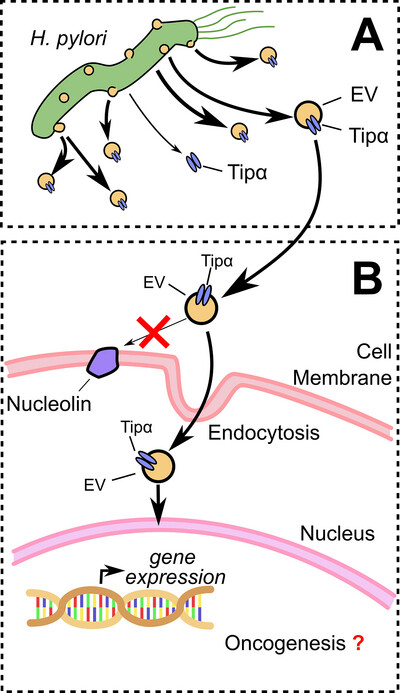
Led by Jack Emery and Professor Richard Ferrero, the study shows for the first time that a poorly understood H. pylori virulence factor, known as Tipα (tumour necrosis factor‑α‑inducing protein), is not simply secreted into the stomach environment. Instead, it is packaged inside tiny nano‑sized particles called extracellular vesicles (EVs), microscopic "delivery pods" that transport bacterial molecules into human cells.
This discovery, published in the Journal of Extracellular Vesicles, positions Hudson Institute as a global leader in H. pylori biology and provides crucial new insights into how the bacterium contributes to stomach cancer, which remains one of the world's deadliest cancers.
A global infection with deadly consequences
Helicobacter pylori infects 43.9% of the global population (4.4 billion people worldwide). In many regions, including Africa, Eastern Europe and South‑East Asia, prevalence exceeds 50%.
While many people never experience symptoms, H. pylori is responsible for:
- 90% of non‑cardia stomach cancers
- 92% of MALT lymphomas
- a major proportion of peptic ulcers
Stomach cancer has a five‑year survival rate of just 40%, largely because it is often diagnosed late.
"Understanding how H. pylori manipulates stomach cells is essential if we want to understand and prevent cancer," says Jack Emery, first author of the study. "Antibiotics can clear the infection, but once cancer develops, treatment options are limited. We need new tools, and that starts with understanding the biology."
A protein with a long-standing mystery
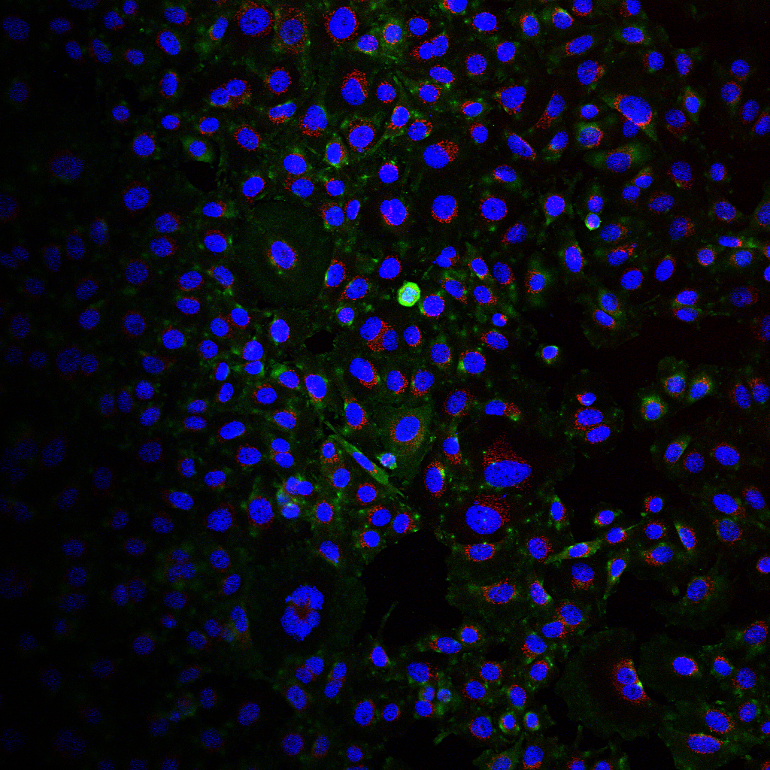
Tipα has been known to scientists for years. It is found in every H. pylori strain that infects the stomach and was linked to inflammation and cancer development. But previous studies produced conflicting results about what Tipα actually does.
Some research suggested Tipα triggers strong inflammation, particularly by increasing TNF – a key inflammatory molecule. Other studies hinted that Tipα might behave differently depending on the strain.
The Hudson team's findings resolve these contradictions by showing that Tipα behaves differently when delivered by extracellular vesicles.
"This was the missing piece," Jack Emery explains. "Tipα's behaviour only makes sense once you understand how it is transported into cells."
The team also found that the amounts of Tipα secreted in EVs varies between different H. pylori strains. It remains an open question whether the amount of Tipα that is secreted correlates with cancer risk.
World-first discovery: Tipα travels inside extracellular vesicles
Using biochemical analysis, imaging, and cell‑based experiments, the researchers uncovered several major findings:
1. Tipα is packaged inside H. pylori extracellular vesicles
This is the first biochemical evidence that an H. pylori virulence factor is packaged within and not outside EVs.
2. EVs are the main mechanism of Tipα secretion
Contrary to previous assumptions, Tipα is not freely released; it is primarily released from the bacteria in EVs.
3. EVs deliver Tipα directly into the nucleus of human stomach cells
Once inside the nucleus, Tipα binds to host DNA.
4. EV‑associated Tipα suppresses inflammation
This overturns earlier studies that claimed Tipα increases inflammation.
"We found that when Tipα is delivered via EVs, it can actually temper the inflammatory response," Jack says. "It reduces production of TNF and IL‑8, which may help H. pylori persist in the stomach for decades."
This ability to dampen inflammation may create the chronic, low‑grade inflammatory environment that eventually leads to stomach cancer.
Professor Ferrero says the discovery provides a new perspective on how H. pylori interacts with host cells to cause disease, and may be relevant to other bacterial infections. "It is the first time a bacterial virulence factor has been shown to be primarily secreted via extracellular vesicles. It also helps explain how H. pylori can manipulate the immune system without invading host cells."
Why this discovery matters for patients
Because stomach cancer is often diagnosed late, prevention and early detection are critical. The team's findings open several promising avenues:
1. New biomarkers for early detection
Tipα‑containing EVs may be detectable in blood, saliva, or gastric fluid, offering a potential early warning sign of infection or cancer risk.
2. New vaccine targets
Understanding how Tipα is packaged and delivered may help researchers design vaccines that block this process.
3. New therapeutic strategies
If Tipα helps H. pylori evade the immune system, targeting EV‑mediated delivery could weaken the bacterium's ability to persist.
"Ultimately, one of our goals is to develop better tools to identify those individuals who are most at risk and prevent cancer before it develops," Dr Emery says.
A global collaboration led from Melbourne
The research was led by Professor Ferrero's group at Hudson Institute and involved collaborators from UNSW Sydney and international partners in Thailand, Brazil, the United States and France, reflecting the global importance of H. pylori research.
His group is internationally recognised for its pioneering work on H. pylori pathogenesis. The research on Tipα was funded by grants to Professor Ferrero from the Australian Research Council, National Health and Medical Research Council and U.S. Department of Defense.
"This discovery reinforces Hudson's position as a leader in H. pylori research," Professor Ferrero says. "Our team has been working on this bacterium for many years, and this study represents a major step forward in understanding its biology and how it causes disease."
What comes next?
The team is now investigating:
- how Tipα interacts with human DNA
- whether Tipα‑containing EVs can be detected in patient samples
- how EV‑mediated delivery influences long‑term cancer risk
- whether blocking EV formation could weaken H. pylori infection
"We've uncovered a completely new mechanism of bacterial communication," Dr Emery says. "Now we want to understand how we can use that knowledge to help patients."
A major step toward preventing stomach cancer
With stomach cancer ranking fifth globally for both incidence and mortality, the need for new prevention strategies is urgent.
By revealing how H. pylori uses extracellular vesicles to deliver a key virulence factor into human cells, Hudson researchers have opened the door to a new mechanism by which the bacterium causes disease. "This is the kind of fundamental discovery that is essential if we want to develop new diagnostics or treatments and make stomach cancer far more preventable," Professor Ferrero says.


