
When a semi-trailer burst into flames on a highway in northern New South Wales earlier this month, it wasn't only the driver who had to flee for his life.
In the back were about 60 cows. With the help of passing motorists, the driver stopped traffic and tried to save the animals. With no loading ramp available, terrified cattle were forced to jump directly from the burning truck onto the road. Some fell and were injured, while others ran onto the highway in panic. Several died.
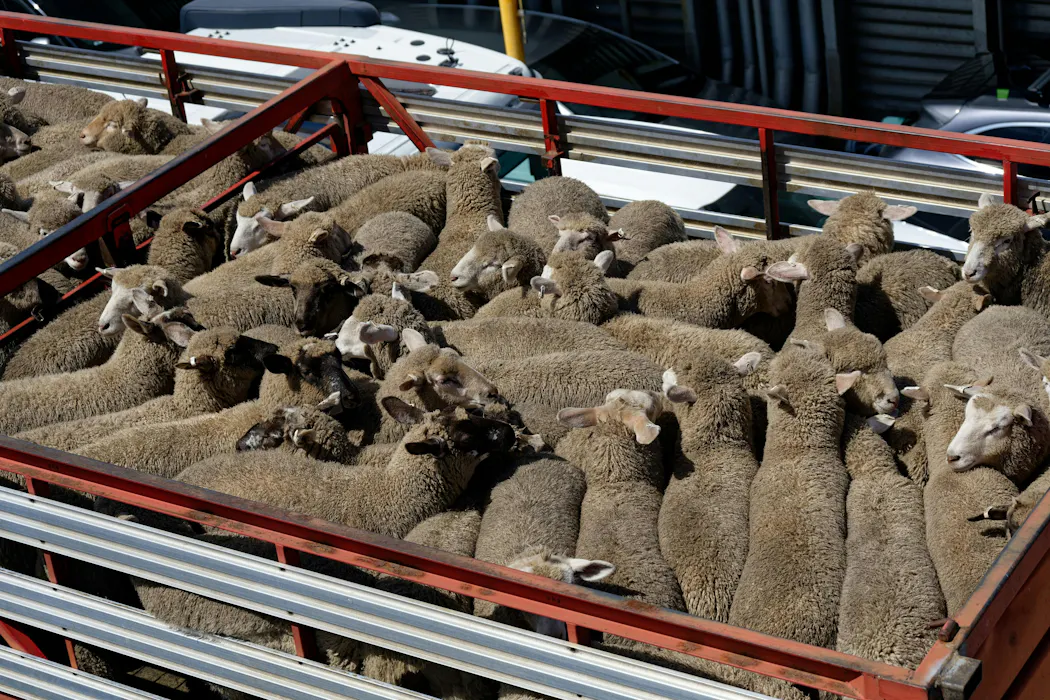
This tragic incident highlights some of the hidden risks faced by thousands of farm animals in Australia. Cattle and sheep are routinely moved long distances from farms to saleyards, between properties, or to slaughterhouses. For the animals, transport is highly stressful. Some are injured or die during the journey. Others arrive so sick, weak or injured that they must be euthanised at the saleyard.
Despite this, there has been very little scientific research in Australia on what happens to livestock once they arrive at saleyards. My recent study published in the journal Animal Welfare addresses that gap. It is the first to document mortality rates of cattle and sheep at saleyards across New South Wales.
This isn't just a major animal welfare issue - it's an economic one as well. And there are steps we can take to resolve it.
Diving into the data
The study was made possible through collaboration with veterinarians from the NSW Department of Primary Industries, who monitor animal welfare at saleyards. They provided access to data recorded in the National Livestock Identification System , where saleyard managers must report animals that die during or shortly after sale days.
We analysed mortality data from cattle and sheep sold at a sample of saleyards across New South Wales between January 2021 and December 2024. We also examined factors that may increase the risk of death, including weather conditions, saleyard size and location.
The "sale mortality rates" include all animals found dead on arrival in trucks, animals that are too sick or injured during the journey so they have to be euthanised, and those that die while being held at the saleyard.
The average mortality rate each sale day was 0.016% for cattle and 0.096% for sheep. This equates to roughly one death per 6,000 cattle and roughly one death per 1,000 sheep.
Scaled up - multiplying sale day mortality by 365 days, to calculate annual equivalent mortality - sheep and cattle had annual equivalent mortality rates of 34.9% and 5.8%, respectively.
So far this year, more than half a million cattle have been sold through saleyards in New South Wales.
In cattle, we found mortality was linked to high daily temperatures as well as the size and location of the saleyard. For sheep, colder minimum temperatures and saleyard location were associated with higher mortality.
The need for better standards
There are standards and guidelines for ensuring the welfare of livestock at Australian saleyards.
The Australian Animal Welfare Standards and Guidelines set out the minimum legal requirements and recommended practices for the care and transport of livestock.
However, because animal welfare laws are managed by individual states and territories, the rules can be applied and enforced differently across Australia.
In the European Union, by contrast, all member countries follow the same regulations for animal transport. European rules generally allow shorter journey times and require animals on long trips to be fed and watered during transport.
Reforms along these lines should be implemented in Australia. The standards and guidelines should be enforced regularly and in the same ways across all Australian states.
All stakeholders involved in the cattle and sheep production chain should also be trained on low stress handling, being able to recognise stress and fear in animals, and educated on the minimal welfare standards.
More than just an ethical issue
Apart from the obvious animal welfare issue, the death of cattle and sheep in transport or at saleyards is also an economic problem for the livestock industry. For example, a single cow can sell for roughly A$1,800 to A$2,000.
On top of that, stress during transport and handling can also reduce meat quality . So reducing it also makes sense for consumers.
High-profile incidents, such as the truck fire in northern New South Wales, can also damage public trust in the livestock industry and weaken its "social licence" to operate.
More research that identifies safer transport practices and better saleyard management can help reduce losses, improve product quality and strengthen confidence in the industry.

Barbara Padalino has received funding from the European Food Safety Authority, European Union, Italian Ministry of Health, Italian Ministry of Education, as well as several NGOs and foundations including World Horse Welfare, Animals Angels and Animal Morris Foundation.


