
Cell and gene therapies use the body's building blocks - cells and genetic material - to boost the immune system or correct the root cause of disease. It is a new era in healthcare, in some cases offering the possibility of a cure where previously only relief or slowing of disease was possible.
Text: Annika Lund, first published in Medicinsk Vetenskap nr 4 2025
The blind will see, the deaf will hear. Is this perhaps the biblical prophet Isaiah echoing his vision of the future, written some 2,700 years ago? No - it is a snapshot from ordinary news reporting.
In autumn 2025, more than 40 cell and gene therapies had been approved in the United States, ready for use in standard healthcare. One of them can actually restore sight, provided the blindness is due to a specific hereditary variant. Genetically caused deafness also appears to have been treated successfully, though those therapies are still only given in clinical studies.
Among the already approved medicines are groundbreaking examples. In one case, the Nobel Prize-winning CRISPR technique - the gene-editing "scissors" - is used. The medicine Casgevy alters the DNA strand in blood stem cells taken from patients with sickle cell disease or beta-thalassaemia, both severe and painful blood disorders. When the edited cells are returned to the patient, they continue to divide as healthy cells - the patients appear cured of their potentially fatal conditions.
Another approved medicine, Zolgensma, seems able to cure spinal muscular atrophy, a congenital disease where children previously rarely lived to celebrate their second birthday. Since 2023, the disease has been included in Sweden's newborn screening programme, meaning more children can receive treatment in time.
A handful of approved CAR-T therapies have cured patients with advanced, widespread blood cancers in cases where no other cancer treatments remained.
On the research side, activity is intense. More than 4,200 cell and gene therapies are estimated to be in development. Some are well on their way to market, including candidates targeting complex common diseases such as heart failure, type 2 diabetes and Alzheimer's disease.
A hub for advanced therapies
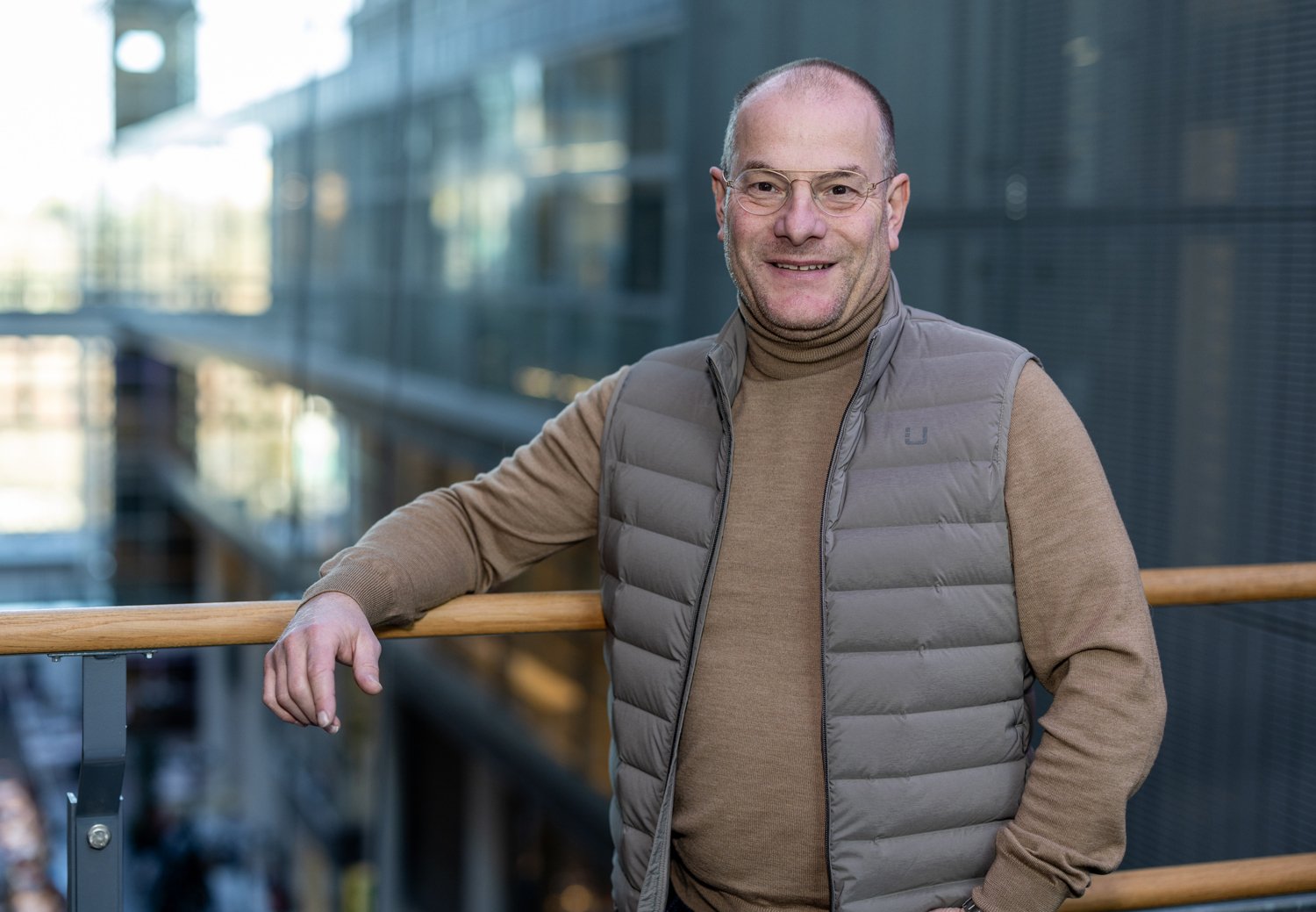
All this is explained by Knut Steffensen , director of Karolinska ATMP Center - a hub for advanced therapy medicinal products based on genes, cells or tissues. The Center is designed to bring together research, healthcare and the pharmaceutical industry.
"The potential of these new advanced therapies is enormous. Just over a decade ago these techniques were seen as science fiction. Now they are reaching patients in standard healthcare, and research is expanding to cover more and more indications," he says.
Karolinska ATMP Center is intended to support researchers who want to take their discoveries further - from basic insights into disease mechanisms to, ideally, approved treatments.
"The ecosystem here makes it possible for healthcare, universities and pharmaceutical companies to work side by side. We can take products all the way to finished medicines," says Knut Steffensen.
But testing medicines in clinical trials is costly. Researchers who want to advance their discoveries need more funding than academic studies alone can provide. Several paths exist - pharmaceutical companies can finance trials of potential drugs, or researchers can start their own companies and raise venture capital.
"Our goal is to ensure that all promising ATMP products developed at Karolinska Institutet enter clinical trials. Once researchers start working with that in mind, I believe collaborations here at the ATMP Center could result in several medicines originating from Karolinska researchers," says Knut Steffensen.
There is also a third option. Some academic discoveries can continue to be produced as hospital-manufactured medicines, without a pharmaceutical company being involved.
Steffensen envisions the ATMP Center taking on that role in treating serious, rare diseases.
"Absolutely. We have laboratories and a manufacturing unit here. We can make the same kinds of cell and gene therapies found in commercial products - but at cost price, without the profit margins of a pharmaceutical company. That could save healthcare a great deal of money," he says.
Treatment for hereditary blindness being tested
One illustrative example is trials of a therapy for hereditary blindness. This rare condition can be caused by different genetic defects, all affecting retinal function. Around 300 such mutations are known. Each is individually rare, but together congenital genetic defects are the most common cause of blindness in younger people.
In healthy individuals, these genes produce proteins essential for the function of photoreceptor cells. Without them, the retina gradually loses function and patients eventually become blind. But the photoreceptor cells can be "dormant" - they may start working again if protein production is restored.

About 80 Swedes live with a specific variant of hereditary blindness called Bothnia dystrophy. The disease is classified as extremely rare, affecting about one in 800,000 people.
"It so happens that the largest known population of people with this disease lives in northern Sweden. The research unit at Novartis, which became interested in this mutation, realised this early on. They contacted us at St Erik Eye Hospital to collaborate on a clinical trial of their treatment," says Anders Kvanta , professor of ophthalmology at Karolinska Institutet.
He led the study in which twelve patients received gene therapy: a healthy gene was surgically introduced into the retina using a harmless viral vector. The gene began producing protein - and the photoreceptor cells started functioning again.
Eleven of twelve patients regained sight to varying degrees. For some the difference was dramatic - one returned to a previously abandoned career.
"Others described being able to take an unassisted walk or read ordinary books to grandchildren whose faces they could see for the first time," says Kvanta.
Challenges of cost and access
Novartis already has an approved gene therapy for hereditary blindness, Luxturna, which targets a different gene mutation. Luxturna was approved in Sweden in 2018.
It took time before Luxturna became available to Swedish patients, as it was initially deemed too expensive. The Swedish NT Council, which advises on cost-effectiveness, said no. Eventually a discount agreement was reached, and since 2021 NT Council has recommended Luxturna - but at a lower price than Novartis originally sought.
Meanwhile, Novartis lost interest in Bothnia dystrophy and chose not to pursue approval, despite the study showing good efficacy and safety.
This is disappointing for patients who want treatment, and frustrating for doctors who want to provide it.
Steffensen suggests that in such cases healthcare and universities could move forward independently. "Genes cannot be patented," he notes.
The key knowledge - that introducing a healthy gene can restore vision - also cannot be patented. However, the specific drug tested, combining the gene with a viral vector, is patented. To develop a new therapy, researchers would need a new way to deliver the gene into photoreceptor cells.
"It should be possible to replicate the concept, introducing different genes depending on the mutation. That way we could have a more general treatment for hereditary blindness. We could pursue this within academic studies," says Kvanta.
Karolinska ATMP Center includes Vecura, a manufacturing unit able to produce cell and gene therapies in small volumes - sufficient for research, or even to supply a small patient population.
"It is difficult to make medicines for tiny patient groups profitable. But if pharmaceutical companies won't develop products for rare diseases - who will?" asks Steffensen.
He continues:
"If the ATMP Center could both develop and manufacture a gene therapy for hereditary blindness, why should only Swedish patients benefit? One could imagine medicines produced here being shared across borders - but regulatory approval processes make that challenging. Today's system is built on specific companies applying for approval. This is a key issue that must be solved for the future. Why should pharmaceutical companies have access to a global market but not a unit like ours?"
These first-generation gene therapies mainly target conditions caused by a single faulty gene - so-called monogenic diseases. Examples include hereditary blindness, haemophilia, cystic fibrosis, Huntington's disease, Duchenne muscular dystrophy and familial amyloidosis. Many are rare, some extremely rare.
But taken together, monogenic diseases are quite common. Estimates suggest as many as one in 250 people are affected by a condition caused by a single congenital gene defect. Some are mild, but others are life-threatening.
Hereditary diseases often occur in geographic clusters, in small communities where mutations have been passed down for generations. Bothnia dystrophy is one example. Sweden also has familial amyloidosis ("Skelleftesjukan"), affecting the heart, kidneys and nervous system.
In these cases, research, healthcare and industry have come together - collaboration is a prerequisite for the entire ATMP field.
CAR-T Therapy - From research to healthcare
CAR-T therapy is a prime example. Patient cells collected in healthcare are part of the pharmaceutical manufacturing process. Production must follow Good Manufacturing Practice (GMP), covering every step - including hospital handling of cells. If hospitals do not meet company requirements, CAR-T cells cannot be produced and patients cannot be treated.
"It has taken time to establish these routines. The ATMP Center is now part of the process of creating joint procedures between healthcare and companies," says Knut Steffensen.
Sweden treated its first CAR-T patient in Uppsala in 2014 - the first in Europe, indeed the first outside the US. The trial included fifteen patients with advanced blood cancer. Results published in 2018 were impressive: six appeared cancer-free within months, though some later relapsed.

"It is almost unbelievable what the Uppsala researchers achieved under the conditions they had. But when the study ended, the ability to continue providing treatment unfortunately disappeared," says Stephan Mielke , professor at the Department of Laboratory Medicine at Karolinska Institutet.
He describes how Sweden, initially at the forefront, fell behind. Major companies chose other countries for their trials. The first approved CAR-T therapy in Europe, Tisa-Cel, did not receive an NT Council recommendation for lymphoma due to uncertainties in the health-economic assessment.
"It was a strange situation. Sweden was so early with this innovative product, but when patients in other countries received commercial CAR-T cells, Swedish patients did not. That was the situation when I was recruited in 2017," says Mielke, who also serves as medical lead for cell therapy and allogeneic stem cell transplantation at Karolinska University Hospital.
He worked to certify the hospital for collaboration with industry on CAR-T cells. In November 2019, the first Swedish treatment in routine care was given, and Mielke was one of the treating physicians.
"The same day we signed the agreement with the company, we started the first treatment. It was a child who was very, very ill. I won't go into details, but the situation has truly improved for that child," he says.
Good results in routine care
Together with other researchers, he recently published a summary in Leukemia on the first hundred patients treated with CAR-T in Swedish routine care. All had blood cancers involving diseased B cells and were severely ill; for many, all other options were exhausted.
Adults treated between 2019 and 2024 had a 67 percent probability of being alive two years post-treatment, a result that according to the authors are better than observed in other European countries. Most who died during the period died from their cancer; some died in connection with treatment.
CAR-T cells are extraordinarily potent-in both efficacy and potential side effects, Stephan Mielke explains.
"You only grasp the magnitude when you see it," he says.
CAR-T cells are manipulated T cells, normally part of the immune system. They are collected from the patient's blood and modified in the lab, where they are given a new receptor which replaces the one they normally use to recognise threats in the bloodstream.
This receptor includes an antibody component that draws them like magnets to specific cells, which they then destroy.
"It happens at breakneck speed-the immune reaction is powerful. If there are many cancer cells, we can see a reaction similar to some COVID patients-cytokine storms, where the immune response is so strong that the body is harmed," says Mielke.
Healthcare has become progressively better at managing such side effects, but they may still require hospital care. CAR-T is a rapidly advancing modality-the most widely used ATMP. Five CAR-T medicines are now recommended by NT Council for routine use in Sweden, for various forms of lymphoma, leukaemia and myeloma, all B-cell diseases.
It is no coincidence that early CAR-T therapies target B cells: people can live without B cells. If CAR-T cells become overzealous and kill both diseased and healthy cells, patients with B-cell disease may still do well.
Tested against autoimmune diseases
Initial efforts to broaden CAR-T have targeted other B-cell-driven diseases, including autoimmune conditions such as several rheumatic diseases and multiple sclerosis.
Smaller studies have already shown that patients with severe SLE or myositis-potentially fatal rheumatic conditions-have appeared healthy after CAR-T and were able to stop their rheumatology drugs. Others with severe systemic sclerosis saw marked symptom improvement but still needed medication, as described in a 2024 study with 15 months of follow-up.
Mielke foresees CAR-T taking a larger role in care. A next step is in vivo manufacturing-producing CAR-T inside the body rather than in the lab. Another avenue involves allogeneic T cells from healthy donors, potentially enabling off-the-shelf cell products.
Intense research is also underway to make CAR-T effective against solid tumours, not just B-cell diseases. The challenge is identifying targets truly specific to tumours, clearly distinguishing diseased from healthy cells.
According to Mielke, it is only a matter of time before this is solved.
"We will make progress. There are so many researchers invested in this," he says.
In short: CAR-T treatments are expected to grow in number, cover more diseases, and become more sophisticated.
A similar trajectory is underway in gene therapy. Many monogenic diseases are in the focus of researchers, while attention also turns to more complex conditions involving multiple genes and proteins-the field's momentum is high.
"We are only at the beginning of this journey. I think all healthcare in future will have an ATMP element-from eyes, ears and teeth to reproduction, ageing and memory, and everything in between. We can't yet imagine it," says Mielke.
High price tag but great potential benefits
The price tag is equally hard to imagine. New gene therapies, often given once, are extraordinarily expensive, taking turns at being called "the world's most expensive drug." Right now haemophilia therapy Hemgenix is described as the most expensive, recently it was Libmeldy for MLD, and before that Zolgensma for SMA. In Sweden, the price for a single dose is around or above 30 million kronor.
That can alarm any regional policymaker. Even if each patient group is tiny, together they add up-especially as more medicines reach the market.
Health-economic evaluations for ATMPs are hard for several reasons. How should the cost of a single expensive one-off dose be weighed against savings over time when other treatments are no longer needed? Annual budgets are a poor fit. It is also difficult to judge how durable cures really are when long-term studies are lacking.
These issues remain unresolved. Proposed solutions include instalment-like payment models, where regions pay over a longer period, and outcomes-based agreements, where companies are paid only if a certain effect is achieved.
"Making these medicines available to patients is the greatest challenge," says Mielke.
Cell therapy is treatment with living cells
The cells used in cell therapy can be taken either from the patient or from a donor. Examples include:
Basic cell therapy
Blood transfusions can be considered the earliest example, though they are not advanced cell therapy.
Bone marrow transplantation
Also called allogeneic blood stem cell transplantation, included in Swedish routine care since 1975. Donor blood stem cells and immune cells replace the patient's diseased cells, mainly for cancers.
Modified immune cells
CAR-T cells are the patient's own immune cells genetically altered to carry an artificial receptor, enabling them to recognise and attack specific cells, such as cancer cells or those driving autoimmune disease. In these cases, immune cells receive gene therapy. Studies are underway with NK cells-another immune cell type-as cancer treatment.
Cultured cells
Since the 1980s, severe burns have been treated with skin cells harvested from the patient, grown in the lab and returned-a life-saving therapy for very severe burns.
Stem cell therapy
Stem cell therapies for lost functions-for example in heart failure, Parkinson's disease, age-related macular degeneration and type 1 diabetes-are not yet routine care, but research is advanced.
More cell therapies are listed here: vavnad.se/cell
Sources: Vävnadsrådet, Edvard Smith, Knut Steffensen et al.
Gene therapies target disease-causing genes
Treatments that alter or replace disease-causing genes can achieve lasting correction of protein production, addressing the root cause - the body stops producing errors and the patient is, hopefully, cured. But these medicines are new, follow-up times are still short, and it is difficult to declare definitive cures. There are several approaches:
Introduce a new gene
A replacement gene can restore normal function. A concern is limited durability if the replacement gene is not consistently carried through cell divisions.
Gene-editing "scissors" (CRISPR)
Editing the genome means the change persists through cell division, making the treatment permanent.
Small pieces of genetic material
So-called therapeutic oligonucleotides leave the genome untouched but can affect, for example, mRNA. This can control protein production so that a damaged gene still yields a healthy protein. If treatment stops, the oligonucleotide clears and the effect ends.
Sources: Genteknik.se, Edvard Smith, Rula Zain et al.


