Manon Westphal's research focuses on highly topical political issues, such as polarization, oligarchy and citizen participation. In this episode of NewIn, she discusses why conflicts can be productive, why technology companies challenge democracy to innovate and why she works at the practice-oriented TUM Think Tank as a theorist.
Display external content
At this point content of an external provider (source: www.xyz.de) is integrated. When displaying, data may be transferred to third parties or cookies may be stored, therefore your consent is required.
You can find more information and the possibility to revoke your consent at www.tum.de/datenschutz .
I agree
A divided society, irreconcilable positions, constant strife between political parties - political polarization is considered one of today's greatest threats to democracy. Manon Westphal has been examining disagreements and conflicts not just since this topic came into the media spotlight, but ever since her graduate studies in political science. However, it was an idea that has largely fallen out of view today that particularly interested Westphal. "While many theories of democracy emphasize deliberative processes and the exchange of arguments, others highlight the importance of conflict and question whether consensus must always be the goal of democratic processes," she explains. "I still find the possibility of accepting dissent very thought-provoking."
The seminar in which these political theories were discussed fascinated Westphal so much that she embarked on an academic career in this field. Since then, she has been exploring the following questions: To what extent can disagreements and conflicts be productive? When do they become problematic? And how can one make this distinction? Westphal answers these questions using the tools of political theory. "With its normative and conceptual perspectives, it can provide guidance," says Westphal.
The creative potential of theory
This is also evident in Westphal's second research focus: democratic innovations. "We are investigating new forms of political participation of citizens." One example is citizens' assemblies, which are gatherings that develop recommendations on a specific topic. Members are selected by lot. "Using political theory, we can clarify what the advantages of this format are. Which democratic principles can be realized through it, and for what purposes should it be used? For example: Do the assemblies make the political decision-making process more inclusive? Should they even make certain decisions, or do they lack the legitimacy to do so because they are not elected but selected by lot?"
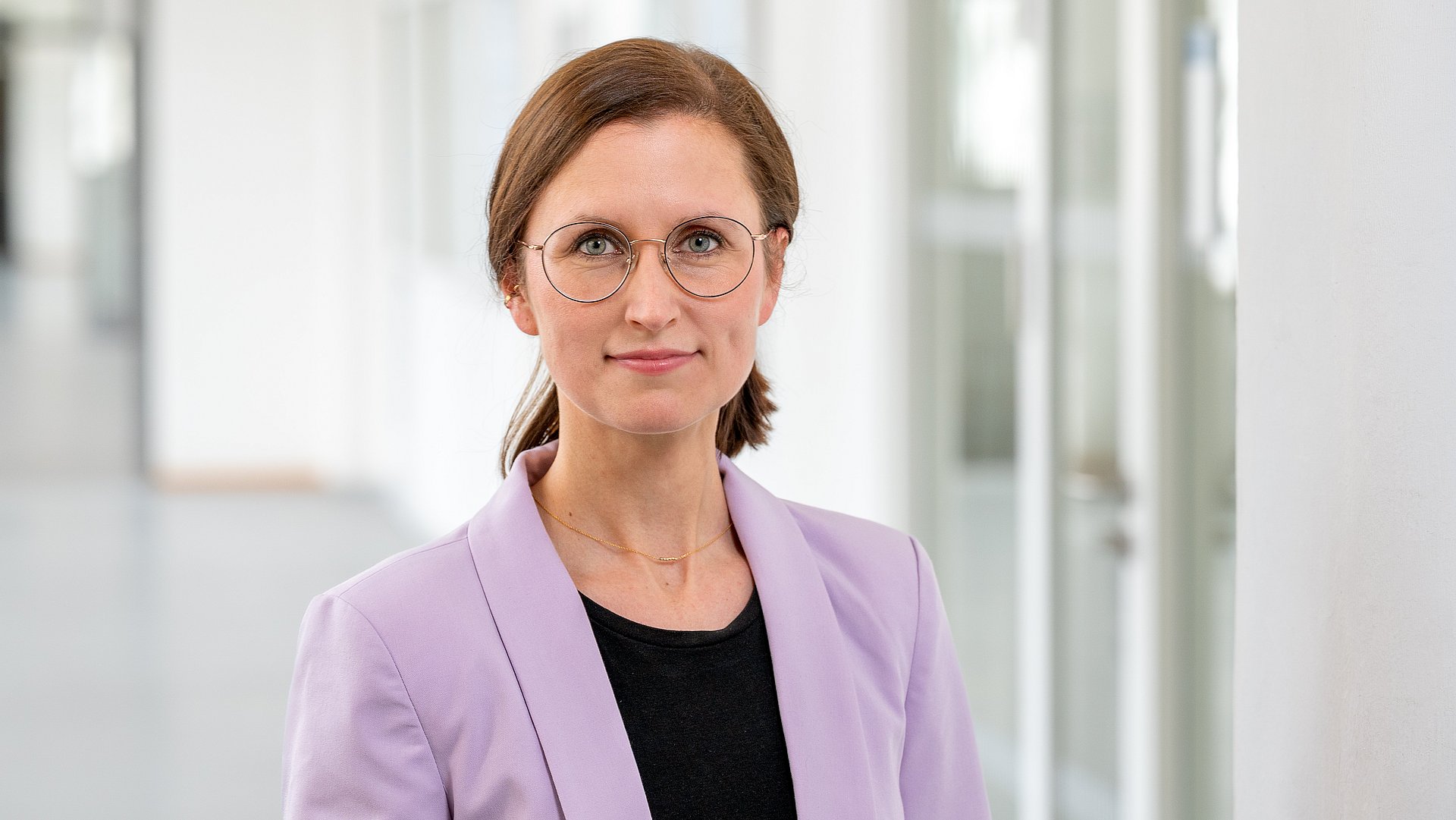 Astrid Eckert / TUM
 Manon Westphal founded the Democratic Innovations Lab at the TUM Think Tank to address this field. At the think tank, academia, civil society, politics and business work together to develop solutions and tools for pressing problems. The lab is designed to devise and test concrete formats for political participation. But how does the think tank's practical focus align with theory? "I believe that political theory should have a strong connection to empirical research," Westphal emphasizes.
"I don't view normative arguments as floating freely in the world of ideas and principles. They must also be plausible in light of empirical findings and practical requirements." Furthermore, political theory has great creative potential. "Because normative argumentation isn't exclusively tied to what already exists, we can more easily develop new ideas and proposals for shaping the future."
Political theory of Big Tech
Westphal came to TUM in part because of the many opportunities to bridge the gap with empirical research fields, not least due to the collaboration with the engineering sciences. Last semester, she offered a seminar on the political theory of Big Tech. "I also study oligarchic power in democracies, that is, economic power that can be converted into political power. Such conversion runs counter to democratic principles, such as political equality." Technology companies play a major role in this regard. "Because technologies and consequently corporate decisions have such a profound impact on us, this new area of political theory is particularly interesting - and one in which we urgently need democratic innovations."
Manon Westphal has been a professor of Political Theory and Philosophy at the TUM School of Social Sciences and Technology and at the Munich School of Politics and Public Policy (HfP) since 2025. After earning her doctorate at the University of Münster, she was a DFG fellow and lecturer at the University of Amsterdam, as well as a postdoc and interim professor in Münster.