
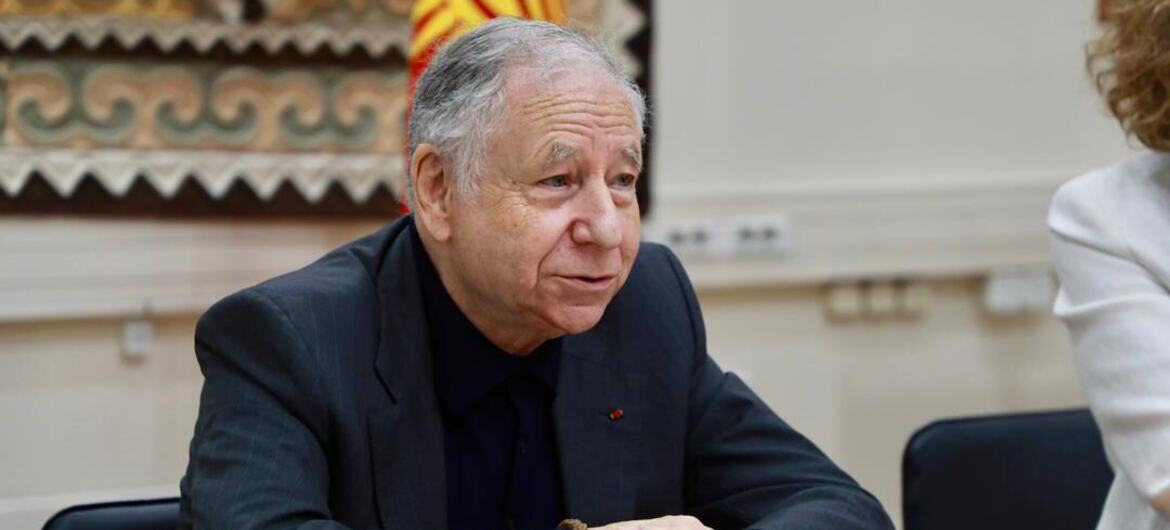
Jean Todt spent decades around the deadliest motorsport on Earth. He was a rally co‑driver, then ran Ferrari's Formula One team, then became president of world motorsport's governing body. In his early years, a driver dying at the track barely made news.
"When I started as a boy, it was very, very dangerous," he says. "People were not surprised if somebody got killed in a racing car."
That world no longer exists. Decades of engineering, regulation and relentless safety work have made a 200mph pile‑up survivable. "Everybody now would be surprised if somebody would be injured in a racing car," Mr. Todt says.
Now he wants the same transformation for the school run, the motorbike commute, the delivery rider weaving through traffic - because the numbers on ordinary roads are still where motor racing used to be.
Millions dead and injured
1.2 million people are killed on the world's roads every year. Another 50 million are injured. It is the leading cause of death for children and young people aged five to 29 - a toll so constant that Mr. Todt, now the UN Secretary‑General's Special Envoy for Road Safety , calls it "a silent pandemic on the road."
"Unfortunately, you get used to the situation," he says.
This week coming, world leaders and ministers gather at UN Headquarters in New York for a two‑day meeting aimed at halving road deaths by 2030, a goal the world is badly off track to meet.
What makes the crisis unusual, Mr. Todt argues, is that nobody is short of solutions.
"Contrary to other pandemics, we have the prescriptions: education, law enforcement, quality of vehicles, quality of roads, quality of post‑crash care," he says. Enforce seat belts, helmets, speed limits and drink‑driving laws properly, he says, and "we would immediately divide by two the number of victims on the roads."
Ninety per cent of road deaths happen in low‑ and middle‑income countries, where safer roads, stronger laws and real enforcement remain far off.
Start them young
The Special Envoy starts young. "If you educate a young boy or girl, six, seven, eight years old, then immediately they will know how to behave," he says, and, crucially, they pass it on to the adults driving them around.
But education without consequences goes nowhere, he warns. "If people know they can behave badly without consequences, there is no reason to change." Corruption, he adds flatly, "cannot work with" effective law enforcement.
New risks keep arriving. E‑bikes, e‑scooters and app‑based delivery riders, often paid by the order and racing the clock, sometimes without a helmet, have added fresh danger to city streets. Self‑driving cars might eventually help, Todt says, but not soon, and not where the crisis is worst: countries still running on ageing vehicle fleets and patchy public transport.
Speaking up
Even inside his own institution, Todt says road safety struggles to be heard. "Very often I travel, I meet the UN team and I say, 'I'm going to be the first one to speak about road safety.' Very often, I am right."
His pitch, stripped of jargon, is essentially the one that transformed his old sport: the deaths were never inevitable, and neither are these.
"Prevention is essential," he says. It took motor racing decades to believe that. The roads, he hopes, will not need as long.


