
The University of Exeter is playing a leading role in shaping the future of metamaterials innovation in the UK, as a new national roadmap sets out priorities for translating world-class research into commercial applications and industrial capability.
The UK Metamaterials Commercialisation Roadmap establishes a shared national ambition to accelerate the commercialisation and adoption of metamaterials over the next decade, building on the UK's international research strengths while addressing the challenges of manufacturing scale-up, investment and skills.
Professor Alastair Hibbins, Director of Exeter's Centre of Metamaterials Research and Innovation, jointly leads the UK Metamaterials Network alongside Dr Claire Dancer of the University of Birmingham. The Network connects around 1,300 members across academia, industry and government, bringing together the expertise and partnerships needed to advance the field.
Professor Hibbins and Dr Dancer said: "Building on the UK's world-leading academic excellence, research, training, and metamaterials community, the launch of the UK Metamaterials Commercialisation Roadmap represents a defining moment, positioning the UK at the forefront of an enabling and transformative technology.
"We see the Roadmap charting a course towards the UK becoming a global leader in commercialising metamaterials research and innovation, contributing to our nation's security and prosperity.
"Realising this ambition depends on coordinated community action, driven by the community activities of the UK Metamaterials Network's c.1300 academic, industry, and government members, to fully harness the UK's competitive advantage in metamaterials."
Developed by the government-convened Metamaterials Strategy Action Group established as part of the National Materials Innovation Strategy and the UK's Modern Industrial Strategy, in partnership with stakeholders across industry, academia, research and technology organisations, and policy, the roadmap identifies five priorities: ecosystem, innovation, manufacturing, assurance and skills.
The strategy highlights the UK's significant strength in metamaterials research, while recognising that maintaining its international position will depend on a more coordinated approach to commercialisation. Investment in manufacturing capability, supply chains and skills will be critical to translating scientific advances into viable products and industrial applications.
The roadmap was facilitated by the Institute of Physics, with extensive engagement across the UK metamaterials community through workshops, consultations and expert input.
The University has established world-leading expertise in metamaterials, including the £19.6M MetaHub launched as a joint private and public investment last year, supported by a collaborative research community and strengths in interdisciplinary science and innovation. This provides a strong foundation for contributing to the opportunities identified in the roadmap, from advancing fundamental science to developing technologies with practical applications.
Professor Lisa Roberts, President and Vice-Chancellor of the University of Exeter, said: "At the University of Exeter, we are proud to be at the forefront of pioneering research in metamaterials, an area with immense transformative potential across multiple sectors, from healthcare to sustainability and beyond.
"As the UK advances its national metamaterials roadmap, Exeter's long-term strength in metamaterials, together with our strengths in interdisciplinary science and innovation, positions us to play a leading role. By bringing together world-class expertise and working closely with partners across academia, industry and government, we are helping to translate discovery science into solutions that address some of the most pressing challenges facing society today."
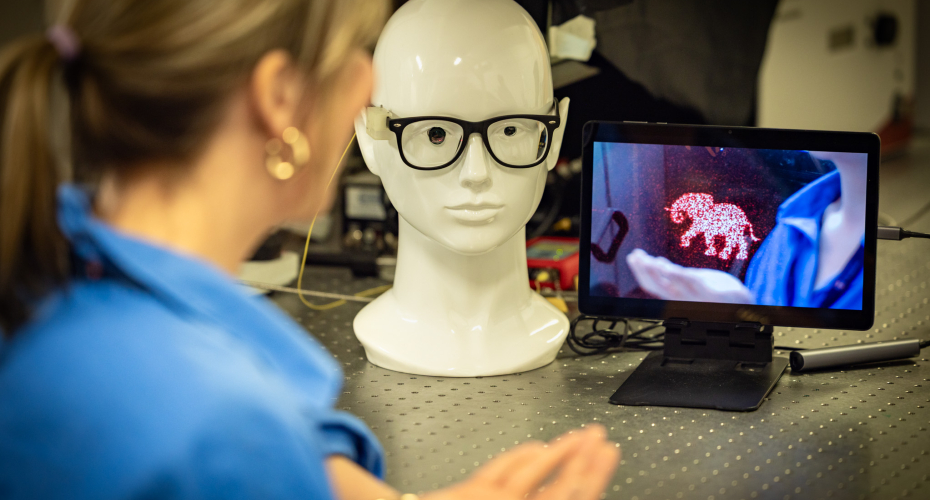
Tom Grinyer, Chief Executive Officer of the Institute of Physics, said: "The UK has the outstanding research foundations, underpinned by physics, to be a world leader in metamaterials. What we need now is the ambition and coordination to turn that unique advantage into innovations that deliver the UK's strategic priorities and economic growth, beginning with a properly developed funding plan from research to commercialisation."
Metamaterials are engineered structures whose properties arise from the collective effects of their constituent elements, enabling responses or functions that conventional materials cannot achieve using their individual constituent materials alone. Metasurfaces are two-dimensional versions of metamaterials, with structural elements confined to a plane.
Their distinctive properties create opportunities for innovation across a broad range of sectors. Potential applications include advanced optics for augmented reality, improved biosensing, more efficient solar energy, heat recovery and wireless power transfer, with potential benefits for healthcare, energy, sustainability, communications, defence and security, and aerospace.
Realising this potential will require continued investment in the fundamental science that underpins new discoveries, alongside the infrastructure, manufacturing capability and industry partnerships needed to bring innovations to market.
The roadmap identifies manufacturing scale-up as both a major opportunity and a critical challenge. Strengthening the UK's ability to manufacture metamaterials at scale will be essential to building resilient supply chains, attracting investment and creating high-value economic opportunities.
For Exeter, the national strategy provides a framework for building on its research expertise and innovation networks, helping to connect scientific discovery with the industrial partnerships and capabilities needed to deliver real-world impact.


