By using light to train and deploy AI systems, energy consumption could be dramatically reduced. Giovanni Volpe's research group at the University of Gothenburg has been awarded SEK 25 million by the Knut and Alice Wallenberg Foundation to turn this idea into reality.
New AI aims to mimic the brain's efficiency using light
AI systems are currently developing at an extraordinary pace, but unfortunately, they also require increasing amounts of energy. If progress continues to rely on the principle of "larger models + more data + more computing power," AI risks becoming increasingly expensive, environmentally burdensome, and concentrated in the hands of a small number of players.
"We believe there is another way. The human brain continuously learns from everyday experiences, adapts quickly, and handles complex perception and decision-making - all while consuming around 20 watts of power, roughly the same as a light bulb. This is what we want to try to emulate in our project," says Giovanni Volpe, principal investigator of the project AI Goes Efficient.
In the project, the researchers will develop small optical components based on so-called metasurfaces - structured, two-dimensional nanomaterials capable of manipulating light with extreme precision. When light passes through a series of such structures, information can be processed in parallel at very high speeds and with minimal energy loss.
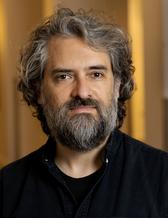
"Instead of having AI systems perform all computations digitally on electronic chips, we can let physics do part of the work. This provides an optical, energy-efficient first step that handles the initial data processing," says Giovanni Volpe.
Modern AI is also resource-intensive because training typically relies on large amounts of manually labelled data and the global optimisation of billions of parameters. Optical systems work differently - they are constrained, imperfect, and only partially programmable. The researchers will therefore develop learning strategies inspired by how the brain works and that are better suited to real-world conditions and optical hardware.
The project will also investigate how optical systems can be scaled up without sacrificing efficiency. Biological systems scale by reusing the same circuits, employing feedback, and using modular structures in which simple components work together to create advanced behaviour.
"We want to translate these principles into optical AI architectures that can refine their results over time and reuse hardware, rather than simply stacking more and more optical layers on top of one another."
Read the press release from KAW here