
WMO's Global Atmosphere Watch does just that. Through its observing network which embraces stations in remote polar and mountain locations, tropical islands and volcanic peaks, it watches the atmosphere and monitors the air we breathe and the pollution we create.
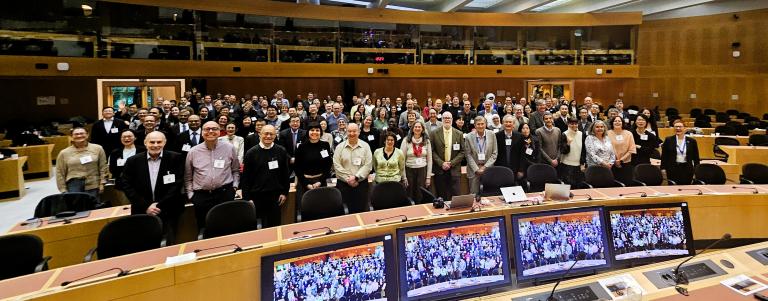
The first in-person Global Atmosphere Watch (GAW) Symposium in nearly a decade takes place at WMO headquarters in Geneva from 13-17 March 2026 to assess progress and chart the future in translating research science into usable services for the global good to save lives, protect livelihoods, and support sustainable development.
The agenda spans how to protect the life-saving ozone layer high in the stratosphere and combat life-threatening low-level ozone and aerosol pollution; how to improve warnings of sand and dust storms and wildfires; and to strengthen monitoring of greenhouse gases like carbon dioxide and methane which are trapping heat and fuelling more extreme weather.
The GAW Symposium,also highlights the importance of historical observations to monitor the past, understand the present and predict the future, with a special ceremony dedicated to 110 years of Spain's Izaña monitoring station on the island of Tenerife .
Environmental risks
"In a world of accelerating environmental risks, WMO must remain the link between scientific knowledge and environmental services delivered to citizens, and one that provides science‑informed support to decision‑making. This is not a new ambition - this is WMO's mandate," said WMO Deputy Secretary-General Ko Barrett in opening remarks.
"Today, climate change is intensifying environmental risks in ways that are directly linked to atmospheric composition. Rising concentrations of greenhouse gases are the fundamental driver of climate change. At the same time, we are seeing an increase in the frequency and intensity of hazards such as forest fires and dust storms, with far‑reaching impacts across economic sectors-particularly health, agriculture, transport, and energy," she said.
"The climate-air quality nexus is becoming ever more critical for societies. Extreme heat combined with poor air quality can be a deadly cocktail-and the risks ahead are only increasing. Addressing these challenges is not a marginal issue; it is central to resilience and well‑being," she told the symposium, which gathered more than 276 participants from more than 70 countries, both online and in-person.
Trusted science
WMO has a unique and indispensable role as the global leader in coordinating observations of atmospheric composition variables, including greenhouse gases and stratospheric ozone.
It provides authoritative, trusted scientific information to the global community and has the capacity and responsibility to further engage National Meteorological and Hydrological Services in delivering services that directly benefit society.
The GAW programme started in 1989, nearly 50 years ago, and is one of the bedrocks of WMO.
Today the programme is based on partnerships involving contributors and experts from more than 100 countries, working with National Hydrometeorological Services, Universities or Research organizations. It maintains and applies long-term systematic observations of the chemical composition and related physical characteristics of the atmosphere, with emphasizes on quality assurance and quality control.
"The Global Atmosphere Watch Programme provides open and trusted information on atmospheric composition that supports a variety of science for actions, including support of conventions, early warnings, climate change mitigation, and food security and human health;" said Greg Carmichael, Chair of the Environmental Pollution and Atmospheric Chemistry Scientific Steering Committee of the GAW Programme.
Topics for discussion include:
- The Vegetation Fire and Smoke Pollution Warning Advisory and Assessment System
- Advancing Early Warning Systems of Sand and Dust Storms
- Recent advances in aerosol science
- Urban challenges in a changing climate
- Advances in atmospheric composition forecasting systems
The symposium will support the evolution of the GAW programme in alignment with WMO priorities and launch the next phase of GAW's implementation planning.


