
In a new book, a team of experts in educational policy, epidemiology and public health chronicles the challenges faced by educators, public health authorities and school officials during the COVID-19 pandemic and offers a guide to some of the lessons learned as K-12 schools weathered that crisis. One key message: Collaboration between schools, public health authorities and community leaders is essential to success.
The book, "K-12 Schools and Public Health Partnerships: Strategies for Navigating a Crisis with Trust, Equity, and Communication," describes the enormous challenges schools faced when the World Health Organization declared in March 2020 that COVID-19 was a global pandemic. School district leaders across the U.S. "had to make rapid decisions about school closures, remote learning plans, staff safety, student meal distribution and communication with anxious families - all while working with limited information and unclear guidance," the authors wrote.

The four co-authors were themselves drawn into the crisis. Each provided their own leadership and expertise to decision-makers in public health and schools and observed the successes and failures of efforts in their communities.
During the peak of the crisis, Leah Perkinson, a pandemics manager at The Rockefeller Foundation and a former researcher at the U.S. Centers for Disease Control and Prevention, led national pandemic response efforts, coordinated communities of practice and compiled public health guidance documents.
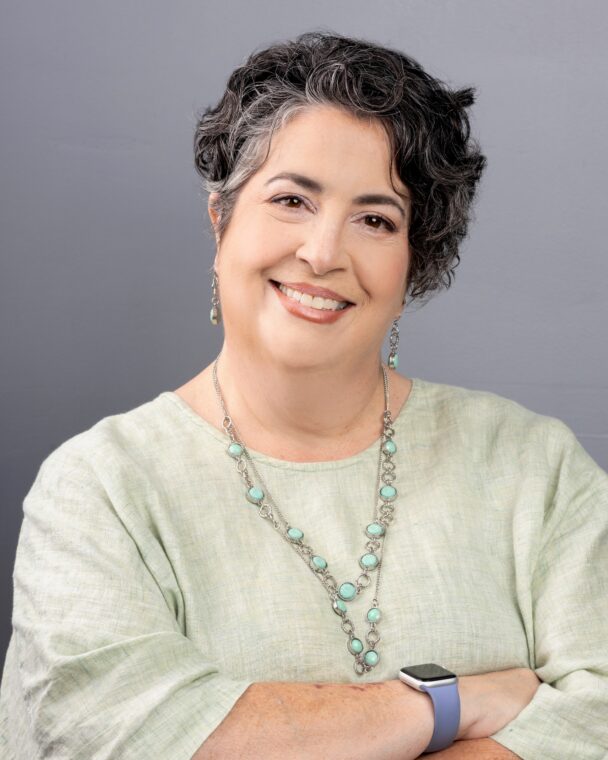
Lisa C. Barrios, currently the director of the Division of Readiness and Response Science at the CDC, led activities to help schools prevent, mitigate and respond to the COVID-19 pandemic.
University of Illinois Urbana-Champaign pathobiology professor Rebecca Lee Smith, an epidemiologist, advised those working to track and reduce the spread of infection in schools and businesses across Illinois.
Rachel Roegman, a professor of education policy, organization and leadership at the U. of I. whose work focuses on how to make schools more affirming spaces for potentially marginalized students, saw how inequities in school communities could exacerbate the tragic toll of the disease.
The book includes dozens of interviews with school, public health and community leaders who played key roles in responding to the crisis in K-12 schools, harvesting a trove of useful insights and practical guidance. The book focuses on the importance of building trust, prioritizing the needs of those most at risk and building accurate and reliable communication channels. These factors were intertwined and foundational to success, the authors wrote.
The best way to build trust was to make an effort to reach out to families and students to ask them what they needed - and finding resources to meet those needs, the authors wrote. During the COVID-19 pandemic, this meant offering students the laptops essential for online learning and showing them how to connect, creating Wi-Fi hubs for neighborhoods that lacked them, developing new systems for distributing school lunches and offering in-person learning hubs for students whose parents were essential workers.

Building trust and enhancing communication also meant creating accessible online dashboards that offered up-to-date testing and infection-rate data for the community along with information about how to access testing sites or services. Communication also was enhanced when community organizations, schools and political leaders coordinated their efforts and collaborated on messaging to speak with one voice.
Serving those most at risk of harm from the pandemic meant planning centered on those with disabilities, those speaking languages other than English and low-income or undocumented families. "Planning from the margins" meant that no one was treated as an afterthought or left out of the public health equation, the authors wrote.
The book also describes how leaders dealt with public criticism of their efforts and the spread of misinformation. It helped when community institutions joined forces to put out unified messages, admitted to uncertainty and acknowledged that guidance sometimes changes in the face of new information. It also helped when they showed up and truly listened to community concerns. And, in some circumstances, the best approach was to avoid amplifying misleading claims by debating them. Instead, the most effective teams remained committed to their essential messages.
To keep kids in school, safe and learning during the next public health crisis, the authors urge communities to continue the partnerships that developed during the COVID-19 pandemic. Building and maintaining those relationships and their outreach to the community is foundational to surviving and navigating the next crisis in K-12 schools, they wrote.


