
When lung cancer treatment stops working, what happens next? New research reveals the answer may depend on how the cancer grows.
Medical researchers at Flinders University have uncovered an important clue that could help doctors better predict what happens next for people with advanced lung cancer when their first treatment fails.
Researchers looked at thousands of patients with non-small cell lung cancer (NSCLC) treated with modern chemoimmunotherapy - a combination of chemotherapy and immunotherapy – that has become a standard first-line treatment.
The study, published in the journal Cancer Letters, is the first to apply a modified classification system to frontline chemoimmunotherapy for lung cancer.

Lead author and expert in Clinical Pharmacology, Professor Michael Sorich says that when cancer progresses after treatment, doctors classify it as "progressive disease." But this term does not distinguish whether the cancer grew in old tumours, appeared as new tumours, or both.
"Our research shows that the way cancer progresses tells us a lot about what the future looks like for patients," says Professor Sorich from the College of Medicine and Public Health.
"People whose cancer comes back with new tumours have a much poorer outlook than those whose existing tumours re-grow. And if both happen - old tumours grow and new ones appear - that's the worst scenario."
The study analysed data from four major international clinical trials involving more than 2,300 patients whose cancer had progressed after treatment. It found that patients whose disease progressed only in existing tumours lived for a median of almost 10 months after progression. Those who developed new tumours survived about seven months, while those with both old and new tumours survived just over five months.
"These differences are significant because they show that not all progression is equal. Understanding this can help doctors and patients make better decisions about what to do next," says Professor Sorich.
Importantly, the pattern of progression mattered regardless of whether patients were treated with chemoimmunotherapy or chemotherapy alone, although the effect was stronger in those who had chemotherapy.
The researchers believe that the reason this happens may be linked to the biology of the cancer and how it interacts with the immune system. New tumours may indicate a more aggressive disease or a tumour environment that resists treatment.
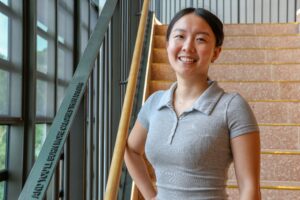
Co-author on the paper, Yuan Gao, says that unfortunately for patients and families, this research does not change the fact that progression is serious, but it does offer hope for more personalised care.
"If we know which patients are at higher risk after progression, we can tailor follow-up and consider different treatment strategies sooner," says Ms Gao from the College of Medicine and Public Health.
The findings could also influence future clinical trials and drug development.


