
URochester physicist Segev BenZvi was part of the IceCube team that discovered high-energy neutrinos from deep space-and now leads its search for signals from exploding stars.
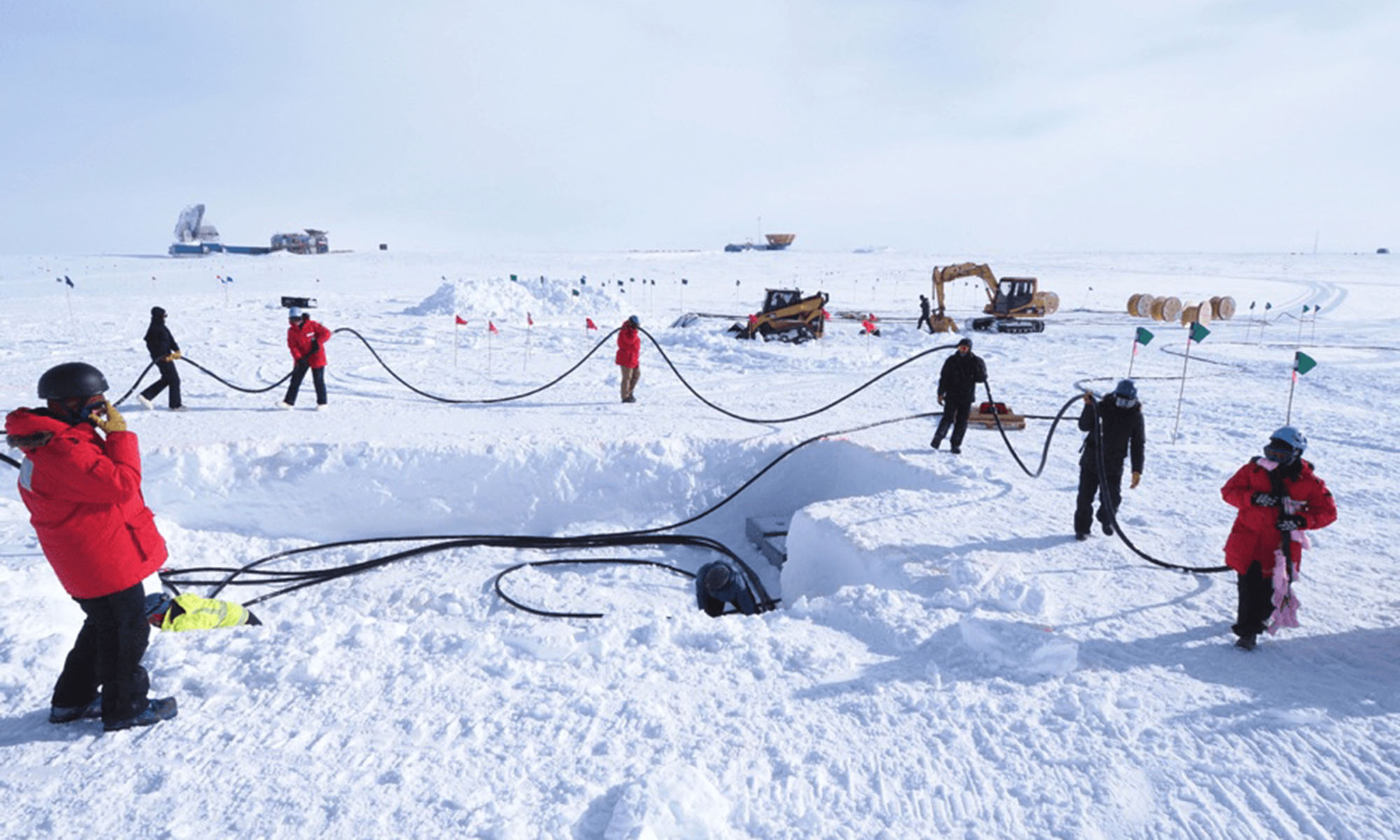
More than a mile beneath the South Pole, thousands of light sensors sit frozen into a cubic kilometer of Antarctic ice. Those sensors are waiting for some of the universe's most elusive particles to pass by.
Together, the sensors make up the IceCube Neutrino Observatory, an enormous detector that has transformed the ice beneath Antarctica into a new kind of telescope-and transformed the way scientists observe the universe.
The physicist who spent decades championing the idea, Francis Halzen of the University of Wisconsin-Madison, has now received science's highest honor for it. On October 6, Halzen was awarded the 2026 Nobel Prize in Physics "for decisive contributions to the IceCube Neutrino Observatory and the discovery of high-energy neutrinos of astrophysical origin."
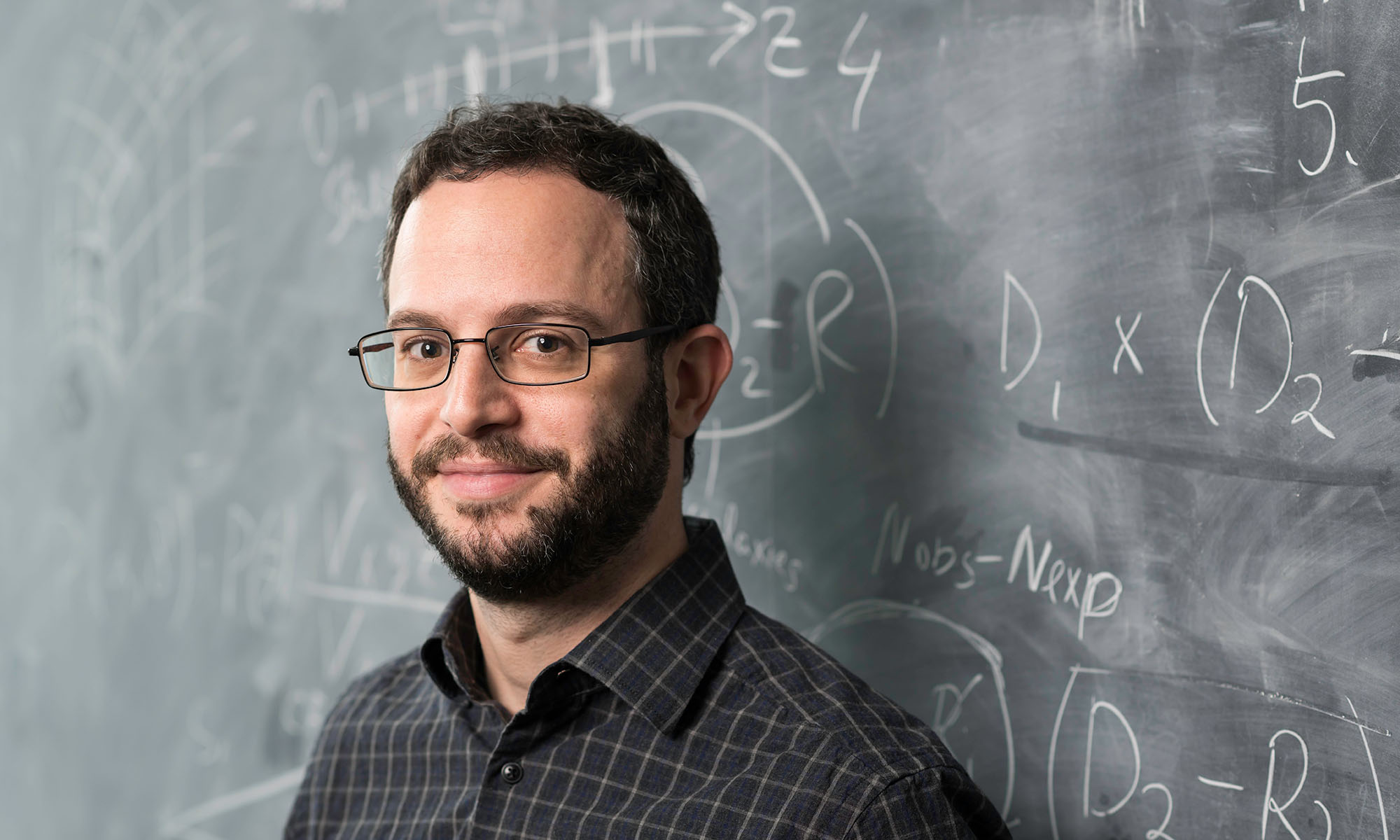
At the University of Rochester, physicist Segev BenZvi greeted the news with "amazement, pride, and a bit of awe." He knows firsthand how long the journey took.
BenZvi, a professor and chair of the Department of Physics and Astronomy, was a member of the IceCube Collaboration at the University of Wisconsin-Madison when scientists announced in 2013 that they had detected high-energy neutrinos arriving from beyond our solar system.
He joined the URochester faculty the following year, when the University also joined the international IceCube Collaboration. Today, his research group leads IceCube's real-time search for neutrinos produced by exploding stars.
"I know that the work leading up to the discovery took many decades to come to fruition," BenZvi says.
A big idea, buried deep in the ice
Halzen didn't begin his career trying to turn Antarctica into a telescope.
A theoretical physicist who worked closely with researchers at particle accelerators such as Fermilab, he shifted his attention toward astrophysical neutrinos after scientists detected particles from Supernova 1987A, an exploding star in a nearby galaxy.
The discovery raised a tantalizing possibility: Could neutrinos become a new way of exploring the cosmos?
There was just one rather large problem: Neutrinos are notoriously difficult to detect.
Halzen and his collaborators pursued an audacious solution. They would bury light-sensitive detectors in natural ice and look for the telltale flashes created when a neutrino interacts with matter.
Their early efforts didn't go according to plan. At the depths researchers initially drilled, bubbles trapped in the ice scattered the light they were trying to detect.
So they went deeper.
Below about a mile, the ice became remarkably clear. The subsequent Antarctic Muon and Neutrino Detector Array-better known as AMANDA-proved the concept could work and paved the way for something vastly larger: IceCube.
"If I can describe [Halzen's] role in two words," BenZvi says, "they would be vision and persistence. Getting IceCube built and turned into a successful experiment was a multidecade effort that would not have happened without his leadership."
What are neutrinos-and why do scientists want to find them?
Here is the strange thing about neutrinos: They are everywhere, and yet they are extraordinarily difficult to find.
Neutrinos are tiny subatomic particles with almost no mass and no electric charge. They interact so weakly with ordinary matter that enormous numbers of them can pass straight through your body-and through the Earth-without hitting anything at all.
For scientists, that elusiveness is both the problem and the opportunity.
Because neutrinos can travel through matter that blocks other forms of radiation, they can carry information from places conventional telescopes may struggle to see. Detecting them gives astronomers another way to investigate some of the most extreme environments in the universe.
"Getting IceCube built and turned into a successful experiment was a multidecade effort that would not have happened without [Halzen's] leadership."
Until IceCube's discovery in 2013, the only neutrinos scientists had detected from beyond our solar system came from Supernova 1987A. IceCube changed that.
Scientists discovered high-energy neutrinos arriving from much farther out in the cosmos and have since traced some of them to active galaxies powered by supermassive black holes. "These high-energy neutrinos come from the most extreme environments in the known universe," BenZvi says.
Because neutrinos can escape the dense gas and dust surrounding black holes and neutron stars, they can give scientists a glimpse into regions of galaxies that other forms of radiation can't reveal.
How does IceCube detect something that passes through almost everything?
If neutrinos are so reluctant to interact with matter, how do you catch one?
You build an enormous detector-and wait.
IceCube consists of more than 5,000 light-sensitive sensors embedded deep in the Antarctic ice near the South Pole. Every once in a while, a neutrino interacts with matter in or near the detector, producing charged particles that streak through the ice and generate tiny flashes of light.
IceCube's sensors capture those flashes. From their pattern and timing, scientists can reconstruct information about the neutrino, including the direction it arrived from.
In other words, IceCube uses a cubic kilometer of some of the clearest ice on Earth to look outward into the universe.
At URochester, waiting for an exploding star
URochester joined the IceCube Collaboration in 2014, when BenZvi arrived at the University.
The Nobel-recognized discovery had already been made. But IceCube's work was hardly finished.
Since then, scientists have continued using the detector to investigate where high-energy neutrinos originate and what they can tell us about the cosmos. Meanwhile, BenZvi and his URochester group are using IceCube to watch for a very different signal: a star exploding relatively close to home.
The URochester group develops software that continuously searches IceCube's stream of data for a burst of neutrinos from a nearby supernova. The group also co-leads the SuperNova Early Warning System (SNEWS), an international collaboration that combines alerts from neutrino detectors around the world.
Scientists have been waiting nearly four decades to detect supernova neutrinos again.
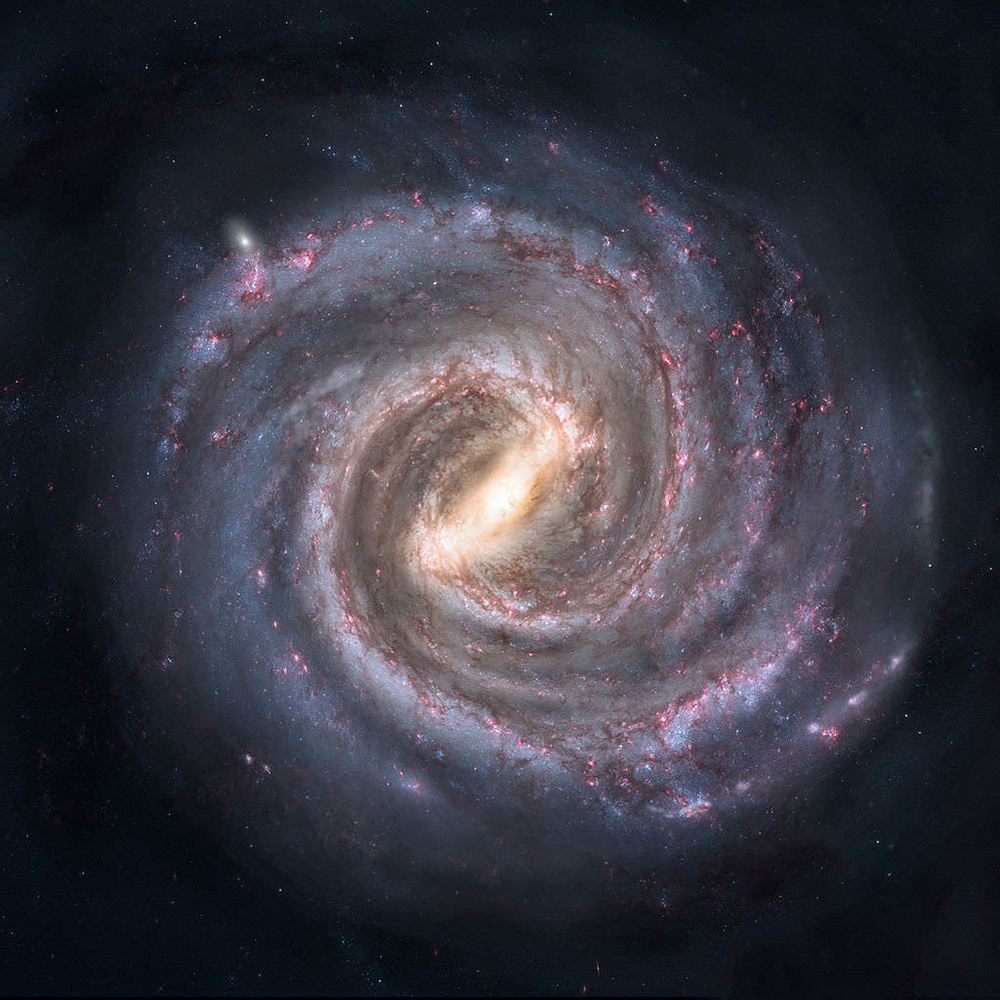
"When a star explodes near the center of the Milky Way, it will be the observation of the decade."
When Supernova 1987A exploded in a nearby galaxy, detectors around the world recorded just 24 neutrinos. The next time could look very different.
If a star exploded near the center of the Milky Way today, BenZvi says, IceCube could detect nearly one million neutrinos.
IceCube is getting an upgrade, too. New photosensors have been deployed at the South Pole since 2025, and the URochester group is now integrating the new detectors into its supernova data acquisition system. The new detectors will allow the group to better measure the energies of supernova neutrinos-and potentially detect exploding stars beyond the Milky Way.
For BenZvi and his team, that means preparing now for an astronomical event that no one can put on the calendar. The next nearby supernova could give scientists an unprecedented look at what happens inside a dying star-and send a torrent of neutrinos through IceCube's frozen array.
In the seconds it takes the star to collapse, IceCube could track changes in those neutrinos in extraordinary detail, giving scientists a front-row view of the formation of a neutron star or black hole.
They just have to wait for the universe to cooperate.
"When it occurs," BenZvi says, "it will be the observation of the decade."


