
Water quality has improved, but the future remains uncertain - measures should be planned carefully
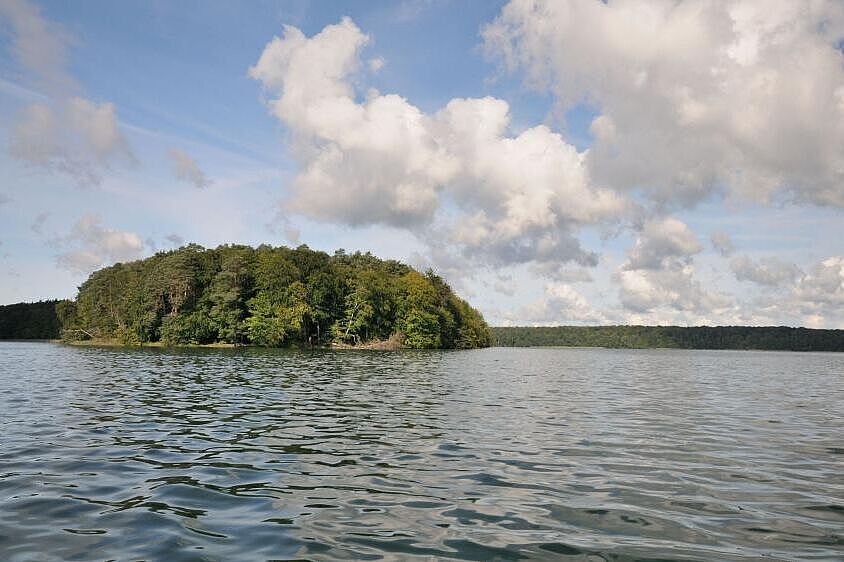
The water quality of Lake Stechlin has fluctuated considerably over the last 15 years. | Photo: Michael Feierabend
Lake Stechlin is one of the largest and deepest clear-water lakes in northern Germany. Water quality has undergone a somewhat turbulent development over the last 15 years: up until 2020, the lake's ecological status deteriorated increasingly and unexpectedly rapidly, a trend primarily linked to a sharp rise in phosphorus concentrations in the lake water. Since 2021, however, a surprising reversal of this trend has been observed: phosphorus concentrations have fallen sharply and by 2025 were barely half as high as at the peak in 2020. This is a sign of a temporary improvement - but it is not yet time to sound the all-clear. It remains to be seen whether this trend will continue. Researchers at the Leibniz Institute of Freshwater Ecology and Inland Fisheries (IGB) explain the recent developments and new findings regarding these dynamics in Lake Stechlin in a new IGB Dossier. In it, they also provide an assessment of which follow-up actions now appear appropriate.
"We can well understand the desire to find quick explanations and solutions for Lake Stechlin. After all, we conduct research in, around and on the lake and feel a strong connection to it too," explains Dr Sabine Wollrab, co-head of the Department of Plankton and Microbial Ecology, which is based right in Neuglobsow on the lake's shore. "However, the ecosystem of such a large lake is very complex; there are many processes and dynamics that influence one another."
Recent studies by IGB have now shed more light on certain aspects of these dynamics: the researchers discovered that it is not only processes in the sediments of the deeper parts of the lake basin that influence the natural retention of phosphorus in the lake, but that the shallow-water areas of the lake also play a crucial role. These are the zones where light still penetrates down to the lake bed. In Lake Stechlin, this applies to areas down to a water depth of around 20 metres, which accounts for 46 per cent of the lake's total surface area. In particular, changes in the underwater plant vegetation found there and the reduced ability of the sediments to bind phosphorus have exacerbated the dynamic increase in phosphorus concentration in the water body. However, the trigger for the changes in the composition of the underwater plants remains unknown.
Scientific assessment of the feasibility study on the ecological improvement of Lake Stechlin
In the freely available IGB Dossier, the researchers also provide their own research-based assessment of the feasibility study funded by the State of Brandenburg and its conclusions regarding potential measures to improve the ecological status of Lake Stechlin. The study was carried out by a consortium of specialist firms following a public tender; the work was also discussed within a working group (AG Stechlin) established by the Brandenburg Ministry of Agriculture, Food, Environment and Consumer Protection (MLEUV).
The IGB researchers agree with the assessment that, given the positive trends of recent years, no large-scale measures to reduce phosphorus levels are currently required. However, as the dynamics in Lake Stechlin are highly complex and not yet fully understood, a renewed rise in nutrient levels cannot be ruled out.
Intensive fishing is not a 'no-regret' measure
At the same time, discussions are currently underway regarding which low-threshold measures could nevertheless be taken now to prevent a recurrence of eutrophication and to improve the ecological status. In the feasibility study, as well as by some stakeholders in the accompanying Stechlin working group, intensive fishing and culling of whitefish was proposed as a so-called 'no-regret' measure. These are understood to be precautionary measures to avert or mitigate potential risks that either incur no costs or offer additional benefits. They are also considered sensible even if the originally assumed causal relationship subsequently proves to be insignificant.
"From a scientific perspective, this view of fishing as a harmless and unproblematic measure is incorrect. There is no evidence of a negative impact of fish on water quality in Lake Stechlin. Nevertheless, the feasibility study proposes the removal of more than six tonnes of whitefish - and this without clear justification. This would mean killing thousands to hundreds of thousands of fish. This massive removal of native and habitat-typical species such as roach and tench would be highly questionable from an ethical, animal welfare and nature conservation perspective, and would also be scientifically unjustifiable. Furthermore, the ratio of very high manpower costs to questionable effectiveness must also be critically examined from an economic perspective," explains fish ecologist Dr Thomas Mehner, co-author of the IGB dossier.
The authors recommend that potential follow-up actions should only be initiated once there is a genuine need for them and they are based on sound scientific evidence.
Lakes are complex systems - IGB aims to contribute to research into the causes through its analyses
"As it remains unclear whether the eutrophication dynamics in Lake Stechlin are a one-off or a recurring phenomenon, certain key environmental aspects around and within Lake Stechlin should be investigated more thoroughly to better understand these dynamics. These include, for example, the influence of groundwater and the substances it carries, a detailed analysis of the sediments from the lake bed, and the role of shallow water zones and aquatic vegetation," explains co-author Prof. Michael Hupfer.
"Within the scope of our institute's remit and resources, we will do our utmost to advance research into the causes at Lake Stechlin and our understanding of the processes involved," explains Sabine Wollrab.
"The exchange of knowledge with policymakers, authorities, associations, economy and the public is a key priority for IGB. That is why we will continue to contribute constructively to the discussion on the future of Lake Stechlin, drawing on our research expertise," emphasises Prof. Hans-Peter Grossart, co-head of the Department of Plankton and Microbial Ecology.


