
Fifty-six representatives from Indigenous ranger organisations joined department staff and government representatives in Darwin on 2 and 3 September for the Northern Australia Indigenous Rangers Biosecurity Round Table.
Held every 2 years, the round table provides an important forum for Indigenous ranger organisations and the department to share knowledge, discuss priorities and identify opportunities to shape the future of ranger-led biosecurity.
Indigenous rangers play a critical role in protecting northern Australia from biosecurity threats. Their deep connection to Country and generations of local knowledge provide valuable insights into identifying, monitoring and managing risks across some of Australia's most remote landscapes.
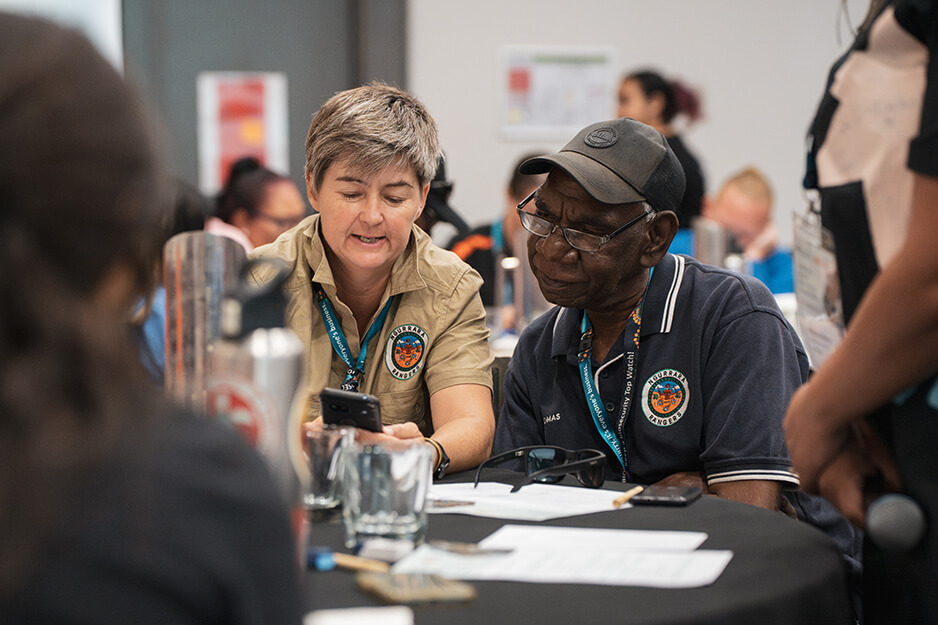
This year's round table was hosted on Larrakia Country and facilitated by experienced Indigenous facilitators Jason Elsegood and Ashlee Wone.
During the 2 days, participants reviewed progress against recommendations from previous round tables. Discussions confirmed that the department's Indigenous Ranger Biosecurity Program continues to deliver in areas valued by ranger organisations. The ongoing importance of the Biosecurity Engagement Officer Network was reaffirmed, and feedback provided indicated that improvements to grant administration processes are making participation in the program easier. The forum reinforced that strong relationships, regular engagement and two-way communication remain fundamental to the program's success.
Support was also confirmed for the structured biosecurity training pathway which provides a clear progression from the fundamentals of biosecurity through to the Biosecurity Masterclass and the Certificate IV Tropical Biosecurity. This new extended career pathway supports consistent capability development across the ranger network.
During the 2 days, Karajarri Traditional Lands Association, the Kimberley Ranger Network representing Kimberley Land Council and Nyangumarta Rangers presented case studies, sharing their approaches to community engagement, land and sea management and which pests and diseases are of most biosecurity concern in their respective regions. These presentations provided valuable ranger-to-ranger learning opportunities, exchange of practical knowledge, experiences and approaches that can be adapted and applied across northern Australia.
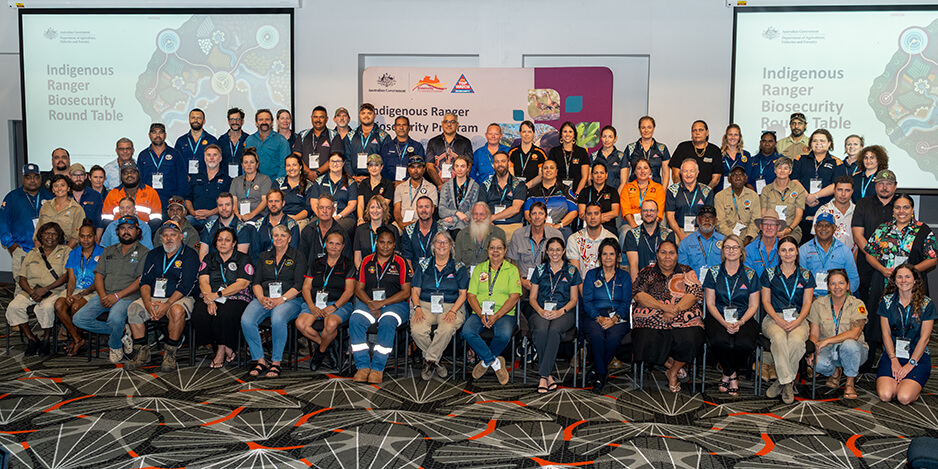
Participants also received the latest information on bird flu (H5 avian influenza) from the Office of the Chief Veterinary Officer.
Looking ahead, the round table generated several suggestions for future consideration. Participants highlighted opportunities to make science and technical information more accessible and relevant for ranger groups, better align the timing of departmental and ranger operational planning. Discussions also explored expanding the range of biosecurity work undertaken by rangers and further integrating traditional ecological knowledge into biosecurity surveillance and monitoring.
This year's round table highlighted the significant contribution Indigenous rangers make to Australia's biosecurity system. By bringing together ranger organisations and government, the forum helps ensure local knowledge, practical experience and on-ground expertise continue to inform biosecurity planning and decision-making. It also strengthens ranger-to-ranger networks, supports the sharing of knowledge and good practice, and ensures Indigenous rangers continue to shape the future direction of the department's program and broader biosecurity outcomes across northern Australia.
Round tables continue to play an important role in the department's engagement with our stakeholders. By bringing together diverse perspectives, these forums support collaboration, strengthen relationships and help inform our priorities and policies.


