
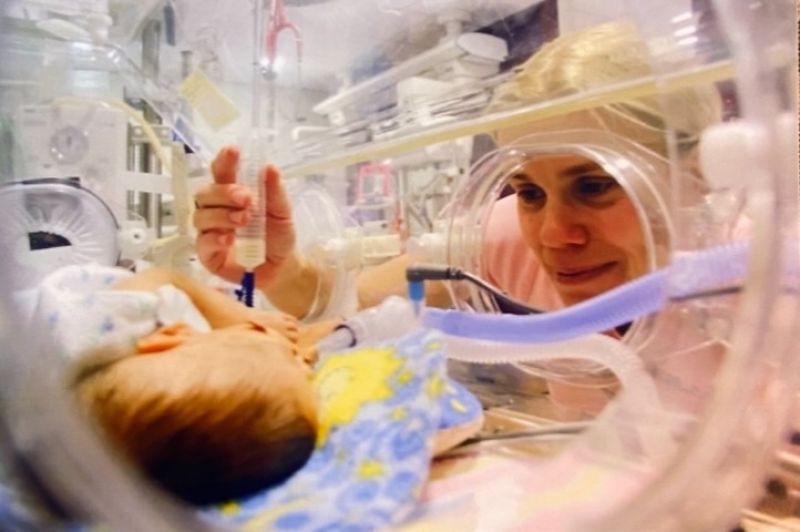
University of Melbourne researchers have launched a landmark clinical trial to determine ideal caffeine doses for very preterm babies, with the potential to improve care for vulnerable newborns around the world.
The BabyCCINO (Caffeine Citrate to Improve Neonatal Outcomes) trial will seeverypreterm babies (born more than two months early) and their families participate in a clinical trial comparing three commonly used caffeine doses and dosing regimens.
Professor Brett Manley, a neonatologist and Director of Newborn Research at Melbourne's Mercy Hospital for Women and Professor in the Department of Obstetrics, Gynaecology and Newborn Health at the University of Melbourne, will lead the trial which begins on October 22nd.
"Preterm babies receive caffeine every day, but we still don't know which dose delivers the best outcomes," Professor Manley said.
"This trial is designed to answer that question and identify the amount of caffeine that gives these babies the best possible start in life."
Researchers will aim to identify the safest and most effective approach for treating apnoea of prematurity, a condition that causes very preterm babies to temporarily stop breathing.
Although caffeine has been a part of neonatal intensive care for decades, the optimal dose remains unknown, and dosing practices vary across Australia and internationally.
Caffeine is one of the most widely used medications in neonatal intensive care units, helping to stimulate breathing, reduce episodes of apnoea and support babies to come off mechanical ventilation.
The BabyCCINO trial builds on the landmark CAP trial, published two decades ago, by addressing one of the remaining unanswered questions in neonatal care. Professor Manley says the study will include almost every neonatal intensive care unit across Australia and New Zealand, alongside several hospitals in the United Kingdom.
"By bringing together neonatal intensive care units across Australia, New Zealand and the United Kingdom, we have a unique opportunity to improve care for very preterm babies around the world," Professor Manley said.
The project has received a $3,014,066 grant from the National Health and Medical Research Council (NHMRC), alongside a portion of an MRFF grant and philanthropic support from Running for Premature Babies.
Running for Premature Babies was founded by Sophie Smith OAM after she and her late husband Ash lost their prematurely born triplet sons, Henry, Jasper and Evan, with a vision for a better chance of survival and quality of life for premature babies in Australia.
"We are grateful for this support from Running for Premature Babies," said Nick Blinco, Vice-President (Advancement, Communications and Marketing) at the University of Melbourne.
"Philanthropic contributions like this help our researchers pursue ambitious clinical trials that can improve and save lives."
The findings are expected to establish evidence-based guidance for caffeine dosing in very preterm infants, helping to standardise care and improve outcomes for babies treated in neonatal intensive care units worldwide.


