
Chen Wang has recently finished her doctoral research and will be defending her dissertation on May 13th. For her PhD she researched the lead in artefacts from ancient China, using isotope analysis to match them to their origins. She applied analytical methods to new contexts and used the data from her research to develop a better understanding of the ambiguity that comes with isotopes.
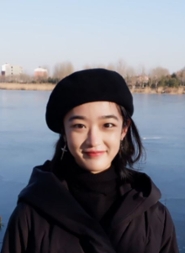
You recently finished writing your dissertation about the use of lead in ancient China and that you combined both case studies and methodological studies, can you tell me a bit more about what that means?
'it means that I analyzed the lead isotopes of ancient artifacts from China, such as glass objects and glazes on ceramics because these are objects that contain lead. We can measure the lead isotopes in these objects and then try to match them to lead sources and published lead isotope signatures of other artifacts. We compare them to find out if they are connected or if they are perhaps from the same source. The methodology part was exploring the use of some newer statistical methods like kernel density estimates and machine learning methods to see if they can help to quantify how certain we can be in saying 'this is the source' or 'those two are related'.'
Did you research artefacts from a specific time period?
'Yes I did two case studies, one was leaded glass from China from the warring state period until the Han dynasty, which is about 2000 years ago. The other case study was glazed ceramics also from Han dynasty China. I'm not specifically researching the Han Dynasty but the artefacts I had access to both happened to be from this time period.

Why did you choose to do research into lead isotopes?
'Lead isotopes are interesting because lead is a metal we can find in different places around the world and the isotopes will be preserved even in artifacts made thousands of years ago. Ancient people exploited lead and used it to make objects because it's easy to shape. When we analyse them, we can learn how people of the past got their resources. We can also learn about long distance trade & exchange. Continuity is something that comes up as well, for example: a group of people in one place and another might use the same source or maybe people in the same place use different sources for their materials. This reveals connections and differences, and we can explore the organization of resources and supply networks in ancient society with these analyses.'
What was something unexpected you ran into during your research?
' We do not have only one truth, what we have is data and we need to figure out how to interpret it'
'Ideally each lead source should have one unique lead isotope signature. But in reality, we found that this is not always the case. Sometimes two sources have a similar or overlapping isotope signature. This makes the analysis less straightforward than identifying a single possible source. After applying statistical methods to quantify all possibilities, we may find that one object is corresponding with several different sources. Sometimes these sources are very far away from each other. This leaves some uncertainty and ambiguity: we don't know which source is the true source. This really got me thinking that even with advanced scientific methods, we still do not have only one truth. What we have is data and we need to figure out how to interpret the data and how to give it a good explanation.'
What is next for you after your PhD here?
'I'm now applying for a postdoc position in China at the university where I got my bachelor's degree, which is also very close to my parents' house. I will keep studying the lead in ancient China and maybe I will be able to explore more artifacts and take samples around China. I would also like to look more into machine learning methods.'


