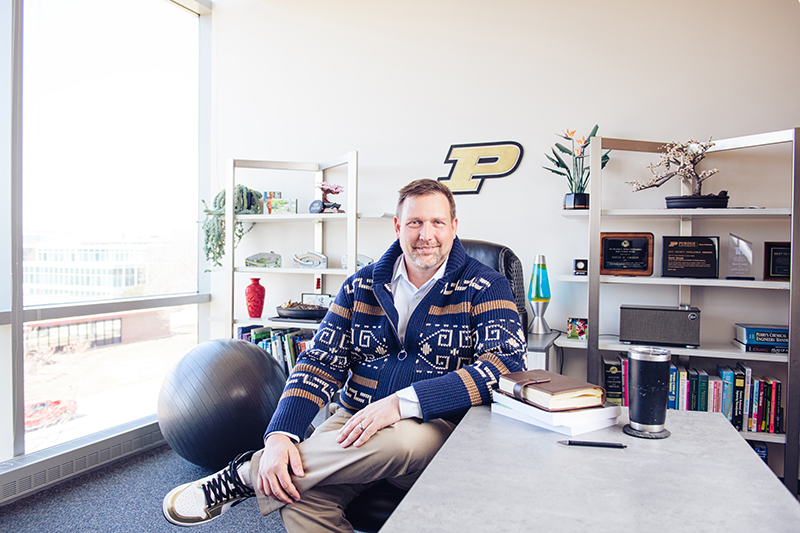
David Umulis, professor and the Dane A. Miller Head of Purdue University's Weldon School of Biomedical Engineering, says collaboration will be key in connecting technology and research in the biomedical engineering field. (Purdue University photo/Rebecca McElhoe)
Biomed expert examines how AI can help scientists and engineers in fighting diseases
WEST LAFAYETTE, Ind. — Artificial intelligence, synthetic biology and collaboration are the building blocks that could help biomedical engineers crack the next big discovery in addressing complex health issues.
David Umulis, professor and the Dane A. Miller Head of Purdue University's Weldon School of Biomedical Engineering, says those three areas are key in the rapidly changing biomedical engineering environment.
"Artificial intelligence is a game changer when it comes to biology, biomedical engineering and other related research areas," Umulis said. "If we can develop the best way to use AI and other technologies, we will find ways to address human health and longevity that we could never imagine earlier."
Umulis also serves as a senior research fellow for the Krach Institute for Tech Diplomacy at Purdue and as project director for the Emergent Mechanisms in Biology of Robustness Integration and Organization (EMBRIO) Institute.
A key example of those three areas working together can be found in his work leading the EMBRIO Institute. EMBRIO received $12.5 million in funding from the National Science Foundation and is a partnership across six higher education institutions that uses artificial intelligence in biology to see how cells defend themselves and how to repair cellular damage.