
Can coral reefs adapt fast enough to keep pace with rising ocean temperatures?
It's one of the biggest questions facing scientists, researchers and reef managers today.
Around the world, research is underway to understand why some corals naturally cope better with warmer ocean temperatures than others. These discoveries are leading to new approaches that could help strengthen coral resilience.
One of the most promising areas of research is focused on the microscopic algae that live in symbiosis inside the coral tissue, which play a critical role in coral health and survival. Research is underway to investigate whether microalgal symbionts with increased heat tolerance could help corals better withstand marine heatwaves and adapt to a warming ocean.
#What is coral bleaching?
Corals get their colour from the microscopic algae that live inside their tissues. The relationship between corals and algae is mutually beneficial - corals provide a protected environment for the algae, and algae provide food for the corals.
During periods of environmental stress, such as elevated water temperatures and UV radiation, corals can expel the algae, causing them to lose their primary source of food. When the algae leaves, the coral's tissues become transparent, exposing its white skeleton and making it appear bleached.
If temperatures cool quickly enough, corals can recover and reabsorb the algae. But if heat stress continues for eight weeks or more, the coral can starve and eventually die.
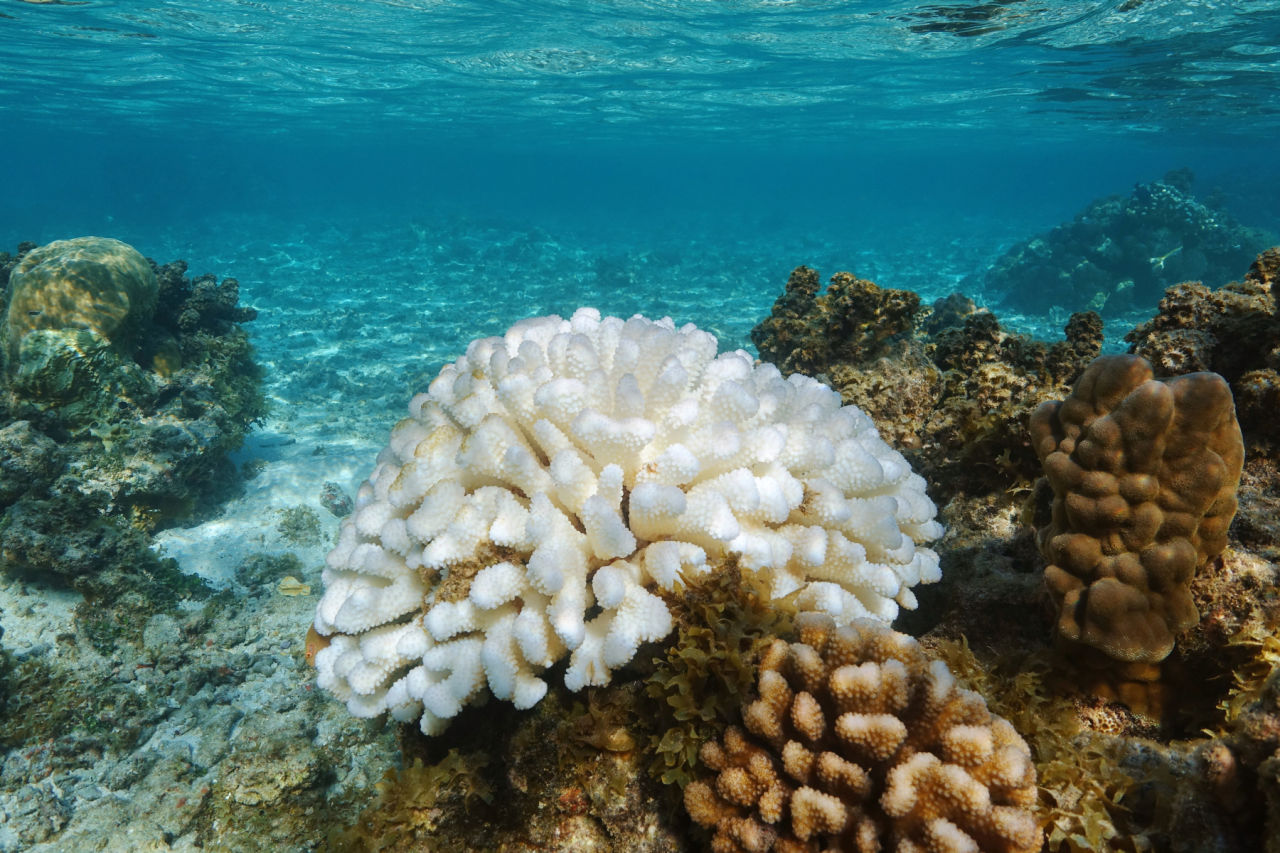
Coral bleaching occurs when water temperatures rise.
#What temperatures can corals survive in?
Different coral species tolerate heat differently depending on the conditions they have evolved in.
Corals from the northern Great Barrier Reef, for example, are generally more heat tolerant than corals from cooler southern regions. On the other hand, corals that regularly experience fluctuating temperatures such as those on the southern Great Barrier Reef, can often be more resilient to heat stress as they are better adapted to temperature fluctuations.
Meanwhile, corals in the Red Sea survive temperatures far higher than most Great Barrier Reef corals experience. In fact, some corals can thrive in waters above 30°C if those temperatures are normal for their environment.
In general, many corals begin experiencing stress when temperatures rise around 2-3°C above their normal summer maximums. How long the heat lasts for is also critical. Scientists use a measure called "degree heating weeks" to track accumulated heat stress over time.
#What research is underway to enhance the heat tolerance of corals?
The Great Barrier Reef Foundation is supporting research led by the Australian Institute of Marine Science (AIMS) to explore whether heat-evolved symbionts could help corals better withstand marine heatwaves. As algal symbionts have much shorter generation times than corals, evolution can occur more rapidly. By exposing each generation to increasingly warmer conditions in the laboratory, only the most heat-tolerant symbionts will survive and reproduce, allowing us to grow symbionts that are better able to tolerate higher ocean temperatures.
Researchers have successfully inoculated young corals with heat-evolved symbionts and early experiments have shown that corals hosting these strains can withstand heat stress better than corals with naturally occurring symbionts. Research is now exploring how these enhanced partnerships perform beyond the laboratory, including whether corals can maintain their relationship with heat-tolerant symbionts over time and under real-world reef conditions.
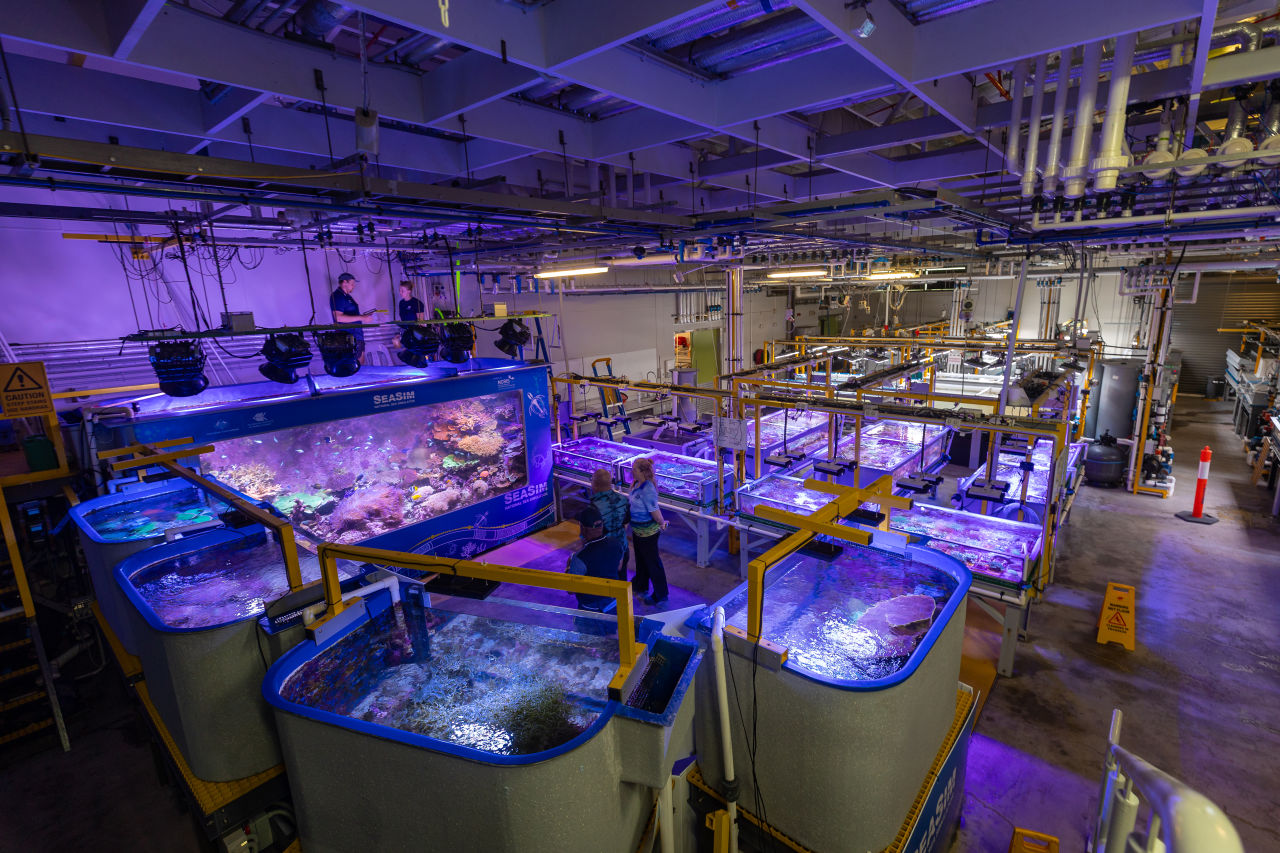
The Australian Institute of Marine Science's National Sea Simulator in Townsville provides the controlled conditions needed to advance research into heat-evolved symbionts.
#Which coral species are researchers focusing on?
Much of the current research focuses on fast-growing branching corals, particularly Acropora species.
These corals are often among the first species to recolonise reefs after disturbances such as bleaching or crown-of-thorns starfish outbreaks and are critical to the recovery of coral reef ecosystems. They also reproduce in ways that make selective breeding research easier.
#Is there any risk involved in trying to increase the heat tolerance of corals?
Scientists are working with traits that already exist in coral populations, identifying corals and symbiotic algae that naturally cope better with heat stress. The goal is to enhance corals' natural heat tolerance and resilience so they can adapt to a rapidly changing climate.
While early results are promising, we are still learning how heat-evolved symbionts perform over the long term on the reef. That's why these approaches are being carefully tested through laboratory studies and small-scale field trials before any broader application is considered.
#How close are we to using this solution at scale?
While the initial results are promising, this research is still in its early stages.
Small-scale field trials on the Reef are currently underway to better understand whether the benefits observed in a lab setting persist in real-world reef conditions. If successful, we can begin exploring how the approach might be applied at larger scales.
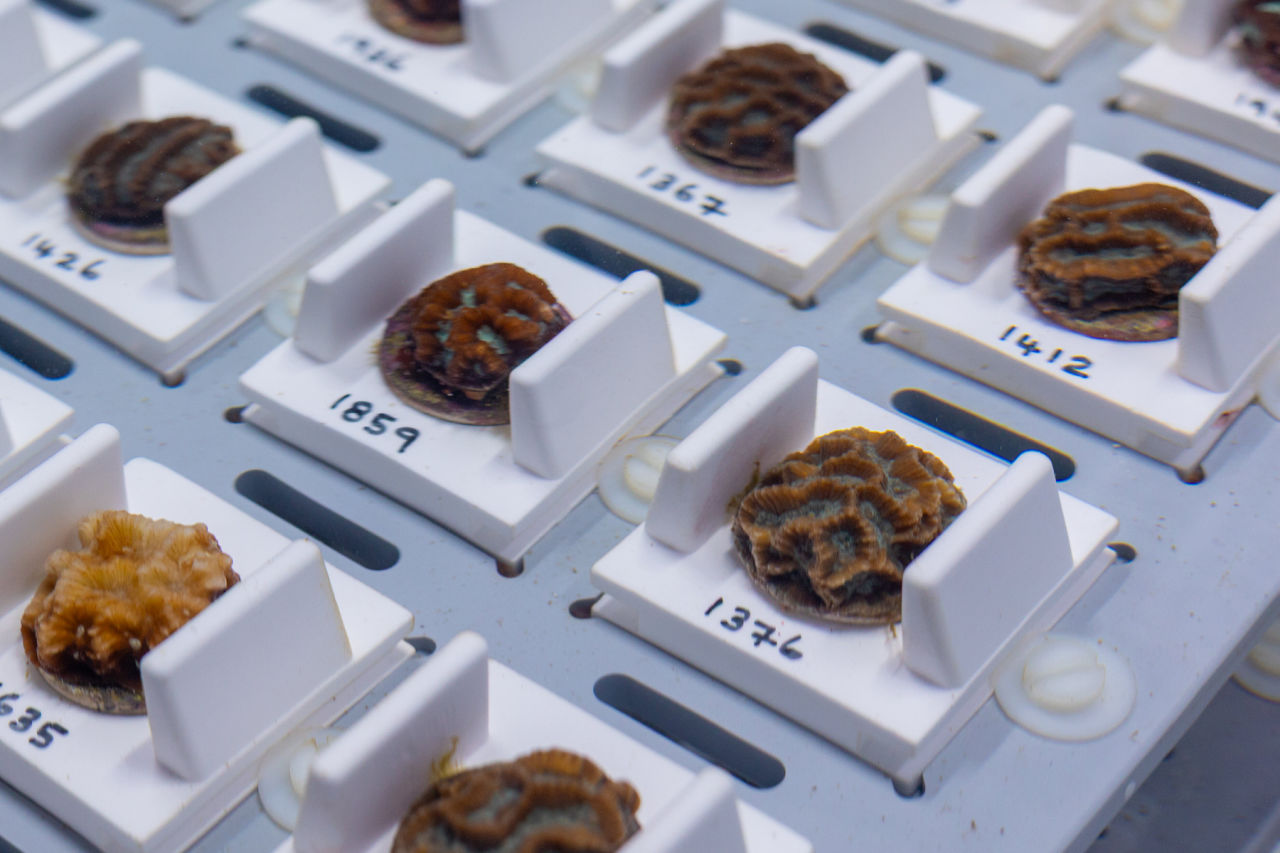
Coral fragments undergoing heat stress testing at the National Sea Simulator in Townsville.
#What can I do to help the Great Barrier Reef?
The Great Barrier Reef is under more pressure than ever. Rising ocean temperatures among other threats are pushing this living ecosystem to its limits.
Your donation could help accelerate the research, testing and field trials needed to understand how to turn promising science into real-world solutions for the future of the Great Barrier Reef.
Field trials advancing research into heat-evolved algal symbionts are supported by XXXX through the Great Barrier Reef Foundation.
Feature image: Broodstock corals at the National Sea Simulator in Townsville. Credit: Christian Miller, Australian Institute of Marine Science.


